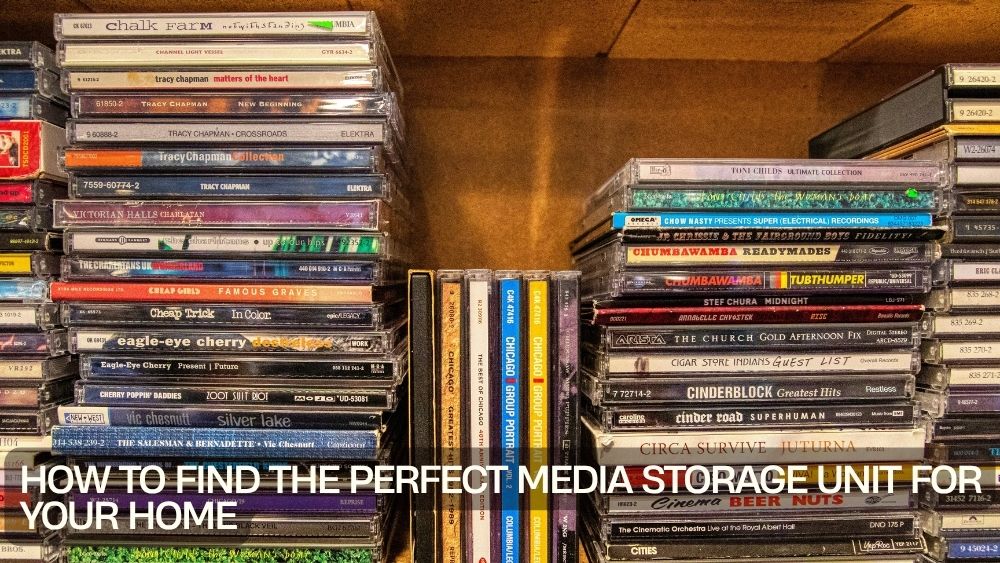
A great entertainment setup is about more than a good TV and comfortable seating. Once DVDs, Blu-rays, CDs, game cases, controllers, remotes, cables, records, and accessories start collecting around the room, even a stylish living space can quickly feel cluttered.
That is where the right media storage unit earns its place.
The ideal solution should do more than hide things away. It should fit your available space, complement your décor, accommodate your media collection, and keep frequently used entertainment essentials easy to access.
Whether you have a growing physical media library or simply need a smarter place for your entertainment accessories, finding the right furniture starts with understanding how your space and collection actually work.
The TotalFindz media storage unit collection provides different storage formats to explore, from tall cabinets to specialized record-player furniture.
Here is how to narrow down the options and choose a media storage unit that genuinely works for your home.
Start by Understanding What You Need to Store
Before comparing furniture, make a list of everything you want the unit to hold.
Your collection might include DVDs, Blu-rays, CDs, video games, vinyl records, books, remote controls, headphones, controllers, cables, or small entertainment accessories.
The type of items matters because different media formats require different storage arrangements.
A large DVD collection benefits from adjustable shelving. Vinyl records need appropriately sized compartments and sturdy surfaces. Gaming equipment may require a combination of open shelves and enclosed storage.
Thinking about your collection first makes it easier to identify the right furniture.
Measure the Space Around Your Entertainment Setup
One of the biggest mistakes when buying media storage furniture is choosing a unit based solely on appearance.
Measure the available wall or floor space before making a decision.
Consider:
- Available width
- Available height
- Depth of the furniture
- Distance from the TV
- Walking space
- Nearby doors and windows
- Power outlets
- Existing entertainment furniture
A large living room may accommodate a substantial storage cabinet, while an apartment may need a tall, narrow design.
The goal is not simply to maximize storage. It is to maximize storage without overwhelming the room.
Think Vertically When Floor Space Is Limited
Small rooms require a different approach.
Instead of choosing a wide cabinet, consider using the vertical space that already exists.
Tall media storage units can provide multiple shelves while maintaining a relatively compact footprint. This makes them especially useful for apartments, bedrooms, home offices, and smaller entertainment areas.
A tall cabinet can also turn an otherwise unused wall section into an organized storage zone.
The 9-tier tall narrow media storage cabinet demonstrates this space-conscious approach.

This type of design can be particularly helpful when width is limited but ceiling height is available.
Choose Adjustable Shelves for Growing Collections
Media collections rarely stay the same size.
You may buy new movies, add games, collect more CDs, or rediscover an old physical-media hobby.
Fixed shelving can become inconvenient when your collection changes.
Adjustable shelves offer more flexibility because you can modify the internal arrangement as your needs evolve.
This is especially useful for media storage cabinets for living rooms where different formats may need to share the same furniture.
If you own a mixture of CDs, DVDs, and Blu-rays, adjustable shelving can help you create separate sections instead of forcing everything into identical compartments.
Consider Your Collection Size
A small collection does not need the same furniture as a serious physical-media library.
For a modest collection, a compact cabinet may provide enough capacity while keeping the room visually simple.
For larger collections, capacity becomes a major consideration.
The 8-tier black media storage cabinet with adjustable shelves is an example of a high-capacity approach.

A larger unit can prevent you from having to scatter your collection across several pieces of furniture.
That can make the entertainment area feel considerably more organized.
Separate Everyday Items From Your Collection
Not everything needs the same type of storage.
Movies and CDs may be stored systematically, while gaming controllers, remotes, headphones, and charging accessories may need faster access.
This is where a combination of open and enclosed storage can be useful.
Keep frequently used items within easy reach while placing less frequently used media deeper into the storage system.
This simple distinction can make practical entertainment center organization much easier.
Think About Your TV and Console Setup
Modern entertainment spaces often contain much more than a television.
You may also have:
- Game consoles
- Streaming devices
- Soundbars
- Blu-ray players
- Controllers
- Speakers
- Headphones
- Charging equipment
- Media accessories
Your storage furniture should work around these components.
Modern TV and media storage furniture should provide enough room for the equipment you actually use while leaving enough ventilation and access for cables.
Avoid creating a setup where every component is squeezed into a tiny compartment.
A tidy entertainment area should also remain practical to operate.
Create a Dedicated Entertainment Zone
Instead of treating storage as an afterthought, use it to define the entertainment area.
A well-planned setup might include the TV as the focal point, storage beneath or beside it, seating facing the screen, and accessories organized within easy reach.
This approach can turn scattered furniture into a cohesive entertainment zone.
Organized living room media storage ideas work particularly well when each item has an assigned location.
When everything has a home, tidying becomes much easier.
Make Space for Records and Music Equipment
Not every media collection revolves around movies.
Vinyl records, turntables, and CDs can also become major parts of a home entertainment setup.
If you own a record player, look for furniture designed around that specific use rather than trying to squeeze the equipment onto a conventional shelf.
A dedicated record player stand with storage and charging station can combine a playing surface with storage while giving your music setup its own defined area.

This type of furniture can also introduce a warmer, more decorative element into a modern entertainment room.
Use White Furniture to Keep a Room Feeling Light
Color can influence how large or visually heavy a storage unit feels.
White furniture can blend naturally with bright walls and neutral interiors, helping a storage area feel less dominant.
A large white cabinet may also work well in contemporary spaces where you want the furniture to feel clean and understated.
For larger collections, a 9-tier white media storage cabinet with adjustable shelves offers substantial storage capacity while maintaining a lighter visual finish.

The choice between white, black, wood tones, or other finishes should ultimately reflect the furniture already present in your room.
Use Black Furniture for a Stronger Entertainment Look
Black media storage can create a more dramatic appearance, particularly around televisions and other dark electronics.
Because most entertainment technology already features black or dark finishes, a black storage cabinet can visually connect the different components.
It can also suit industrial, contemporary, minimalist, and modern interiors.
The key is balance. If the room already contains several dark furniture pieces, introduce lighter walls, flooring, textiles, or accessories to prevent the entertainment zone from feeling too heavy.
Keep Small Spaces Clutter-Free
Small homes benefit from furniture that performs several jobs at once.
A compact media cabinet can store physical media while also providing organization for accessories. A tall cabinet can use vertical space instead of consuming valuable floor area.
For particularly tight rooms, prioritize:
- Narrow footprints
- Vertical storage
- Adjustable shelves
- Easy-access compartments
- Furniture that matches existing décor
Space-saving media storage furniture should solve a storage problem without creating a new space problem.
That is the real test of compact furniture.
Organize Your Media by Category
Once you have the right storage unit, organization becomes the next step.
Group similar items together.
For example:
Movies: Keep DVDs and Blu-rays in dedicated sections.
Music: Separate CDs and records from movie collections.
Games: Create a dedicated section for game cases.
Accessories: Keep controllers, remotes, and cables together.
Less-used items: Place seasonal or rarely accessed equipment on higher shelves.
This makes your collection easier to browse and prevents the storage unit from becoming another clutter zone.
Leave Some Room for Future Additions
Do not buy furniture that is already completely full on day one.
If every shelf is packed, even one new purchase can create a storage problem.
Leaving some room for expansion makes your furniture more useful over time.
This is particularly important when choosing the perfect media storage unit for modern homes because entertainment collections often evolve.
You may also change your technology setup in the future.
A flexible unit can adapt much better than furniture designed around one very specific collection.
Choose Furniture That Complements Your Interior
Media storage should look like part of your home rather than equipment storage.
Consider the room's existing colors, materials, furniture shapes, and decorative style.
Modern interiors may suit clean-lined cabinets with neutral finishes. Industrial spaces can work well with darker colors and metal details. Traditional rooms may benefit from warmer wood tones.
Stylish media storage solutions for home interiors should balance visibility and organization.
The furniture needs to perform a practical role without visually dominating everything around it.
Consider Accessibility
Storage is only useful when you can comfortably access it.
Frequently used media should be placed at convenient heights.
Rarely used items can occupy higher or lower shelves.
If the furniture is tall, make sure you can safely reach the upper levels. If shelves are deep, ensure that items at the back will not become forgotten.
Good organization reduces the amount of time spent searching for something.
That is one of the simplest benefits of choosing the right storage furniture.
Use the Final Shelf for Flexible Storage
One useful strategy is to avoid assigning every shelf a permanent purpose.
Keep one section flexible.
That extra space can accommodate a new gaming console, recently purchased movies, spare controllers, or another accessory that does not currently have a home.
Flexible storage is particularly valuable in modern homes because entertainment equipment changes quickly.
A little spare capacity today can prevent a bigger organization problem tomorrow.
A Simple Media Storage Buying Checklist
Before purchasing, ask yourself:
- How much media do I currently own?
- Which formats need storage?
- How much space is available?
- Would vertical storage work better than a wide cabinet?
- Do I need adjustable shelves?
- Will the unit accommodate gaming equipment and accessories?
- Do I need open shelves, enclosed storage, or both?
- Would a black, white, or wood finish suit the room?
- Do I need dedicated space for records or a turntable?
- How much room should I leave for future additions?
- Can I easily access everything I store?
Answering these questions before shopping can eliminate many common furniture-buying mistakes.
Final Thoughts
The perfect media storage unit should make your entertainment space easier to use, easier to organize, and easier to enjoy.
Start with your collection. Measure the available space. Think about how your TV, consoles, records, movies, games, and accessories fit into your daily routine.
Then look for furniture that gives every category a sensible place.
Tall cabinets can make the most of vertical space. Adjustable shelving can adapt to changing collections. Dedicated record-player furniture can create a focused music station. Compact cabinets can help smaller rooms stay organized without feeling overloaded.
Most importantly, choose storage that fits your home rather than forcing your home to fit the furniture.
With the right combination of capacity, flexibility, accessibility, and style, media storage can become part of the room's design instead of simply being a solution to clutter.