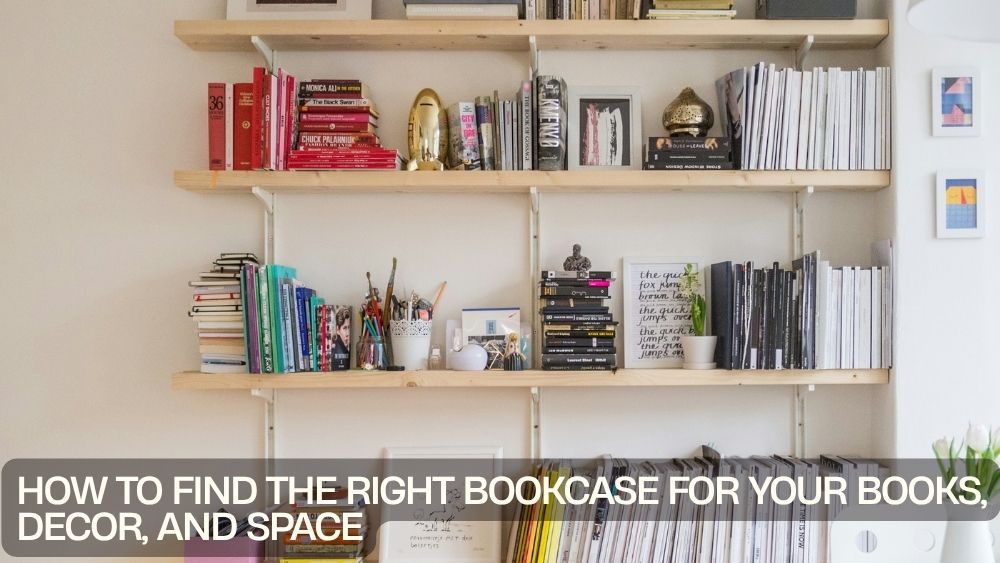
A great bookcase does more than hold books.
It can frame a room, display favorite objects, organize everyday essentials, and turn an empty wall into a useful feature. The right design can make a small space feel smarter while giving a larger room structure and personality.
But choosing the right bookcase is not simply about counting shelves.
You need to think about the size of your room, the number of books you own, the items you want to display, your decorating style, and how much storage you actually need.
Whether you are furnishing a living room, creating a home library, organizing a home office, or building a reading corner, this bookcase buying guide will help you find a piece that works beautifully and practically.
Explore the bookcases collection to see different designs for books, storage, and home decor.
Start With Your Available Space
Before choosing a bookcase, measure the area where you plan to place it.
Check the width, height, and depth of the available space.
Do not forget doors, windows, baseboards, light switches, nearby furniture, and walkways. A bookcase may look perfect online but feel completely different when it occupies valuable floor space.
This is especially important when choosing bookcases for small spaces.
A narrow or vertical design can make better use of limited floor area while still providing plenty of shelving.
For larger rooms, you have more freedom to choose wider or taller designs.
Think About What You Need to Store
Not every bookcase serves the same purpose.
Ask yourself what you actually want to put on the shelves.
Are you storing novels and textbooks?
Displaying photographs?
Showing plants and decorative objects?
Organizing office supplies?
Keeping children's books within easy reach?
The answer will help determine the best bookcase for books and decor.
If books are your priority, look for sufficient shelf space and a configuration that accommodates your collection.
If decoration matters just as much, consider open shelving that gives you room to create visual balance.
Choose the Right Bookcase Size
Size is one of the most important parts of choosing the right bookcase.
A bookcase that is too small may leave you wishing for more storage almost immediately.
One that is too large can dominate the room.
Think about both your current needs and future storage.
If your book collection continues to grow, leave some room for expansion.
For a more flexible setup, choose a design with several shelves that allows you to rearrange items as your needs change.
Consider Vertical Storage
When floor space is limited, look upward.
Tall bookcases can provide substantial storage without consuming as much floor area as wide furniture.
A tall design can also draw the eye upward, making a room feel more vertically structured.
The 70.8-inch freestanding six-tier bookcase with storage shelves and X-shaped design is an example of a taller shelving solution that combines multiple tiers with a distinctive frame.

Vertical shelving can be particularly useful in apartments, home offices, bedrooms, and compact living rooms.
Make the Most of Corners
Corners often become wasted space.
A corner bookcase can turn an awkward area into useful storage.
The 66.9-inch L-shaped corner bookcase with five tiers and two drawers is designed specifically around corner placement.

This type of configuration can work well when a traditional rectangular bookcase would interfere with the room's layout.
Corner shelving can also create a natural reading or display area.
Choose Shelves for Books and Decor
A bookcase does not need to be filled entirely with books.
In fact, mixing books with decorative objects can create a more balanced appearance.
Try combining:
- Books
- Framed photographs
- Plants
- Small sculptures
- Decorative boxes
- Candles
- Collectibles
- Artwork
This creates visual variety while keeping the shelving functional.
The goal is to make the bookcase feel curated rather than crowded.
Leave Some Open Space
One common decorating mistake is filling every shelf.
An entirely packed bookcase can look heavy and overwhelming.
Leave some breathing room between groups of objects.
You can create small visual pauses by leaving one section partially empty or placing a single decorative item on an otherwise open shelf.
This approach works particularly well with decorative bookcases.
Consider Bookcase Storage Beyond Shelves
Open shelving is excellent for displaying objects, but sometimes you need hidden storage.
Drawers or enclosed compartments can keep smaller items out of sight.
A bookcase with drawers can be particularly useful in bedrooms, home offices, and living rooms where you need both display space and concealed storage.
The 72.5-inch five-shelf freestanding bookcase with drawers combines open shelving with drawer storage.

This type of design can help you create functional bookcase storage without sacrificing display space.
Choose a Bookcase for Your Living Room
A living room bookcase can become much more than a place for novels.
Use it to display books alongside decorative objects, family photographs, plants, and personal collections.
The right bookcase for living room spaces should complement your existing furniture.
Consider the colors, materials, shapes, and proportions already present in the room.
If your sofa and coffee table have strong visual lines, a clean shelving design can reinforce that look.
If the room feels plain, a more distinctive bookcase can become a focal point.
Create a Home Library Feel
You do not need an entire room to create a home library.
A thoughtfully arranged bookcase can establish a reading atmosphere in almost any room.
Place it near a comfortable chair.
Add a reading lamp.
Keep your favorite books within easy reach.
Use a small side table for drinks or reading materials.
Suddenly, an unused corner becomes a personal reading destination.
If you have multiple bookcases, arrange them around a larger wall to create a more substantial library effect.
Choose Bookcases for a Home Office
A home office needs storage that supports productivity.
A bookcase can hold reference books, notebooks, files, office supplies, and decorative items.
For bookcases for home office spaces, consider how easily you can access the materials you use most frequently.
Keep everyday resources between comfortable reach levels.
Place less frequently used materials higher or lower.
Use boxes or baskets to group smaller items.
This keeps open shelving from becoming visually chaotic.
Think About Shelf Height
Different objects require different amounts of vertical space.
Large books may need taller compartments.
Small paperbacks can fit into shorter sections.
Decorative objects may require additional clearance.
Before buying, think about the items you plan to store.
Adjustable shelves can provide additional flexibility when available.
If the shelving is fixed, consider your largest items before making a purchase.
Consider a Tree-Style Bookcase
Traditional shelving is not your only option.
A tree-style design can add personality while creating an unusual visual shape.
The HOOBRO nine-tier tree bookshelf offers a distinctive vertical arrangement with a rustic-inspired finish.

A design like this can work as both storage and decor.
It can be especially effective in bedrooms, reading corners, offices, or rooms where you want furniture to have a stronger decorative presence.
Choose the Right Style
Your bookcase should fit the personality of your room.
Modern interiors often benefit from clean lines and simple finishes.
Rustic spaces may suit wood-inspired designs and warmer tones.
Minimalist rooms can benefit from streamlined shelving.
Traditional interiors may work well with more classic silhouettes.
There is no single perfect bookcase style.
The best choice is the one that complements your existing space.
Think About Color
Color can dramatically change how a bookcase feels in a room.
White shelving can create a bright, clean appearance.
Brown finishes can introduce warmth.
Dark finishes can create stronger contrast and visual weight.
Think about your walls, flooring, furniture, and decor before choosing.
You do not necessarily need an exact match.
Sometimes contrast creates a more interesting interior.
Use Bookcases to Organize a Room
A bookcase can also help define different areas.
In an open-plan room, shelving can create a visual boundary between spaces.
For example, you could use a bookcase to separate a home office from a living area.
This approach provides organized home storage while subtly creating zones.
Open shelving is particularly useful because it maintains some visual connection between the spaces.
Make a Small Room Feel More Organized
Small rooms require strategic furniture choices.
Instead of spreading several small storage pieces across the room, a single well-designed bookcase can consolidate your belongings.
Use vertical space.
Keep the shelves organized.
Avoid excessive decoration.
Choose a size that leaves enough room for movement.
These simple decisions can make living room storage furniture feel much more efficient.
Consider a Children's Bookcase
Children need storage that matches their size and routines.
A children's bookcase should make books easy to see and access.
The QABA three-tier kids bookshelf with two drawers combines shelving with additional drawer storage.

A child-friendly storage area can encourage children to choose books independently and return them after reading.
Always follow the manufacturer's age, weight, assembly, and safety guidance for children's furniture.
Organize Books by Category
Once your bookcase is installed, organization becomes the next challenge.
You can arrange books by:
- Genre
- Author
- Size
- Color
- Subject
- Frequency of use
Choose the system that feels natural to you.
If you regularly search for specific titles, organizing by author or genre may be more practical.
If the bookcase is primarily decorative, arranging books by color or size can create a stronger visual effect.
Mix Horizontal and Vertical Stacking
You do not have to arrange every book vertically.
Stacking a few books horizontally can create visual variety.
A horizontal stack can also become a platform for a small decorative object.
Combine this technique with vertical rows to create a more dynamic arrangement.
Just avoid creating unstable stacks.
Use Baskets and Boxes
Small objects can make open shelves look messy.
Baskets and storage boxes can solve that problem.
Use them for:
- Cables
- Stationery
- Remote controls
- Small toys
- Craft supplies
- Documents
- Miscellaneous accessories
This creates hidden organization without requiring a fully enclosed cabinet.
Avoid Overloading Shelves
A bookcase should not become a storage battle.
Avoid placing more weight on a shelf than the manufacturer recommends.
Distribute heavier books appropriately.
Follow the assembly instructions carefully.
If the product requires anchoring or other safety measures, follow the manufacturer's guidance.
Good organization should always include safe use.
Think About Stability
Tall furniture requires particular attention to stability.
Follow the manufacturer's assembly instructions.
Use any included anti-tip or anchoring hardware as directed.
Position the bookcase on an appropriate surface.
Keep children away from furniture that has not been properly secured.
These precautions are especially important for tall bookcases and children's rooms.
Use Your Bookcase as a Decor Feature
A well-designed bookcase can become part of your room's visual identity.
Instead of treating it as purely functional furniture, consider the composition.
Place taller objects beside shorter ones.
Group similar colors.
Alternate books with decorative items.
Leave small areas of negative space.
The result can look intentional without feeling overly staged.
Create a Balanced Shelf Arrangement
One easy method is to think about visual weight.
Do not place every large item on one side.
Spread heavier books and decorative objects across the shelving.
Use plants or smaller accessories to soften strong lines.
Keep the overall arrangement balanced without making every shelf identical.
A little asymmetry can make the display feel more natural.
Consider Future Storage Needs
Your storage requirements may change.
Your book collection may grow.
Your children may accumulate more books.
Your home office may need additional reference materials.
Choose a bookcase that gives you some room to adapt.
Buying slightly more storage than you currently need can be useful, provided the furniture still fits comfortably in the space.
Measure Before You Buy
This step deserves repeating.
Measure your available area.
Then measure the bookcase dimensions.
Check doorways and hallways.
Think about how the furniture will enter the room.
Also consider the ceiling height if you are choosing a tall design.
A few minutes with a measuring tape can prevent a surprisingly large furniture headache.
Think About Function and Style Together
The best home decor shelving combines useful storage with attractive design.
Do not choose between beauty and practicality when you can have both.
A bookcase can store books, organize household items, display decor, and contribute to the overall style of a room.
That makes it one of the most versatile storage pieces in the home.
Final Thoughts
Finding the right bookcase begins with understanding your space and your storage needs.
Measure before shopping.
Think about what you want to store.
Choose the right height and width.
Consider whether you need open shelving, drawers, or both.
Look for designs that complement your existing furniture.
For small rooms, vertical and corner designs can make excellent use of limited space. For larger rooms, wider shelving can create a dramatic library-style feature. In home offices, bookcases can combine reference storage with organization. In children's rooms, accessible shelving can make books easier to reach.
Most importantly, do not treat a bookcase as simply a place to stack books.
It can be storage.
It can be a display.
It can define a room.
It can showcase your personality.
And when chosen carefully, it can make your entire home feel more organized.