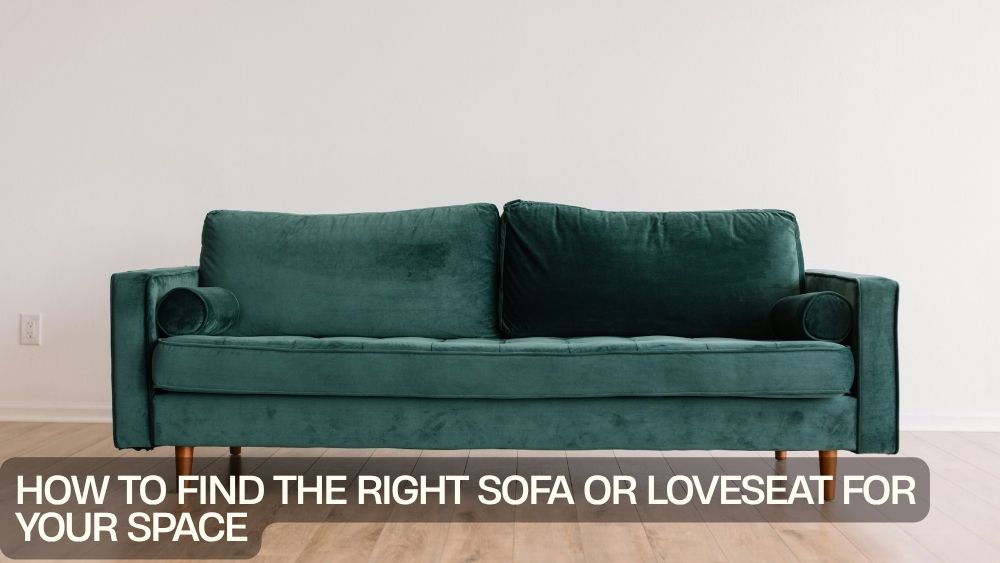
Choosing a sofa sounds simple until you start measuring the room, comparing styles, thinking about comfort, and wondering whether that gorgeous sectional will actually fit through the front door.
The right sofa should do more than fill an empty wall. It should suit the size of your room, support the way you live, complement your decor, and remain comfortable long after the excitement of a new purchase fades.
Whether you're furnishing a compact apartment, upgrading a family living room, or creating a cozy bedroom seating area, understanding how to find the right sofa can save you from expensive mistakes.
From compact loveseats and streamlined sofas to spacious sectionals and convertible sleeper designs, there are plenty of options for modern homes. The trick is knowing what matters before you buy.
If you're ready to explore different designs, start with the collection of sofas and loveseats and compare options based on your room, lifestyle, and seating needs.
Start with Your Space
Before thinking about color, fabric, or style, grab a measuring tape.
The most attractive sofa in the world becomes a problem when it blocks a doorway or leaves no room to walk around the coffee table.
When learning how to choose a sofa for your space, measure:
- Room length and width
- Available wall space
- Doorway width
- Hallways and stairways
- Ceiling height
- Nearby furniture
- Space needed for walking
Remember to measure more than the area where the sofa will sit. You also need to consider how the sofa will enter your home.
A modular design can sometimes make delivery easier because individual sections are easier to maneuver.
Understand the Difference Between a Sofa and Loveseat
The simplest distinction is size.
A traditional sofa generally provides seating for three or more people, while a loveseat is more compact and typically accommodates two.
That difference can completely change how a room functions.
A large family may prefer a spacious sofa or sectional. A couple living in a smaller apartment may get more value from a loveseat combined with an accent chair.
If your room has limited floor space, a loveseat can provide comfortable seating without overwhelming the layout.
How to Choose the Right Loveseat
Learning how to choose the right loveseat starts with understanding your available space.
Loveseats work especially well in:
- Apartments
- Bedrooms
- Home offices
- Guest rooms
- Reading corners
- Small living rooms
A compact Giantex sofa loveseat can work well when you want comfortable seating without committing a large portion of the room to furniture.

Loveseats can also complement a larger sofa. Instead of matching everything perfectly, combine pieces with related colors, textures, or design elements.
Choose the Best Sofa for Your Living Room
The best sofa for your living room depends on how you use the space.
Ask yourself a few practical questions.
Do you regularly host guests?
Do children use the sofa?
Do you watch television from it?
Do you like stretching out while reading?
Do you need extra sleeping space?
Do you want built-in storage?
Your answers matter more than simply choosing whatever style is currently popular.
For a household that values everyday practicality, a 3-seater sofa with storage pockets and pocket springs combines seating with useful side storage and supportive construction.

Consider Your Sofa Size Carefully
A sofa size guide can help you avoid one of the most common furniture mistakes: choosing a sofa based on room dimensions alone.
A sofa may technically fit along a wall while still making the room feel crowded.
Leave enough space for:
- Walking paths
- Coffee tables
- Side tables
- Doors
- Reclining or lounging
- Other seating
The sofa should occupy the room without swallowing it.
For smaller rooms, a compact two- or three-seat design may be ideal. Larger spaces can accommodate sectionals or deeper sofas.
Think About Loveseat Size Too
A loveseat size guide is particularly useful when furnishing compact spaces.
A loveseat should provide enough seating for comfortable everyday use without consuming the floor area you need for other furniture.
Measure the loveseat's full width and depth. Then mark those dimensions on the floor with painter's tape or newspaper.
This simple trick gives you a surprisingly accurate idea of how the furniture will feel in the room.
It is much better to discover that something is too large before delivery day.
Sofas for Small Living Rooms
Small rooms need furniture with discipline.
When shopping for sofas for small living rooms, look for streamlined arms, moderate depth, compact proportions, and versatile functionality.
Avoid choosing a massive sofa simply because you love the design.
A smaller sofa can actually make the room feel more luxurious because it leaves enough open space around it.
Consider pairing a compact sofa with:
- A small coffee table
- Slim side tables
- Wall-mounted storage
- A lightweight rug
- One accent chair
This creates a balanced layout without making the room feel packed.
Best Loveseat for Small Spaces
The best loveseat for small spaces should provide comfortable seating while preserving valuable floor area.
An armless loveseat can be particularly useful because removing bulky armrests reduces the visual footprint.
A modern armless loveseat sofa offers a streamlined option for rooms where every inch matters.

Armless designs can also work well in bedrooms, studios, waiting areas, and compact lounges.
Modern Sofas for Contemporary Homes
Modern sofas often focus on clean lines, practical proportions, and understated details.
They work well with contemporary interiors because they provide a strong foundation without introducing excessive visual clutter.
Pair a modern sofa with:
- Minimalist tables
- Neutral walls
- Simple lighting
- Textured rugs
- Contemporary artwork
You do not need every piece of furniture to look identical. A little contrast gives the room character.
Stylish Loveseats Add Flexible Seating
Stylish loveseats are useful when you want to add personality without purchasing another full-size sofa.
A loveseat can become a focal point in a reading area or serve as secondary seating in a larger living room.
You can also use contrasting textures to create interest. For example, pair a fabric sofa with a leather-look accent chair or place a textured loveseat against a smooth wall.
The room feels collected rather than manufactured.
Comfortable Living Room Seating Should Come First
A beautiful sofa that feels uncomfortable is an expensive sculpture.
When evaluating comfortable living room seating, pay attention to seat depth, cushion firmness, back support, arm height, and upholstery.
If possible, sit on the sofa before buying.
Think about your preferred posture.
Do you sit upright?
Do you curl up?
Do you stretch out?
Do you regularly lie down?
A deep sofa may be perfect for lounging but less comfortable for someone who prefers upright seating.
There is no universal definition of comfort. Your habits should make the decision.
Consider Convertible Sofas for Flexible Homes
Furniture becomes particularly valuable when it can serve more than one purpose.
A convertible sofa can function as seating during the day and transform into a sleeping surface when needed.
The 3-in-1 convertible sofa bed with USB charging and adjustable backrest adds several practical features to a flexible seating solution.

This type of design can work particularly well in:
- Studio apartments
- Guest rooms
- Home offices
- Small living rooms
- Multipurpose spaces
When square footage is limited, multifunctional furniture becomes especially valuable.
Storage Can Make a Sofa More Useful
Storage is another feature worth considering.
A space-saving sofa with pockets or hidden compartments can help keep remote controls, books, blankets, chargers, and other small items organized.
A sleeper sofa with storage can be even more useful in compact homes.
For example, the 2-in-1 pull-out sofa bed with storage combines seating, sleeping functionality, and storage in one piece.

That is the kind of furniture that quietly earns its floor space.
When a Sectional Sofa Makes Sense
Large living rooms can benefit from sectional seating.
An L-shaped configuration creates a natural conversational area while providing plenty of room to stretch out.
A 110-inch L-shaped modular sectional sofa can provide a substantial seating area for spacious rooms.

Before choosing a sectional, carefully check its dimensions and orientation.
An L-shaped sofa can dominate a small room, but in a large open-plan space, it can provide much-needed structure.
L-Shaped Sofas for Open-Plan Rooms
An L-shaped sofa can act as a subtle room divider.
Instead of building walls, use the sofa to visually separate the living area from a dining space or kitchen.
This makes living room furniture part of the architecture.
An L-shaped configuration also creates a natural corner for lounging, making it particularly appealing for family rooms and entertainment spaces.
For added versatility, a Giantex sectional sofa with chaise lounge provides an L-shaped arrangement with a chaise for stretching out.

Sofa Styles for Every Home
There is no single correct sofa style.
Different designs suit different lifestyles and interiors.
Minimalist Sofas
Choose clean lines, neutral colors, and simple shapes.
Contemporary Sofas
Look for modern silhouettes and functional details.
Sectional Sofas
Ideal for larger families and spacious rooms.
Loveseats
Excellent for compact rooms and secondary seating.
Sleeper Sofas
Useful when you need occasional sleeping space.
Upholstered Sofas
Great for adding softness and texture.
The best sofa style is the one that fits both your home and your habits.
Think About Fabric and Maintenance
A sofa's upholstery affects more than its appearance.
Consider how much use the furniture will receive.
If you have children or pets, you may prioritize easy-care upholstery. If the sofa sits in a formal room, appearance may matter more.
Also think about color.
Light colors can make a room feel airy, while darker shades can create a grounded atmosphere. Neutral colors offer flexibility when you change your decor.
Texture matters too. Corduroy, woven fabrics, and other tactile materials can make a sofa feel warmer and more inviting.
Create a Cohesive Living Room
Your sofa should work with the rest of the room.
When planning living room design ideas, consider the relationship between:
- Sofa
- Rug
- Coffee table
- Lighting
- Curtains
- Wall decor
- Accent chairs
Start with the sofa and build outward.
If the sofa has a bold texture, keep other large surfaces relatively simple. If the sofa is neutral, use pillows, artwork, and rugs to introduce personality.
A Practical Sofa and Loveseat Buying Guide
Before making your final choice, run through this checklist.
Measure the room. Know exactly how much space you have.
Measure entry points. Check doors, hallways, elevators, and stairways.
Choose your seating capacity. Decide how many people need to sit comfortably.
Think about function. Consider storage, sleeping, lounging, or everyday family use.
Check proportions. Match the furniture scale to the room.
Prioritize comfort. Pay attention to seat depth, firmness, and back support.
Choose suitable upholstery. Consider durability and maintenance.
Think long-term. Pick a style you'll still enjoy after the latest trend disappears.
Final Thoughts
Learning how to find the right sofa is really about understanding your space and your lifestyle.
The perfect sofa is not necessarily the biggest, softest, or most fashionable option. It is the one that fits your room naturally, provides the comfort you need, and supports the way you actually live.
For compact homes, consider loveseats for small spaces, armless designs, and multifunctional sleeper sofas. Larger rooms can accommodate sectionals and deeper seating. If flexibility matters, look for storage and convertible features.
Most importantly, measure before buying and think beyond the showroom.
Your sofa will probably become one of the hardest-working pieces of furniture in your home. It will host conversations, movie nights, afternoon naps, quiet reading sessions, and probably a few snack-related accidents along the way.
Choose accordingly.
Explore sofas and loveseats to compare different designs and find comfortable, stylish seating that works for your space.