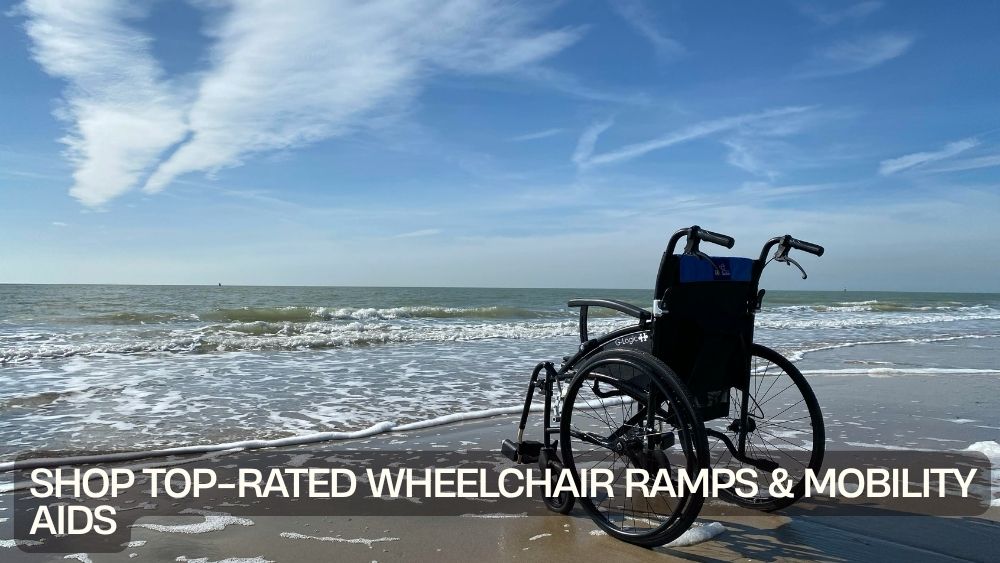
Accessibility should make everyday life easier, not more complicated. The right wheelchair ramp or mobility aid can make entrances, doorways, vehicles, and other spaces more convenient to navigate while giving users and caregivers greater confidence.
Whether you're looking for Wheelchair ramps for home access, portable solutions for travel, or practical Mobility aids for everyday use, choosing the right equipment starts with understanding your needs.
A good accessibility setup considers ramp length, surface, weight capacity, portability, storage, and the environment where the equipment will be used. With the right combination of products, small barriers can become much easier to manage.
Explore the complete wheelchair ramps and mobility solutions to find products designed around accessibility, convenience, and mobility.
Why Wheelchair Ramps Matter
Steps and raised thresholds can create major obstacles for wheelchair users and people using mobility scooters.
A properly selected ramp provides a smoother transition between different surfaces and can improve access to homes, garages, porches, vehicles, and other locations.
Top-rated ramps come in many configurations, so there is no single solution for every situation.
Before choosing one, consider:
- Height of the step or threshold
- Available ramp space
- User and equipment weight
- Ramp length
- Surface conditions
- Portability requirements
- Storage space
- Intended frequency of use
These factors help determine whether a portable, folding, threshold, or more permanent ramp is appropriate.
Portable Wheelchair Ramps for Home and Travel
Portable wheelchair ramps are popular because they can be moved between locations.
They can be useful for temporary access needs, travel, visiting friends and family, or situations where a permanent ramp isn't practical.
A portable ramp should be easy to handle without sacrificing stability. Aluminum models are especially popular because they can provide a useful combination of strength and manageable weight.
For anyone comparing Best portable wheelchair ramps for home and travel, portability should be considered alongside ramp capacity and dimensions.
Aluminum Wheelchair Ramps Offer Practical Durability
Aluminum wheelchair ramps for durability are a popular choice for both home and travel applications.
Aluminum construction can offer strength while keeping the ramp relatively manageable to transport.
The surface is equally important. A ramp should provide reliable traction in the conditions where it will actually be used.
For example, outdoor applications may require greater attention to rain, dirt, temperature changes, and other environmental factors.
Folding Ramps Make Storage Easier
Space can be a major consideration in homes and vehicles.
Folding ramps for easy storage and transport can solve that problem by allowing the ramp to be folded when it is not being used.
A folding design can be especially useful for caregivers who need to transport accessibility equipment regularly.
Before purchasing, check the folded dimensions and weight. A ramp may be technically portable but still difficult to lift or place in a vehicle if it is too heavy for the intended user.
A Portable Ramp for Steps, Stairs, and Doorways
One of the most versatile options for everyday accessibility is a portable folding ramp.
The VEVOR Portable Wheelchair Ramp is designed for applications involving steps, stairs, doorways, thresholds, and curbs.

Its aluminum construction, folding design, non-slip surface, and stated 800-pound capacity make it a substantial option for users comparing Wheelchair ramps with high weight capacity.
Always verify the actual ramp dimensions, load requirements, slope, and compatibility with the specific wheelchair or mobility device before use.
Threshold Ramps for Small Height Changes
Not every accessibility problem involves a staircase.
Sometimes the obstacle is a small doorway threshold or raised transition between surfaces.
Threshold ramps for doorways and small steps are designed specifically for these situations.
They can help create smoother transitions where a full-length ramp would be unnecessary or impractical.
Threshold ramps may be useful around:
- Exterior doors
- Interior doorways
- Garage entrances
- Raised thresholds
- Small steps
- Sliding doors
Measure the height of the obstacle carefully before selecting a threshold ramp.
Mobility Aids for Everyday Independence
Ramps are only one part of an accessible environment.
Mobility aids for independent living can help users navigate daily activities with greater convenience.
Depending on individual needs, mobility equipment may include:
- Wheelchairs
- Transport chairs
- Mobility scooters
- Walking aids
- Ramps
- Handrails
- Accessibility accessories
The right combination depends on the user's mobility requirements and the environments they regularly navigate.
Choose a Wheelchair Based on Your Needs
Sometimes accessibility starts with choosing the right mobility device.
For users who need a practical manual wheelchair, the Lightweight Folding Wheelchair for Adults offers a folding design with swing-away footrests, desk-length arms, and a stated 330-pound capacity.

A lightweight folding wheelchair can be particularly useful when transportation and storage are important considerations.
When comparing wheelchairs, look beyond weight alone. Consider seat dimensions, armrests, footrests, folding mechanism, weight capacity, and how the chair will be transported.
Transport Chairs for Caregivers
A transport chair can serve a different purpose from a traditional self-propelled wheelchair.
Mobility equipment designed for assisted transportation can be useful when a caregiver or another person will push the chair.
The VEVOR Foldable Steel Transport Wheelchair features a folding configuration, a 24-inch-wide seat, and a stated 300-pound capacity.

For caregivers, portability can be especially important because the chair may need to be stored in a vehicle between trips.
Mobility Scooter Ramps Need Extra Consideration
Mobility scooters and power wheelchairs can be heavier than standard manual wheelchairs.
That makes Mobility scooter ramps particularly dependent on appropriate load capacity and ramp length.
Before choosing a ramp, consider the combined weight of:
- The mobility device
- The user
- Any accessories or cargo
Never assume that a ramp suitable for one wheelchair will automatically be suitable for every scooter or powered mobility device.
The ramp's stated capacity and the equipment manufacturer's recommendations should both be considered.
Think About Ramp Length
One of the biggest mistakes shoppers can make is focusing only on weight capacity.
Ramp length matters because it affects the slope.
A taller step generally requires a longer ramp to create a more manageable incline. The appropriate slope depends on the equipment, application, user capabilities, and applicable accessibility requirements.
For this reason, don't choose a ramp simply because it fits your budget or looks convenient.
Measure the vertical rise first.
Then determine the ramp length required for your intended application.
Non-Slip Surfaces Improve Confidence
Non-slip wheelchair ramps for safety can provide important traction, particularly in environments where moisture or debris may be present.
A ramp surface should provide dependable grip while remaining compatible with the wheels of the mobility device.
Outdoor users should pay particular attention to weather conditions.
Rain, snow, mud, and dirt can affect traction, so keeping the ramp clean and inspecting its surface regularly is important.
Accessibility Solutions for Vehicles
Accessibility doesn't stop at the front door.
Many wheelchair users and caregivers also need solutions for vehicle access.
Ramps for vans and vehicle access can make transporting mobility equipment more convenient, depending on the vehicle and ramp configuration.
Vehicle applications require careful attention to:
- Ramp length
- Vehicle height
- Ramp width
- Weight capacity
- Storage dimensions
- Surface stability
- Loading angle
Always confirm that a ramp is suitable for the specific vehicle and mobility device before using it.
Helpful Equipment for Challenging Outdoor Conditions
Mobility and vehicle access sometimes involve uneven outdoor surfaces.
Products designed for traction and difficult terrain can be useful in certain vehicle situations.
For example, traction boards with TPR are designed for use on challenging surfaces such as mud, snow, and sand.

These are not wheelchair ramps, so they should not be treated as a substitute for accessibility equipment. However, they can be relevant to broader vehicle mobility and recovery needs.
Safety Accessories and Accessibility Planning
A complete accessibility setup may involve more than the primary ramp.
Handrails and accessibility accessories can provide additional support around steps, entrances, and other areas where users may need assistance.
When planning accessibility improvements, walk through the space from the user's perspective.
Ask:
- Where are the barriers?
- Where does the user need additional support?
- Is there enough clearance?
- Is the surface stable?
- Is the lighting adequate?
- Can the equipment be stored safely?
- Can a caregiver operate it comfortably?
Accessibility works best when the entire route is considered rather than one obstacle in isolation.
Portable Solutions for Caregivers
Caregivers often need equipment that can move between different locations.
Lightweight portable ramps for caregivers can be easier to transport and set up than larger permanent systems.
However, lightweight should never mean unsuitable for the intended load.
Always compare the ramp's weight capacity with the combined weight of the user and mobility device.
Also consider whether the caregiver can safely lift, unfold, position, and secure the ramp without assistance.
Modular Ramp Systems for Permanent Access
For frequently used entrances, a temporary portable ramp may not always be the best solution.
Modular ramp systems for permanent home access can provide a more structured approach for homes requiring long-term accessibility.
Permanent or semi-permanent installations require careful planning around:
- Available space
- Entry height
- Ramp configuration
- Handrails
- Surface conditions
- Local building requirements
- Accessibility standards
For major home modifications, professional assessment and installation may be appropriate.
ADA-Compliant Wheelchair Ramps for Homes
When searching for ADA-compliant wheelchair ramps for homes, don't rely solely on product descriptions.
Accessibility requirements can depend on the specific application, property type, location, and installation.
If compliance is important for your project, verify applicable requirements and consult a qualified professional when necessary.
A ramp that physically works for a wheelchair may not automatically satisfy every accessibility standard.
How to Choose the Right Mobility Aid
Choosing Mobility aids for seniors and disabled individuals should start with the user's actual needs.
Consider:
Mobility Level
Determine whether the person can walk independently, requires support, or uses a wheelchair or scooter.
Environment
Think about indoor floors, outdoor paths, steps, thresholds, vehicles, and other surfaces.
Transportation
If equipment travels regularly, prioritize folding or portable designs where appropriate.
Weight Capacity
Always verify the manufacturer's stated capacity.
User Comfort
Seat dimensions, armrests, footrests, and overall ergonomics can influence daily usability.
Caregiver Requirements
If someone else will operate the equipment, make sure they can safely handle it.
Wheelchair Ramp Installation and Setup Guide
Proper setup is just as important as buying the correct ramp.
Before use, inspect the ramp for visible damage and confirm that it is positioned on a stable surface.
Check that:
- The ramp is fully deployed
- Connections are secure
- The surface is stable
- The ramp has adequate clearance
- The load remains within its stated capacity
- Wheels have sufficient traction
- The slope is appropriate for the intended device
Never improvise a ramp installation when doing so could compromise stability.
Consider Your Storage Requirements
Accessibility equipment can be surprisingly large.
Before purchasing, think about where the ramp or mobility aid will live when it isn't being used.
Folding ramps can be easier to store in:
- Vehicles
- Garages
- Closets
- Utility rooms
- Storage areas
Measure your available space before buying.
A ramp that works beautifully at the doorway but cannot be stored conveniently may become frustrating over time.
Portable vs Permanent Ramps
Choosing between portable and permanent options depends on how frequently the access route is used.
Portable Ramps
Best suited to temporary access, travel, multiple locations, and situations where flexibility matters.
Permanent Solutions
Better suited to frequently used entrances where accessibility is a long-term requirement.
Threshold Ramps
Useful for small height differences rather than large staircases.
Folding Ramps
Useful when transportation and storage are important.
There is no universal winner. The right choice depends on the environment.
Final Thoughts
Good accessibility equipment can make everyday movement more convenient and help create a more usable environment for wheelchair users, mobility scooter users, caregivers, and families.
From Portable wheelchair ramps and aluminum folding designs to threshold solutions, wheelchairs, transport chairs, and other Mobility aids, the most important step is choosing equipment that matches the actual application.
Measure first. Check capacity. Consider portability. Think about the surface and slope. And always follow the manufacturer's setup and safety instructions.
For users searching for Best ramps for power wheelchairs and scooters, the same principle applies: choose based on the complete combination of user, mobility device, environment, and intended use.
Explore the complete wheelchair ramps collection to discover accessibility products designed to support practical mobility at home, on the road, and beyond.