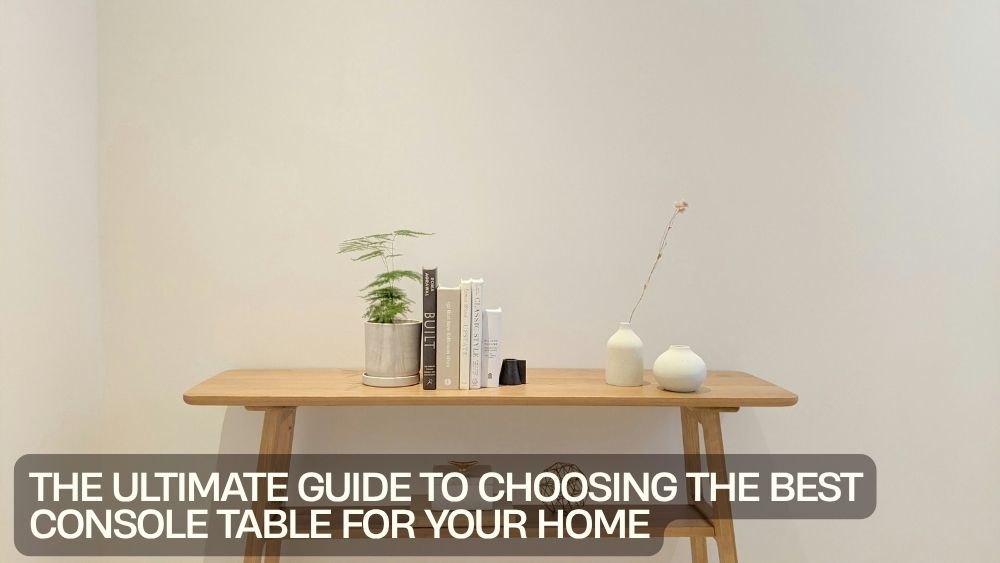
A console table may look like a simple piece of furniture, but it can quietly transform an entire room. Tucked behind a sofa, placed beneath a mirror, or positioned in an entryway, the right table adds storage, personality, and structure without demanding too much floor space.
That makes choosing one more important than it first appears.
Today’s best console tables for home interiors come in countless shapes, finishes, sizes, and configurations. Some focus on minimalist style. Others offer shelves and drawers for serious organization. Some are designed for narrow hallways, while longer models can anchor a spacious living room.
So, how do you find the right one?
This guide walks you through everything you need to know, from dimensions and placement to materials, storage, style, and functionality. By the end, you will have a much clearer idea of which console table deserves a place in your home.
If you are ready to explore different designs, browse the console tables collection for options suited to a range of rooms and decorating styles.
What Is a Console Table?
A console table is a narrow, versatile table designed to fit against walls, behind sofas, or in transitional spaces such as hallways and entryways.
Unlike bulky cabinets or large sideboards, console tables usually have a slim profile. That makes them useful when you want extra surface area without sacrificing too much floor space.
They can hold decorative accessories, lamps, books, keys, baskets, plants, photographs, and everyday essentials.
Some designs also include shelves, drawers, charging stations, or integrated lighting.
That flexibility explains why console tables for entryways and living rooms remain popular in modern interiors.
Start With Where You Will Place It
Before thinking about color or style, decide where the table will live.
Its location will determine the size and design you need.
Console Tables for Entryways
The entryway is one of the most natural places for a console table.
A well-positioned table creates a landing zone for keys, wallets, mail, sunglasses, and other items you tend to drop when you walk through the door.
Pair it with a mirror above the table and a small lamp or decorative bowl on the surface. Add a basket underneath for shoes, bags, or other accessories.
This simple arrangement can make an entrance feel organized and intentional.
If your hallway is narrow, look for a slim design that provides useful surface space without interfering with foot traffic.
Console Tables for Living Rooms
In the living room, a console can serve several purposes.
Place it behind the sofa to create a finished look and provide space for lighting and decor. Position it against an empty wall to create a decorative display. Or use it near an entrance to connect the living room with an adjacent hallway.
Console tables for living rooms are especially useful in open-plan homes because they can help visually define different areas.
The key is to choose a design that works with the scale of your existing furniture.
Measure Before You Buy
A beautiful console table that does not fit your space is still the wrong table.
That makes measuring one of the most important steps in any console table buying guide.
Measure the available width first. Then check the depth and height.
If you plan to place the table behind a sofa, measure the sofa height as well. A console that is dramatically taller or shorter than the sofa can look visually unbalanced.
For an entryway, measure the hallway width and leave enough room for people to walk comfortably.
Do not forget doors, drawers, nearby chairs, radiators, and other furniture. Every inch matters when working with tight spaces.
Follow a Simple Console Table Size Guide
There is no universal console table size because homes and furniture layouts vary.
Instead, think in terms of proportion.
A narrow hallway usually benefits from a slim table. A large wall can handle a longer console with multiple storage sections.
For example, a compact console may work well in an apartment entryway, while a long sofa table can provide better balance behind a large sectional.
The furniture should feel proportional to the surrounding room.
That is the heart of a useful console table size guide: measure the available area and select a table that fills the space without overwhelming it.
Narrow Console Tables for Small Spaces
Small rooms do not mean you have to give up style.
Narrow console tables for small spaces can provide valuable surface area while maintaining an open floor plan.
Look for slim frames, open shelving, and streamlined silhouettes.
A narrow table with vertical storage can be particularly useful because it uses height without extending too far into the room.
A great example is this 43.31-inch solid wood narrow console table with a two-tier design.

Its narrow profile makes this type of design suitable for hallways, compact living rooms, and other areas where floor space is precious.
Choose Storage Based on Your Needs
Not every console table needs drawers and cabinets.
Sometimes an open shelf is enough.
If you mainly want a decorative surface for lamps, plants, artwork, or accessories, a simple design may be ideal.
If you need to hide clutter, however, choose console tables with storage.
Drawers can hold smaller objects such as keys, stationery, chargers, and remote controls. Shelves can accommodate baskets, books, or decorative boxes.
Think about what you want the table to accomplish before choosing its configuration.
Open Shelves vs. Drawers
Both options have their strengths.
Open shelves create an airy appearance. They also make frequently used items easy to access.
Drawers provide concealed storage and help create a cleaner visual appearance.
If you want flexibility, choose a console that combines both.
A longer console with drawers and shelving can become a genuine organizational hub while still looking stylish.
For larger rooms, a 70.8-inch console table with three storage drawers and a shelf can provide substantial storage while working as a statement piece behind a sofa or along a long wall.

Think About Your Home's Style
Your console table should feel connected to your existing decor.
Modern rooms often benefit from clean silhouettes, simple hardware, and restrained finishes.
Farmhouse interiors may suit natural wood tones, substantial tops, and rustic details.
Vintage-inspired spaces can handle more character, texture, and traditional design elements.
The goal is not necessarily to match every piece of furniture. Instead, create a sense of visual harmony.
Modern Console Tables
Modern console tables often use simple shapes and streamlined construction.
They work particularly well in minimalist interiors where every furniture piece needs to look intentional.
A metal frame combined with a warm wood-inspired top can create a modern industrial feel without making the room look cold.
For example, this three-tier 47-inch console table with a metal frame and oak finish brings together open storage and a clean silhouette.

Farmhouse Console Tables
Farmhouse styling brings warmth into a room.
Natural-looking wood, chunky tops, warm brown finishes, and simple construction can make a console feel welcoming.
This style works particularly well in entryways, living rooms, and hallways where you want furniture to add character without appearing overly formal.
Consider a Console With Extra Features
Furniture has become more functional, and console tables are no exception.
Some designs now include charging stations, integrated lighting, multiple shelves, or other practical features.
A charging station can be particularly useful in an entryway where household members need a convenient place to recharge phones and devices.
This four-tier entryway console table with a charging station and LED lights demonstrates how a traditional furniture concept can become much more functional.

Features like these are worth considering if you want your furniture to do more than simply look good.
Material Matters
The material affects appearance, durability, maintenance, and overall character.
Wood-inspired finishes create warmth and work with many decorating styles.
Solid wood can provide a substantial, natural appearance, particularly in farmhouse and rustic interiors.
Metal frames can introduce a contemporary or industrial feel while creating a visually lighter structure.
Reclaimed-wood-inspired finishes can add texture and character without requiring an elaborate design.
Think about your existing furniture and choose a material that complements rather than competes with it.
Think About What Goes on Top
The surface of a console table is prime decorating territory.
But there is a fine line between curated and crowded.
Start with one larger focal item, such as a mirror, artwork, or lamp. Then add smaller accessories around it.
Try combining different heights. A tall lamp, medium-sized vase, and low decorative tray can create visual movement.
Plants can add natural texture. Books can introduce color and personality. Baskets can provide practical storage.
The best decorative console tables leave enough breathing room for every item to stand out.
Use a Mirror to Create a Focal Point
One of the easiest entryway furniture ideas is to pair a console table with a mirror.
A large mirror can make a hallway feel brighter and more spacious while giving the console a clear visual anchor.
Choose a frame that complements the table.
For a modern table, try a simple geometric frame. For farmhouse furniture, a wood frame can reinforce the warm aesthetic.
The combination creates an instant entryway vignette.
Use a Console Behind the Sofa
A sofa console can solve an awkward furniture-layout problem.
If your sofa floats in the middle of a large room, the back can sometimes look unfinished.
A console table behind it creates a visual transition and gives you a surface for lamps, books, plants, and decor.
This is especially useful in open-plan homes.
Choose a table that is close to the sofa's height and leave enough clearance for comfortable movement.
Long Console Tables for Larger Rooms
Large rooms often need furniture with enough visual weight to feel balanced.
A short console can disappear against a large wall or sectional.
A longer design can create a stronger focal point and provide additional storage.
Long modern home furniture can also help connect different areas of an open-plan space.
If you have a large sofa or expansive wall, consider a console that fills more of the available width while maintaining comfortable walking space.
Consider a Vintage-Inspired Design
Not every home needs an ultra-modern aesthetic.
Vintage-inspired furniture can bring personality and warmth into contemporary spaces.
A narrow vintage console with an open shelf can work beautifully in an entryway or living room.
This 63-inch vintage console table with a narrow profile and open shelf offers a character-rich approach while maintaining practical proportions.

Pair it with neutral walls, warm lighting, framed artwork, and natural accessories for a relaxed interior.
Reclaimed-Wood Looks Add Character
A reclaimed-wood-inspired console can create an aged, textured appearance that gives the room more personality.
These designs work especially well with rustic, industrial, farmhouse, and eclectic interiors.
A reclaimed-wood-look console sofa table with one drawer and one shelf combines storage with a rustic accent-table aesthetic.

Use it in an entryway, behind a sofa, or along an empty living room wall.
Make Functionality Part of the Design
The most successful functional console furniture does not sacrifice appearance for practicality.
Instead, storage becomes part of the design.
Shelves can create visual rhythm. Drawers can provide clean lines. Metal frames can make storage look lighter. Wood finishes can add warmth.
When function is integrated into the design, you get furniture that works harder without looking like a storage solution.
Avoid These Common Console Table Mistakes
Choosing the right table also means avoiding a few common problems.
Buying Without Measuring
Never guess the dimensions.
Measure the space and compare those measurements with the table's specifications.
Choosing Too Much Furniture
A console should support the room, not dominate it.
If the surrounding space is already crowded, choose a lighter design.
Ignoring Traffic Flow
Entryways need clear walking paths.
A beautiful table is not useful if people constantly bump into it.
Overloading the Surface
Decorative accessories should enhance the furniture rather than bury it.
Leave some empty space.
Forgetting Storage Needs
If clutter is your main problem, a decorative table without storage may not solve anything.
Choose drawers or shelves when organization is important.
Build a Stylish and Practical Interior
A console table can become much more than an accent piece.
It can organize your entryway, finish a living room layout, create a display area, provide hidden storage, or introduce a new design element into your home.
The best approach is to start with function and then layer in style.
Measure your space. Think about placement. Decide how much storage you need. Consider your preferred materials and finishes. Then choose a design that complements your existing furniture.
Whether you prefer stylish console tables, farmhouse-inspired designs, narrow tables for compact spaces, or feature-packed modern furniture, the right choice can make your room feel more complete.
Final Thoughts
The perfect console table does not need to shout for attention.
It simply needs to work.
It should fit the available space, support your lifestyle, complement your decor, and provide the right amount of storage or display area.
A narrow console can make a small hallway more functional. A long sofa table can anchor a spacious living room. A farmhouse design can add warmth. A modern table can sharpen a minimalist interior.
That versatility is what makes console tables such valuable pieces of home decor furniture.
Take your measurements, identify your needs, choose your style, and think about how you want the room to feel.
Then let the furniture do its job.