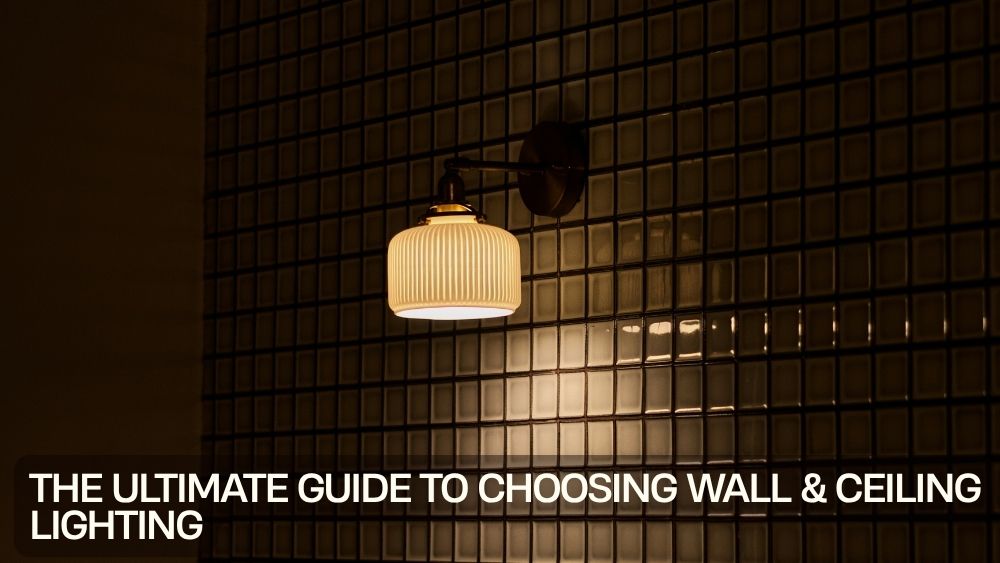
Lighting can completely change how a room feels. The right fixture can make a small space appear more open, highlight architectural details, create a cozy atmosphere, or turn a plain ceiling into a design feature.
That is why choosing Ceiling lighting and wall fixtures deserves more thought than simply picking the first attractive lamp you find. Good lighting balances function, atmosphere, style, room size, and energy use.
This Lighting guide walks through the essentials of choosing Wall and ceiling lights for different rooms, from living areas and bedrooms to hallways, kitchens, bathrooms, garages, and workspaces.
If you're ready to explore different styles and fixtures, browse the full collection of wall and ceiling lighting and discover options for creating a more functional and inviting home.
Why Wall and Ceiling Lighting Matters
Lighting is one of the foundations of good interior design.
Furniture establishes the layout. Colors establish the mood. Lighting brings the entire room to life.
Thoughtfully selected Interior lighting can:
- Improve visibility
- Create atmosphere
- Highlight architectural features
- Define different areas
- Make rooms feel larger
- Add decorative character
- Improve everyday functionality
The best lighting plan rarely relies on a single fixture. Instead, it combines different types of illumination to create layers.
Understand the Three Main Types of Lighting
Before choosing fixtures, understand the basic lighting layers used in modern Home lighting.
Ambient Lighting
Ambient lighting provides general illumination throughout the room.
Ceiling fixtures, chandeliers, and flush mounts commonly serve this purpose.
Task Lighting
Task lighting focuses illumination where specific activities happen.
Examples include:
- Kitchen counters
- Desks
- Bathroom mirrors
- Reading areas
- Workbenches
Accent Lighting
Accent lighting draws attention to specific features such as artwork, architectural details, shelves, or textured walls.
Wall sconces can work particularly well as accent fixtures.
Combining all three creates a more balanced lighting design.
Choose Ceiling Lighting Based on Room Size
Room dimensions should influence your choice of Ceiling lights.
A large room may require multiple fixtures or a larger central light. Smaller rooms often benefit from compact flush-mount or semi-flush designs.
Before purchasing, consider:
- Ceiling height
- Room dimensions
- Existing natural light
- Furniture placement
- Intended use
- Fixture size
A fixture that looks perfect online can feel surprisingly oversized once installed. Measure first, admire later.
Flush-Mount Lighting for Low Ceilings
Flush-mount fixtures sit close to the ceiling, making them ideal for rooms with limited vertical clearance.
They work well in:
- Bedrooms
- Hallways
- Kitchens
- Laundry rooms
- Entryways
For utility-focused areas, the VEVOR 4FT LED Wraparound Light offers a practical LED solution with adjustable color temperatures for spaces such as garages, offices, kitchens, and laundry rooms.

Pendant Lights vs Flush-Mount Ceiling Lights
The choice between Pendant lights vs flush mount ceiling lights often depends on both ceiling height and visual style.
Pendant Lights
Pendant fixtures hang down from the ceiling and can become strong decorative focal points.
They're particularly useful above:
- Dining tables
- Kitchen islands
- Breakfast counters
- Entry areas
Flush-Mount Fixtures
Flush mounts remain close to the ceiling and offer a cleaner, more compact appearance.
They're better suited to:
- Low ceilings
- Narrow hallways
- Bedrooms
- Utility rooms
If you have high ceilings, pendant lighting can add visual interest. If space is tight, flush mounting keeps the room feeling open.
Add Character with Wall Sconces
Wall sconces are among the most versatile lighting fixtures available.
They can provide ambient, task, or accent lighting depending on their placement and design.
Install them beside:
- Beds
- Mirrors
- Hallways
- Artwork
- Entry doors
- Bathroom areas
For an industrial interior, the Industrial Black Wall Sconce Pipe Light brings a distinctive pipe-inspired design that works especially well with modern industrial décor.

Explore Industrial Wall Lighting
Industrial lighting remains popular because it combines functional construction-inspired details with strong visual character.
Metal finishes, exposed pipe designs, and darker tones can add personality to otherwise simple interiors.
The Modern Water Pipe Wall Sconce in Rustic Red introduces a bold rustic-industrial accent that can work well in living rooms, bedrooms, offices, or entryways.

Modern Wall Lighting Ideas for Interiors
When exploring Modern wall lighting ideas for interiors, think beyond basic illumination.
Wall fixtures can become part of the room's decorative composition.
Try placing sconces:
- Symmetrically beside a bed
- Along a hallway
- Around a mirror
- Beside artwork
- Near architectural features
Symmetry can create a polished appearance, while asymmetrical placement can feel more artistic and contemporary.
Consider Water-Pipe Ceiling Designs
Lighting fixtures don't always have to disappear into the background.
The 5-Head Water Pipe Ceiling Light in Brushed Silver combines multiple light heads with a distinctive industrial-inspired structure.

A multi-head design can distribute light across a larger area while creating a strong visual centerpiece.
Chandeliers Can Become the Focal Point
If you want your lighting to make a statement, a chandelier can provide both illumination and drama.
The Waterpipe Ceiling Light 5-Light Chandelier in Brushed Copper combines a five-light configuration with a brushed copper finish and water-pipe-inspired styling.

It can work particularly well in dining rooms, kitchens, living spaces, and industrial-style interiors.
Wall and Ceiling Lighting for Living Rooms
The living room typically requires multiple lighting layers.
Instead of relying entirely on one central fixture, combine:
- Ceiling lighting
- Wall sconces
- Floor lamps
- Table lamps
- Accent lighting
This creates flexibility for different activities.
Bright ambient lighting works for cleaning and entertaining. Softer accent lighting creates a more relaxed atmosphere for evenings.
Ceiling Lighting for Bedrooms
Bedrooms benefit from softer, more controlled illumination.
Ceiling lighting for living rooms and bedrooms should reflect how each space is used.
For bedrooms, consider:
- Warm color temperatures
- Dimmable fixtures
- Wall sconces beside the bed
- Soft ambient illumination
- Adjustable task lighting
Avoid excessively harsh lighting where possible. Your bedroom should not feel like an interrogation room.
Wall Lighting for Hallways and Bathrooms
Hallways often receive little natural light, making wall fixtures particularly useful.
Wall lighting for hallways and bathrooms can improve visibility while adding decorative detail.
In hallways, sconces can create rhythm along a long wall.
In bathrooms, carefully positioned fixtures around mirrors can provide useful task lighting.
Always choose fixtures appropriate for the specific environment and follow electrical and installation requirements.
Dimmable Wall and Ceiling Lights
Dimmable wall and ceiling lights offer greater control over room atmosphere.
A single fixture can support different activities throughout the day.
For example:
- Bright lighting for cleaning
- Medium lighting for conversation
- Soft lighting for relaxing
- Focused lighting for tasks
Before purchasing a dimmable fixture, ensure that the fixture, bulb, dimmer, and electrical system are compatible.
Energy-Efficient Ceiling Lighting
Modern LED fixtures can provide excellent illumination while using less energy than many traditional lighting technologies.
Energy-efficient ceiling lighting is particularly useful in areas where lights remain switched on for long periods.
LED fixtures can also offer advantages such as:
- Long operating life
- Lower energy consumption
- Reduced maintenance
- Multiple color temperatures
- Instant illumination
When comparing fixtures, consider both upfront cost and long-term operating costs.
Recessed Lighting for Ceilings
Recessed lighting for ceilings creates a streamlined appearance because the fixture sits within the ceiling rather than projecting downward.
It's particularly useful when you want:
- Minimalist aesthetics
- Even illumination
- Clean ceiling lines
- Focused task lighting
Recessed fixtures can also be combined with decorative fixtures to create layered lighting.
Track Lighting for Walls and Ceilings
Track lighting for walls and ceilings provides flexibility because individual heads can often be directed toward specific areas.
It's useful for:
- Art displays
- Kitchens
- Home offices
- Retail-style spaces
- Living rooms
Track systems work especially well when furniture layouts change frequently.
Lighting Placement Tips for Walls and Ceilings
Correct placement can matter just as much as fixture selection.
Before installation, consider where people stand, sit, walk, work, and gather.
Living Rooms
Use layered lighting to create flexibility.
Bedrooms
Place bedside wall sconces at comfortable reading height and use softer ambient ceiling fixtures.
Hallways
Position wall fixtures to create even illumination without excessive glare.
Kitchens
Combine ceiling lighting with focused task illumination over work surfaces.
Dining Areas
Center pendant or chandelier lighting over the table whenever practical.
Best Lighting for High Ceilings
High ceilings create opportunities for dramatic lighting.
Best lighting for high ceilings may include:
- Chandeliers
- Pendant clusters
- Large statement fixtures
- Track systems
- Layered recessed lighting
Choose fixtures that visually fill the vertical space rather than appearing lost in a large ceiling.
Large rooms often benefit from multiple lighting layers instead of one oversized fixture doing all the work.
Think About Color Temperature
Color temperature affects the atmosphere of a room.
Warm light generally creates a cozy and relaxed feeling, making it popular for bedrooms and living rooms.
Cooler light can feel more energetic and focused, which can be useful for workspaces, garages, kitchens, and utility areas.
Some modern fixtures offer adjustable color temperatures, allowing you to change the atmosphere according to the task.
Match Lighting to Your Interior Style
Wall and ceiling lighting styles explained becomes much easier when you consider your existing décor.
Industrial
Look for metal, pipe-inspired, black, copper, and exposed structural details.
Modern
Choose clean lines, simple shapes, and integrated LED technology.
Traditional
Consider decorative finishes, warm materials, and classic silhouettes.
Minimalist
Choose fixtures with simple forms and restrained visual details.
Rustic
Look for natural textures, aged finishes, and warm tones.
The best fixture should feel like part of the room rather than an object that was dropped into it at the last minute.
Affordable vs Premium Lighting Fixtures
You don't always need the most expensive fixture to create beautiful lighting.
Affordable wall and ceiling lighting can provide excellent functionality, especially for utility rooms, bedrooms, and smaller spaces.
Meanwhile, Premium lighting fixtures for home can become statement pieces that define an interior.
When comparing products, consider:
- Material quality
- Light output
- Fixture dimensions
- Installation requirements
- Energy efficiency
- Finish durability
- Replacement parts or bulbs
Value comes from the combination of quality, performance, and suitability for your space.
A Simple Lighting Checklist
Before buying new fixtures, ask yourself:
- What is the room used for?
- How much natural light does it receive?
- What is the ceiling height?
- Do I need ambient, task, or accent lighting?
- Should the fixture be dimmable?
- What color temperature suits the room?
- Does the fixture match my décor?
- Is the size appropriate?
- How much energy will it use?
- Does installation require professional assistance?
Answer these questions and your shortlist will shrink considerably.
Final Thoughts
Choosing the right Ceiling lighting and wall fixtures is about creating a balance between function and atmosphere.
The best lighting plan considers room size, ceiling height, furniture placement, daily activities, décor, brightness, and energy efficiency. Instead of treating each fixture as an isolated purchase, think about how your lighting choices work together.
From versatile Wall sconces and practical Ceiling lights to pendant fixtures, recessed lighting, track systems, and LED solutions, there are countless ways to transform your home.
Whether you're designing Home lighting for a cozy bedroom, upgrading a kitchen, brightening a hallway, or creating a dramatic living room centerpiece, thoughtful lighting can make the entire space feel more considered.
Explore the complete collection of Wall and ceiling lights and find fixtures that bring practical illumination and distinctive style to every room.