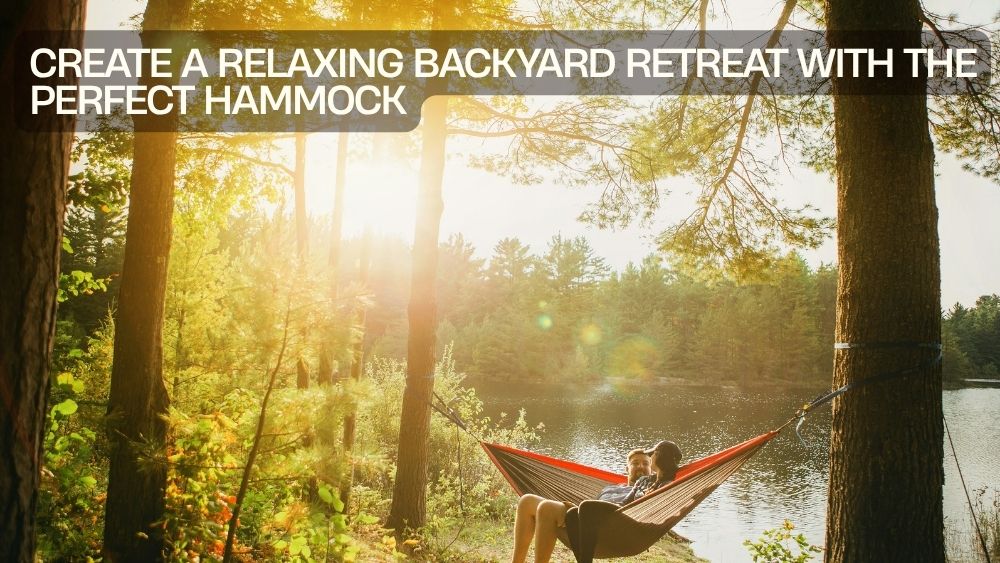
A backyard can be much more than a patch of grass, a patio, or a place to store outdoor furniture. With the right setup, it can become your favorite place to slow down, enjoy fresh air, read a book, take a nap, or simply escape the noise of everyday life.
One simple addition can completely change the mood: a hammock.
The right hammock brings comfort without demanding much space. It can turn an empty corner into a peaceful retreat and give your outdoor area a natural focal point. Whether you prefer a spacious hammock for two, a hanging chair for reading, or a freestanding design that can move around your yard, there is an option for almost every outdoor lifestyle.
If you're planning your own retreat, explore the full range of hammocks and outdoor relaxation options to find a style that suits your space.
Start With the Space You Have
The first step in creating a relaxing backyard retreat is understanding your available space.
You do not need a huge garden to create a comfortable relaxation zone. A small patio corner, covered porch, garden area, or section of lawn can work beautifully.
Look at how the space is currently used.
Is there an unused corner? Is there a shady spot beneath trees? Do you have an open patio that needs a focal point?
Once you identify the ideal location, think about how much room the hammock needs to hang or stand safely.
Leave enough clearance around the hammock so people can walk comfortably without bumping into it.
Choose the Right Hammock Style
Your hammock should match the way you want to relax.
A traditional hammock works well when you want to stretch out completely. A double hammock provides more room and can accommodate two people when specifically designed and rated for shared use.
A hanging hammock chair creates a more upright position, making it useful for reading, chatting, or enjoying your morning coffee.
A freestanding hammock is another excellent option when you do not have suitable trees or permanent mounting points.
The heavy-duty freestanding outdoor hammock offers a dedicated setup with a stand, headrest, and side pocket, making it suitable for a backyard, patio, or poolside relaxation area.

Make the Hammock the Centerpiece
A great retreat needs a focal point.
Instead of placing the hammock randomly in the yard, design the surrounding area around it.
Position the hammock where it can become the visual center of your relaxation zone. Add greenery around the edges, a small table nearby, and comfortable accessories that support the way you plan to use the space.
For example, you could create a reading corner with a hammock, side table, outdoor lamp, and a few potted plants.
Or create a more social space with additional chairs surrounding the hammock.
The goal is to make the area feel intentional.
Create a Backyard Hammock Retreat for Two
If relaxation is better when shared, consider a double hammock.
A wider design can give two people enough room to relax together when its specifications permit shared use. It can also provide extra space for one person who prefers to stretch out.
An 83-inch patio double hammock is designed as a wide outdoor hammock bed for two and includes a pillow.

A double hammock can become an inviting spot for couples, friends, or family members to enjoy the backyard together.
Always check the manufacturer's weight capacity before using a hammock with more than one person.
Add a Hanging Hammock Chair
Not everyone wants to lie flat.
A hanging chair can provide a comfortable alternative for reading, listening to music, talking with friends, or enjoying a cup of coffee.
A macrame hanging hammock chair with two cushions adds a softer seating experience while bringing decorative texture to the space.

Hammock chairs can work particularly well in smaller patios because they generally occupy less horizontal space than a traditional hammock.
They can also create a stylish feature in a covered porch, garden, or other suitable outdoor area.
Think About Comfort First
The best hammock for relaxation is the one that feels comfortable for the way you actually use it.
Think about your preferred position.
Do you like lying completely flat? Look for a wider hammock.
Do you prefer sitting upright? A hammock chair may be a better fit.
Do you want to relax for long periods? Consider features such as cushions, headrests, and side pockets.
A hammock should make relaxation easier, not require constant adjustment.
Comfort also depends on correct setup. Always follow the manufacturer's installation instructions and recommended hanging dimensions.
Add a Canopy for Shade
Sunlight can make an otherwise beautiful relaxation area uncomfortable during the hottest part of the day.
If your backyard receives strong direct sunlight, consider a shaded seating option.
A three-seat outdoor patio swing with canopy offers a covered seating design for a backyard, porch, or garden.

A canopy can make a seating area more useful during sunny periods while also adding visual structure to the outdoor space.
For traditional hammocks, you can also consider positioning them beneath naturally shaded areas where appropriate.
Use Your Garden as a Natural Backdrop
A relaxing outdoor space should feel connected to nature.
If you have a garden, place your hammock where you can enjoy the plants, flowers, trees, or landscaping around you.
This can make the hammock feel less like a standalone product and more like part of the garden.
Garden hammock ideas can include placing a hammock near flowering plants, beneath mature trees, or beside a garden path.
Keep the hammock away from thorny plants, unstable branches, and other hazards.
If you use trees as support points, make sure they are healthy and suitable for the installation method specified by the hammock manufacturer.
Build a Peaceful Outdoor Space
Creating a peaceful outdoor space is about reducing visual and physical clutter.
You do not need dozens of decorations.
Instead, focus on a few elements that create calm.
Try combining:
- A comfortable hammock
- Green plants
- Soft outdoor lighting
- A small side table
- Weather-resistant cushions
- Natural textures
- A clean, uncluttered layout
Keep unnecessary furniture away from the relaxation zone.
The less crowded the area feels, the easier it becomes to mentally disconnect.
Add Comfortable Outdoor Seating
A hammock does not have to be the only seating in your backyard.
Additional comfortable outdoor seating can make the area more useful when friends and family visit.
An outdoor swing can complement a hammock while providing room for multiple people.
For example, an outdoor porch swing with adjustable canopy and cushion provides three-seat capacity, shade, and cushioned seating.

This can help transform a simple hammock area into a larger outdoor gathering space.
Create Separate Relaxation Zones
If you have a larger backyard, divide the space into zones.
One section can be dedicated to dining.
Another can become a lounge area.
A quieter corner can become your personal hammock retreat.
This approach makes the backyard feel more organized without making it feel formal.
For example:
Relaxation zone: Hammock, side table, plants, and soft lighting.
Social zone: Outdoor swing, chairs, and a coffee table.
Dining zone: Outdoor table and chairs.
Different zones allow the same backyard to support different activities.
Choose a Hammock for Your Patio
A hammock for patio and garden spaces should fit the scale of your outdoor area.
If your patio is compact, a hanging chair may be a better choice than a large hammock.
If you have a spacious patio, a freestanding hammock can become a striking centerpiece.
Measure the area before buying.
Consider the hammock's full dimensions, including its swing or hanging space. Make sure doors, pathways, furniture, and other features remain accessible.
Good planning prevents the hammock from becoming an obstacle.
Think About Materials
Material affects comfort, appearance, and durability.
When comparing durable backyard hammocks, consider where the hammock will be used and how much exposure it will receive.
Outdoor conditions can include:
- Direct sunlight
- Rain
- Humidity
- Dust
- Wind
- Temperature changes
Choose a material appropriate for your intended environment and follow the manufacturer's care instructions.
If the hammock will remain outdoors for long periods, proper protection and maintenance can help preserve its condition.
Create a Cozy Backyard Retreat for Every Season
Your backyard retreat does not need to disappear when summer ends.
With a little planning, you can adapt the space throughout the year.
During warm weather, focus on shade, breathable materials, and fresh greenery.
During cooler months, add suitable outdoor blankets and weather-resistant cushions.
If your outdoor area includes appropriate heating equipment, you can also combine the hammock zone with other comfortable seating areas for extended outdoor use.
The hammock itself may not be suitable for every weather condition, so protect or store it according to the manufacturer's recommendations.
Add a Side Table for Everyday Essentials
A small table can make your hammock dramatically more convenient.
Keep your essentials within easy reach:
- Water bottle
- Phone
- Sunglasses
- Book
- Snacks
- Small speaker
Choose a weather-resistant table that does not interfere with the hammock's movement.
If your hammock includes a side pocket, use it for smaller items.
The freestanding outdoor hammock with stand mentioned earlier includes a side pocket and headrest, giving you useful features for longer lounging sessions.
Create a Reading Retreat
Your hammock can become the perfect reading corner.
Place it somewhere quiet and add a small table nearby.
Use soft outdoor lighting for evenings and keep your favorite books within reach.
If you prefer an upright position, a hammock chair may work particularly well.
The gentle movement of a hanging seat can create a comfortable environment for reading without requiring a large outdoor setup.
Make the Space Feel More Private
Privacy can make relaxation easier.
If your backyard is visible to neighbors or nearby streets, consider suitable privacy solutions.
Plants, trellises, outdoor screens, fencing, or strategically positioned landscaping can help create a more secluded atmosphere.
Avoid blocking required access, ventilation, or visibility around any outdoor equipment.
The objective is to create a peaceful retreat without compromising safety or practicality.
Consider a Freestanding Hammock
A freestanding design can solve one of the most common hammock problems: finding suitable support.
If your backyard lacks appropriately positioned trees, a stand provides its own structure.
A freestanding hammock can also offer flexibility when you want to change your outdoor layout.
Before placing the stand, choose a level, stable surface appropriate for the product.
Check the manufacturer's recommendations for assembly and placement.
Explore Indoor-Outdoor Hammock Chairs
Some hammock chairs can work across multiple environments.
An indoor-outdoor hanging rope hammock chair with cushions can provide a relaxing seating option inside or outside when installed correctly.

This flexibility can be useful if you want to create a consistent relaxation style throughout your home.
Before installing a hanging chair indoors or outdoors, confirm that the ceiling, beam, mounting point, and hardware are suitable for the product and intended load.
Think About Hammock Maintenance
A hammock may be low-maintenance, but it still benefits from regular attention.
Inspect the fabric, stitching, ropes, straps, hooks, stand, and other components before use.
Look for:
- Fraying
- Loose stitching
- Damaged hardware
- Worn straps
- Cracks or instability
- Signs of weather damage
Do not use a hammock if important components appear damaged.
Clean the hammock according to the manufacturer's instructions, and store or protect it when severe weather is expected.
A Simple Hammock Buying Guide
Before choosing your hammock, ask yourself a few questions.
How much space do I have?
Measure your available area before shopping.
How will I use it?
Sleeping, reading, lounging, socializing, or camping can require different designs.
Will one or two people use it?
Choose a model specifically rated for the intended number of users.
Do I have suitable support points?
If not, consider a freestanding hammock.
Do I need shade?
A canopy or naturally shaded location can improve daytime comfort.
What style fits my backyard?
Consider colors, materials, and design alongside comfort.
How much maintenance am I willing to do?
Outdoor exposure means every hammock requires some level of care.
Prioritize Safe Installation
Relaxation starts with a secure setup.
Always follow the manufacturer's instructions for installation, suspension, spacing, and weight capacity.
Use suitable trees, structures, stands, or mounting hardware.
Never attach a hammock to an unstable object.
Inspect the setup regularly, particularly after severe weather.
For hanging chairs and swings, make sure the mounting structure can safely support the intended load.
If you are uncertain about a permanent installation, consult a qualified professional.
Final Thoughts
A relaxing backyard retreat does not require a complicated renovation.
The right hammock can provide the foundation for a peaceful outdoor space. From a spacious double hammock for two to a compact hanging chair or freestanding hammock, the best choice depends on how you want to relax and how much space you have.
Start with comfort.
Then think about shade, privacy, greenery, lighting, seating, and practical accessories.
A wide double hammock for outdoor lounging can become a shared retreat.
A macrame hammock chair can create a stylish reading corner.
A canopy outdoor swing can add comfortable group seating.
A freestanding hammock can provide flexibility when permanent mounting is not practical.
And a rope hanging hammock chair can bring the same relaxed feeling indoors or outdoors when properly installed.
The result does not need to be extravagant. It simply needs to feel comfortable, calm, and distinctly yours.
Explore hammocks for relaxing outdoor spaces and turn an unused backyard, patio, or garden corner into a place where slowing down finally feels like part of the plan.