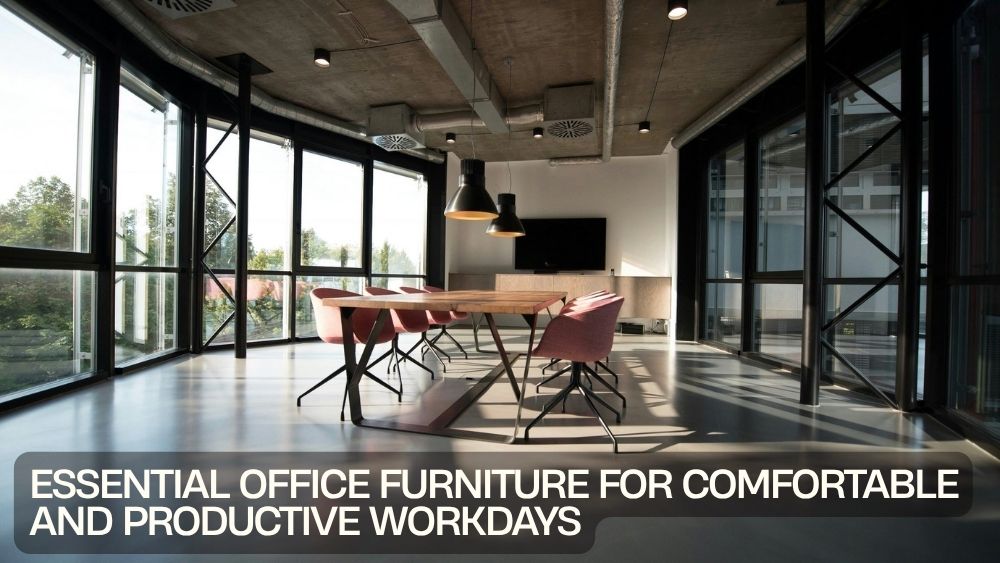
A productive office is not built around a desk alone.
The way a workspace feels throughout the day depends on the entire furniture setup. Your desk needs enough room for your equipment. Your chair needs to support comfortable working. Storage needs to keep paperwork and supplies under control. Even a narrow console table can become useful when it adds organization without consuming valuable floor space.
That is why choosing essential office furniture for comfortable and productive workdays is really about building a complete environment.
Whether you are furnishing a dedicated office, upgrading a remote-work setup, creating a study room, or organizing a shared workspace, the right combination of furniture can make daily tasks smoother and the room considerably easier to use.
Start With Your Office Furniture Needs
Before buying individual pieces, think about everything your office needs to accomplish.
Will it mainly support computer work?
Do you need space for two people?
Will you store paper documents?
Do you work long hours at a desk?
Does the room need additional seating?
Could you benefit from a standing workstation?
Answering these questions helps establish a furniture plan instead of turning the room into a collection of unrelated pieces.
The office room collection can provide a broader starting point when planning a complete office environment.
Choose the Right Office Desk
The desk is usually the centerpiece of an office.
It needs to provide enough working surface without overwhelming the room.
For a single workstation, a conventional computer desk may be sufficient. For shared offices, larger workstations can create dedicated areas for multiple users.
The 2-person industrial double computer desk offers a spacious configuration designed for two people.

This type of setup can be useful for shared offices, study rooms, creative workspaces, or environments where two computer stations need to coexist.
Consider a Standing Desk for Flexible Work
Sitting at a desk for an extended period can make your working routine feel repetitive.
A height-adjustable desk gives you the option to alternate between sitting and standing throughout the day.
The electric height-adjustable standing desk includes memory presets and a sedentary reminder, providing features designed around flexible workstation use.

A standing desk can be particularly appealing for people who want to vary their position during the workday.
The important point is flexibility. Instead of locking yourself into one working position, an adjustable workstation lets you adapt the desk to different activities.
Make Your Chair Part of the Setup
A comfortable desk cannot compensate for an uncomfortable chair.
If you spend several hours working, studying, gaming, or reading, your chair becomes one of the most important pieces of office furniture.
Look for a chair that suits the way you use your workspace and provides enough support for extended sessions.
The Giantex gaming recliner chair takes a more relaxed approach to office seating.

A recliner-style chair can be useful as secondary seating or in spaces that combine work with relaxation, entertainment, or gaming.
Organize Paperwork With Filing Storage
Digital documents may dominate modern offices, but physical paperwork has not completely disappeared.
Invoices, contracts, receipts, records, forms, and important documents may still need a dedicated home.
A filing cabinet prevents these materials from taking over your desk.
The vertical filing cabinet with two drawers provides vertical storage while taking advantage of floor space efficiently.

Vertical furniture can be particularly useful in smaller offices because it adds storage without requiring a wide footprint.
Keep Important Documents Secure
Some paperwork should not simply sit in an open shelf.
If your office contains confidential records, business documents, or personal information, lockable storage can provide an additional layer of organization and security.
The four-drawer metal filing cabinet with lock and wheels combines multiple drawers with a lock and mobile design.

Wheels can also make rearranging the office easier when you need to change the layout.
This is a good example of functional office furniture solving several problems at once: storage, organization, mobility, and controlled access.
Use Vertical Space Wisely
Office storage does not always need to spread across the floor.
Vertical furniture can help maximize the room while keeping walking areas open.
If your office is small, consider furniture that provides height rather than excessive width.
Shelving and tall filing cabinets can help create additional storage capacity while preserving valuable floor space.
This approach works particularly well in compact offices where every piece of furniture needs to justify its footprint.
Add a Console Table for Flexible Storage
Not every useful office surface needs to be a conventional desk.
A narrow console table can provide additional space for accessories, printers, paperwork, décor, or charging devices without consuming the footprint of a full workstation.
The Hoobro console table with outlets and USB ports combines a narrow profile with storage and built-in power features.

This type of furniture can be particularly useful along an office wall, behind a sofa, or near an entry area connected to the workspace.
Create More Storage Without Adding Bulk
Small offices benefit from furniture that performs multiple jobs.
A console table with shelves can act as storage, display space, and an additional surface.
The four-tier console table provides several levels for organizing items while maintaining a relatively narrow profile.

You could use the shelves for books, office accessories, boxes, decorative pieces, or equipment that does not need to remain on your primary desk.
The goal is to keep your main workstation focused while giving everything else a designated location.
Build Separate Work Zones
A productive office does not necessarily mean one giant desk covered with everything you own.
Creating separate zones can make the room easier to navigate.
Computer zone: Place your monitor, keyboard, mouse, and primary equipment here.
Paperwork zone: Keep filing storage and documents nearby.
Storage zone: Use shelves or cabinets for supplies and less frequently used equipment.
Relaxation zone: If the room allows, add comfortable seating for reading or taking breaks.
This arrangement can make a multifunctional office feel much more structured.
Think About Office Ergonomics
Comfort should influence furniture choices from the beginning.
Your desk, chair, monitor, and accessories should work together rather than being selected independently.
A desk that is too high or too low can make comfortable positioning difficult. A chair that does not suit the desk height can create another problem.
Adjustable furniture can provide more flexibility, especially in shared spaces where different people use the same workstation.
The aim is to create a setup where your equipment is easy to reach and your body can remain in a comfortable working position.
Choose Furniture for the Size of Your Room
Large offices give you more freedom, but small rooms require smarter decisions.
For a compact office, prioritize furniture that combines several functions.
A narrow console can provide storage without occupying much floor space. A vertical filing cabinet can take advantage of height. A corner workstation can use an otherwise awkward area.
For a larger room, you may have space for a generous desk, dedicated storage, additional seating, and separate work zones.
The best office furniture for productive workspaces is furniture that matches the scale of the room.
Think About Shared Workspaces
Not every office belongs to one person.
A home office may be shared by partners. A study room may support two students. A small business may need multiple computer stations.
In these situations, furniture layout becomes particularly important.
A two-person desk can provide a single coordinated workstation rather than forcing two separate desks into the room.
The large industrial double workstation mentioned earlier can be useful when two users need to work side by side while maintaining separate personal areas.
Shared spaces benefit from clear boundaries. Give each person enough surface area and storage so that the desk does not become a daily negotiation.
Choose Durable Furniture for Everyday Use
Office furniture experiences plenty of wear.
Drawers open and close repeatedly. Chairs are used for hours. Desks support computers and equipment every day. Storage cabinets may become increasingly full.
For that reason, durability should be part of your buying decision.
Consider construction, materials, drawer operation, stability, and how frequently the furniture will be used.
For a professional workspace, durable furniture can provide better long-term value than pieces chosen purely for appearance.
Keep Your Office Visually Organized
Organization is partly practical and partly visual.
A room can technically contain plenty of storage and still look cluttered if everything remains exposed.
Use drawers and cabinets for items that do not need to be visible.
Use open shelving for things that are attractive or frequently accessed.
Keep the primary desktop relatively clear.
This creates a workspace that feels easier to enter and easier to maintain.
Match Furniture Styles Across the Room
Your office does not need every piece to come from the same collection.
But visual coordination can make the room feel more intentional.
Think about finishes, colors, materials, and overall design language.
A modern desk can pair with minimalist storage.
A rustic workspace can incorporate warm wood tones.
A professional office may benefit from darker finishes and clean lines.
The key is balance.
You want different furniture pieces to complement each other without making the room look overly coordinated.
Give Technology Its Own Space
Today's office may contain a surprising amount of equipment.
Computer monitors, laptops, printers, speakers, chargers, phones, headphones, and other accessories all need somewhere to live.
If your desk becomes the storage location for every device you own, usable working space disappears quickly.
Use shelves, drawers, consoles, and dedicated storage to move secondary equipment away from the primary workspace.
Cable management also becomes important.
A clean desk is easier to work at, easier to photograph during video calls, and much easier to maintain.
Make Storage Accessible
Storage only works if you can actually reach what is inside.
Frequently used items should be positioned close to your main workstation.
Occasionally used supplies can move into less accessible cabinets or shelves.
This simple hierarchy can reduce unnecessary movement during the workday.
For example, keep pens, notebooks, and headphones within easy reach. Store backup supplies and rarely used equipment farther away.
Your furniture layout should support the rhythm of your day.
Create a Better Work-Study Environment
An office can serve multiple roles.
During working hours, it may function as a professional workstation. Later, it may become a study area or personal planning space.
This is another reason versatile furniture matters.
A spacious desk can support computers and books.
Storage cabinets can organize study materials and paperwork.
A comfortable chair can support focused sessions.
Additional console furniture can keep supplies and equipment from crowding the main desk.
The result is a room that can adapt without requiring a complete rearrangement every evening.
Don't Forget Empty Space
Furniture planning is not about filling every available inch.
Empty floor space has value.
It gives you room to move, pull out a chair, access cabinets, and change positions throughout the day.
When planning your office, imagine the furniture with people actually using it.
Can you walk comfortably?
Can you open drawers?
Can you move your chair?
Can you access your storage?
If the answer is no, the room needs less furniture or a better layout.
Build Your Office Around Your Priorities
Every workspace has different priorities.
A remote professional might prioritize an adjustable desk and comfortable seating.
A small business owner may need substantial filing storage.
A student might prefer a spacious computer desk with room for books.
A shared workspace may need a two-person workstation.
A compact home office may prioritize narrow furniture and vertical storage.
There is no universal office furniture checklist.
Instead, create your own based on what you do most often.
A Practical Office Furniture Checklist
Before upgrading your workspace, consider these essentials:
Desk: Choose enough surface area for your equipment and daily activities.
Chair: Prioritize comfort and compatibility with your desk.
Storage: Add cabinets, drawers, or shelves based on your paperwork and supplies.
Flexible workstation: Consider a height-adjustable desk if you want to alternate between sitting and standing.
Secondary surfaces: Use console tables for additional storage or equipment.
Shared workstations: Choose larger desks when two people need to work in the same room.
Organization: Give frequently used items accessible storage.
Room layout: Leave enough space for comfortable movement.
This creates a practical foundation without encouraging unnecessary furniture purchases.
Final Thoughts
The most effective essential office furniture for comfortable and productive workdays works as a system.
A desk provides the main working surface. A comfortable chair supports longer sessions. Filing cabinets keep paperwork organized. Adjustable desks introduce flexibility. Console tables create additional storage and surfaces without necessarily demanding a large footprint.
The secret is choosing each piece according to the way your office actually functions.
Start by understanding your daily tasks. Measure your room. Identify your equipment and storage requirements. Then build around those needs.
Whether your office is compact or spacious, shared or private, traditional or modern, the right furniture can make the difference between a room that merely contains work and one that genuinely supports it.
A productive office does not need to be complicated.
It simply needs the right pieces, in the right places, doing the right jobs.