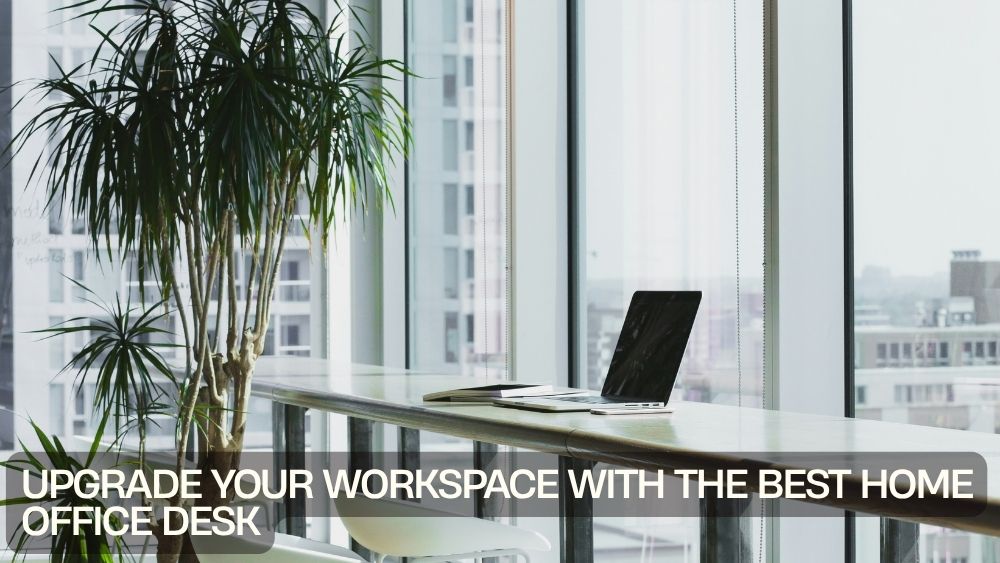
A great home office starts with a desk that earns its place.
When your workspace feels cramped, cluttered, or awkwardly arranged, even simple tasks can become frustrating. The right desk changes that equation. It gives your computer a proper home, creates room for focused work, adds useful storage, and helps your office feel like a space designed for productivity rather than a corner temporarily occupied by a laptop.
Whether you work remotely, study from home, manage a business, or need a creative workspace, choosing the right desk can make a noticeable difference.
The challenge is knowing what to look for.
From compact corner desks to spacious L-shaped workstations, today's best home office desks come in a range of shapes and configurations. The trick is matching the desk to your room, equipment, working style, and everyday needs.
Start Your Workspace Upgrade With the Right Shape
Desk shape has a bigger impact than many people expect.
A conventional rectangular desk works well against a wall and offers a straightforward workstation. But if your room has an unused corner, a corner or L-shaped desk can turn that overlooked space into valuable working real estate.
An L-shaped desk collection is worth exploring if you need more workspace without placing a large rectangular desk in the center of the room.
L-shaped desks can create natural zones for computers, paperwork, writing, or creative projects.
For smaller rooms, triangular corner designs can be particularly useful. They use the corner itself as the foundation of the workstation, helping preserve open floor space elsewhere.
Match the Desk to Your Workload
Your desk should reflect what you actually do during the day.
A person working exclusively from a laptop has different requirements from someone running two monitors, speakers, a desktop computer, notebooks, and office accessories.
Before buying, make a quick inventory of your everyday equipment.
Ask yourself:
- How many monitors do I use?
- Do I need space for a desktop tower?
- Will I use the desk for writing or paperwork?
- Do I need storage within arm's reach?
- Do I regularly charge several devices?
- Will the desk also be used for studying or creative work?
These questions help determine whether you need a compact workstation or a more substantial home office setup.
Make Small Home Offices Feel Bigger
Limited space does not mean you have to settle for an uncomfortable workstation.
A well-designed corner desk can make an apartment, bedroom, or small office much more efficient.
The floating triangular corner computer desk with storage shelf offers a compact configuration designed around corner placement.

Instead of allowing an awkward corner to become wasted space, you can turn it into a dedicated computer or study area.
This type of space-saving office desk for apartments can be especially useful when your home office shares a room with another activity.
Add Warmth With a Rustic Workstation
Your office furniture does not have to look clinical.
If your home has warm wood tones or a relaxed interior style, a rustic-finish workstation can blend more naturally with the room.
The rustic brown corner computer desk combines a triangular footprint with a writing and computer-friendly surface.

It can work particularly well when you want a home office to feel connected to the rest of your interior rather than separated from it.
Style matters because you are more likely to enjoy spending time in a workspace that feels visually comfortable.
Look for Practical Desk Features
The desktop is only one part of a modern workstation.
Features such as charging stations, keyboard trays, adjustable shelves, and cable openings can make a desk much easier to use.
For example, a triangle corner desk with charging station, keyboard tray, and storage shelf brings several useful features into a compact design.

A charging station can reduce the need to scatter chargers across the room. A keyboard tray can free up valuable desktop space. Shelving provides a convenient location for accessories and supplies.
These details may seem small, but they become increasingly useful during a busy workday.
Create a Professional Home Office
Working from home does not mean your workspace needs to feel informal.
If you meet clients virtually, handle business paperwork, or run a company from home, a more professional desk can help define the working environment.
The front reception office desk with adjustable shelf and lockable drawer offers a more formal approach to home office furniture.

Adjustable shelving can provide flexibility, while a lockable drawer offers a dedicated place for documents and important office supplies.
A professional-looking workstation can also help visually separate work from the rest of your home.
Keep a Minimalist Desk Organized
Minimalism can be incredibly practical in a home office.
A crowded desktop makes it harder to find what you need. It can also make a small workspace feel even smaller.
A minimalist desk setup starts with one simple principle: keep the working surface focused on the things you use most.
The white corner wooden PC laptop computer desk offers a clean workstation option for users who prefer a straightforward setup.

White furniture can also help create a lighter visual atmosphere, especially in smaller rooms.
Pair the desk with simple storage, controlled cable routing, and a comfortable chair for a workspace that feels calm rather than chaotic.
Upgrade to an L-Shaped Workstation
If your current desk constantly feels too small, it may be time to rethink the layout rather than simply add more accessories.
An L-shaped desk provides additional surface area while allowing you to organize activities into separate sections.
One side can become your primary computer station. The other can handle paperwork, planning, writing, or creative projects.
The gray L-shaped computer desk with charging station and adjustable shelf is suited to this kind of flexible workspace.

This configuration can be particularly useful for professionals who switch between digital and physical tasks throughout the day.
Give Dual-Monitor Setups More Room
Multiple monitors can transform productivity, but they also consume substantial desk space.
If you use two displays, measure the width and depth required by your monitor stands or mounting equipment before choosing a desk.
You will also need room for your keyboard, mouse, speakers, notebooks, and other frequently used items.
A spacious workstation can prevent the dreaded desktop squeeze, where every accessory seems to occupy the exact same square inch.
For serious computer users, surface area is not luxury. It is working infrastructure.
Take Cable Management Seriously
Modern desks often support several electronic devices.
Your monitor might connect to a computer. Your phone needs charging. Your speakers need power. Your laptop needs its adapter. Suddenly, one desk has become the headquarters of a small electrical civilization.
Cable holes can help keep that civilization under control.
The large modern L-shaped computer desk with two cable holes and two storage shelves is designed with cable-management openings and integrated storage.

When evaluating modern computer desks for home offices, look beyond the desktop itself. Think about what happens after you plug everything in.
Use Storage to Protect Your Productivity
Storage is one of the easiest ways to make a workspace feel more intentional.
Instead of leaving documents, stationery, headphones, notebooks, and accessories scattered across the desk, give each category a designated location.
Open shelves are useful for items you reach for frequently.
Drawers are better for things that should stay tucked away.
Adjustable shelving provides another layer of flexibility, particularly if your storage needs change over time.
The best desk is not necessarily the one with the most storage. It is the one with the right storage for your routine.
Consider Comfort During Long Workdays
A desk upgrade should improve more than the appearance of your room.
If you spend several hours working every day, desk dimensions matter.
Your chair should fit comfortably beneath the desk. Your keyboard should have enough space. Your monitor should be positioned at a sensible viewing height, and you should have enough room to move naturally.
This is where ergonomic desk ideas for comfortable working become important.
Remember that ergonomics involves the entire workstation, not just the desk. Chair height, monitor positioning, lighting, keyboard placement, and regular movement all contribute to a more comfortable setup.
Choose a Desk That Can Do More
The modern home office is rarely used for only one activity.
Your desk may serve as a workstation in the morning, a study area in the afternoon, and a creative surface in the evening.
That makes versatility valuable.
A desk with enough surface space and practical storage can support remote work, studying, planning, gaming, crafting, writing, and other activities without requiring a completely different setup for each one.
Instead of asking, "What desk do I need today?" consider asking, "What will I use this desk for most often?"
That small change in thinking can lead to a much better purchase.
Match Your Desk to the Room
A desk can look fantastic online and still feel completely wrong in your room.
Consider the surrounding furniture, wall color, flooring, lighting, and overall interior style.
A white desk can create a bright, modern appearance.
Rustic finishes can bring warmth to a room.
Dark office furniture can create a more traditional professional atmosphere.
L-shaped designs can make larger offices feel purposeful, while compact triangular desks can make smaller rooms more efficient.
The goal is not to make your desk dominate the room. It should feel like it belongs there.
Avoid Buying More Desk Than You Need
Bigger is not automatically better.
A huge workstation in a small bedroom can make the entire room feel cramped. Likewise, a tiny desk in a professional home office may quickly become frustrating.
Measure first.
Then consider your equipment and daily activities.
If you only use a laptop, you may not need an enormous desktop. If you operate several monitors and regularly handle paperwork, extra space may be essential.
The best home office desks for productive workspaces are sized according to real requirements.
Build Around Your Productivity Style
Some people prefer a completely clear desktop.
Others need notebooks, reference materials, and equipment within easy reach.
Some workers need two monitors and extensive storage.
Others need nothing more than a laptop and a coffee cup.
There is no single formula for a productive workspace.
Your desk should support the way you concentrate.
If you prefer minimal surroundings, prioritize a clean surface and concealed storage. If you multitask constantly, look for a larger workstation with distinct zones.
The right desk removes friction from your routine.
Upgrade Your Entire Workspace, Not Just the Desk
A new desk is an excellent starting point, but it works best as part of a complete setup.
Pair it with a comfortable office chair. Add suitable lighting. Organize your cables. Keep frequently used accessories within reach. Move unnecessary items away from the main work zone.
Then take a step back.
Does the room make it easy to begin work?
Can you find your essentials quickly?
Do you have enough space for your computer equipment?
Can you move comfortably?
If the answer is yes, your desk is doing its job.
Final Thoughts
The best home office desk is not necessarily the biggest, most expensive, or most fashionable option.
It is the one that fits your space and makes your everyday work easier.
For compact rooms, corner and triangular desks can turn unused areas into productive workstations. For demanding computer setups, L-shaped desks can provide valuable additional surface area. Storage shelves, drawers, charging stations, keyboard trays, and cable-management features can further improve organization.
Before making your choice, consider your room dimensions, equipment, work habits, storage requirements, comfort, and interior style.
Then choose accordingly.
A thoughtfully selected desk can do more than hold your computer. It can become the command center of your home office, bringing structure to your workday and turning an ordinary corner of your home into a space built for focus, flexibility, and productivity.