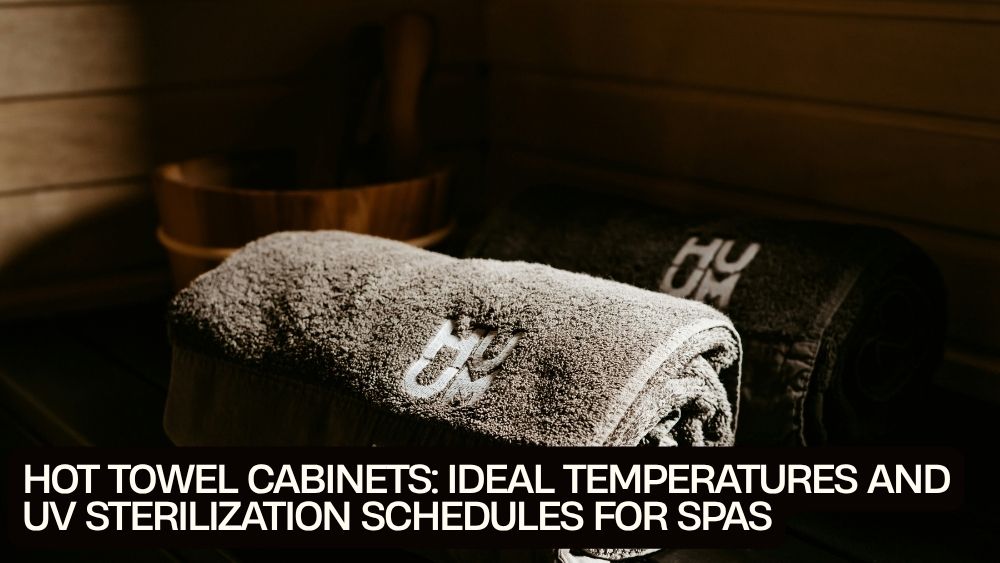
A warm towel can turn an ordinary facial, massage, or skincare treatment into a more relaxing experience. It softens the feeling of cleansing products, adds a comforting touch, and helps clients settle into their appointment.
But for spa owners and salon professionals, getting that perfect towel involves more than switching on a warmer. You need the right temperature, a reliable laundry routine, safe handling practices, and a clear understanding of what the cabinet's UV feature can actually do.
So, what is the ideal towel warmer UV sanitizer temperature setting for a spa, and how often should you run the UV function?
The answer depends on your equipment and treatment protocol. A cabinet's heating temperature is not necessarily the temperature a towel should reach before touching someone's skin. Likewise, a UV lamp is an additional hygiene feature, not an automatic replacement for washing and proper sanitation.
This guide covers practical temperature management, UV use, daily cleaning schedules, and common mistakes to avoid when operating a hot towel cabinet in a professional spa.
What Is the Ideal Temperature for a Spa Hot Towel Cabinet?
There is no single temperature setting that suits every towel warmer, fabric, and treatment. The correct setting depends on the cabinet's design, its operating instructions, and how the towels will be used.
For the VEVOR 23L hot towel warmer featured in this guide, the product manual describes heating towels to approximately 150–180°F (66–82°C) within 10–15 minutes. This is the product's stated heating performance, not a universal recommendation for the temperature of a towel applied directly to a client's skin. (VEVOR hot towel warmer manual)
That distinction matters. A towel that feels pleasantly warm inside a cabinet can still be too hot for facial or body contact.
Cabinet temperature vs. skin-contact temperature
Think of these as two separate measurements:
-
Cabinet or heating temperature: The temperature the appliance reaches during operation, according to its design and specifications.
-
Towel application temperature: The actual temperature of the towel when it touches the client's skin.
The second is what matters most for comfort and burn prevention.
Before placing a warm towel on a client, check its temperature using a suitable thermometer or your salon's established safe-handling procedure. Test the towel carefully, and allow it to cool if it feels excessively hot. Be especially cautious around the face, neck, and other sensitive areas.
Never assume a towel is safe to apply simply because the cabinet's heating cycle has finished.
How long should you warm towels?
The VEVOR 23L model's manual indicates a heating time of approximately 10–15 minutes, but actual results can vary with towel size, moisture level, loading, and starting temperature. (VEVOR hot towel warmer manual)
Use the manufacturer's guidance as your starting point, then establish a repeatable routine for your salon. Avoid overloading the cabinet or packing towels so tightly that air circulation becomes restricted.
If you prepare towels before appointments, check them before use rather than relying entirely on the timer.
How to Choose the Right Towel Temperature for Different Spa Treatments
Different treatments call for different levels of warmth. The goal is client comfort, not the highest temperature the cabinet can achieve.
Facials and skincare treatments
Facial skin can be sensitive, especially after exfoliation, waxing, or the application of active skincare products.
Use a comfortably warm towel rather than an extremely hot one. Test it before application and avoid placing excessive heat on irritated skin.
If a client reports discomfort, remove the towel immediately. Do not use hot towels on areas where the treatment protocol, product instructions, or the client's condition makes heat unsuitable.
Massage treatments
Warm towels can help create a soothing transition before or after a massage. However, the appropriate temperature depends on the treatment, the area being covered, and the client's sensitivity.
Avoid leaving a hot towel folded tightly against one area for an extended period. Use your professional judgment and follow the spa's safety procedures.
Waxing and other sensitive treatments
After waxing or treatments that can temporarily irritate the skin, avoid assuming that a hot towel is appropriate. Follow the treatment protocol and consider whether a cooler towel is the safer choice.
The practical rule: Set the cabinet according to its manual, but assess every towel before it touches a client.
How Does UV Sterilization Work in a Hot Towel Cabinet?
UV light can damage the genetic material of microorganisms, which can limit their ability to reproduce. Certain ultraviolet systems are used for microbial reduction or disinfection under defined conditions.
However, UV performance depends on factors such as wavelength, delivered dose, exposure time, distance from the light source, and whether the target surface receives direct exposure.
This creates an important limitation in towel cabinets: folds, overlapping towels, and shadowed areas may not receive the same UV exposure as directly illuminated surfaces. UV also does not replace the removal of oils, skincare products, or other physical residue through laundering.
The FDA has highlighted the limitations of UV-based treatment, including shadowing and limited penetration, in its discussion of UV disinfection technologies. (FDA UV technology discussion)
Does a UV hot towel warmer sterilize towels?
Be careful with the word sterilize. A cabinet having a UV lamp does not, by itself, establish that the entire towel load has been sterilized.
The VEVOR 23L warmer's manual describes a 6-watt UV light function intended to provide an additional hygiene benefit. That specification alone does not establish a validated sterilization cycle for every towel, fabric arrangement, or microorganism. (VEVOR hot towel warmer manual)
For ordinary spa towels, use properly laundered and completely dried textiles, then follow the cabinet's operating instructions for any additional UV feature.
If your services require a specific level of disinfection or sterilization, confirm that your equipment and procedures meet the applicable requirements. Do not rely on a general-purpose towel warmer as a substitute for validated processes.
What UV Sterilization Schedule Should a Spa Follow?
There is no universal UV schedule that can safely be prescribed for every hot towel cabinet. The appropriate cycle depends on the exact device, its instructions, and any performance claims supported by the manufacturer.
For the VEVOR cabinet, consult the supplied manual for how to activate the UV function and whether it can operate alongside the heating function. The available manual describes these functions as usable together or independently, but it does not establish a universal exposure time that guarantees sterilization of every towel. (VEVOR hot towel warmer manual)
Rather than inventing a cycle duration, use this practical schedule.
Before the first appointment
-
Confirm that the cabinet and its UV function are operating according to the manual.
-
Load only clean, fully laundered towels.
-
Arrange towels according to the manufacturer's loading guidance.
-
Run the heating and UV functions as instructed.
-
Check towel temperature before client contact.
Between clients
-
Remove used towels promptly and place them in the designated laundry container.
-
Never return a used towel to the clean towel supply.
-
Use a fresh, clean towel for each client.
-
Clean any cabinet surfaces that have become soiled, following the manufacturer's instructions.
-
Follow your written hygiene protocol for any required UV operation.
Running the UV lamp between every client is not a substitute for changing the towel. A used towel must not be returned to service just because it has been exposed to UV light.
At the end of the day
-
Remove remaining towels according to your clean-linen handling procedure.
-
Switch off and unplug the cabinet before cleaning if the manual requires it.
-
Clean the interior, racks, door, and handle as directed.
-
Check for moisture, residue, or visible buildup.
-
Inspect the UV lamp and other components according to the manufacturer's maintenance schedule.
Do not extend UV exposure or change the operating procedure in an attempt to compensate for dirty towels, overcrowding, or uncertain device performance. Follow the manufacturer's instructions and replace or service components as recommended.
The Correct Way to Launder and Prepare Spa Towels
A clean towel is the foundation of a good spa hygiene routine. Heating and UV functions should support, not replace, proper laundering.
The US Centers for Disease Control and Prevention (CDC) explains that laundry hygiene depends on a combination of factors, including time, temperature, detergent, mechanical action, and drying. It also recommends following fabric-care instructions and storing clean textiles in a way that protects them from dust and contamination. (CDC laundry and bedding guidance)
Step 1: Separate used towels
Keep used towels away from clean linens. Use a designated laundry container and avoid placing soiled towels on treatment beds, worktops, or shelves holding clean supplies.
If towels are contaminated with body fluids or substances requiring special handling, follow your workplace procedures and applicable local guidance.
Step 2: Wash with an appropriate detergent
Use a suitable laundry detergent and follow the fabric manufacturer's washing instructions. Select a wash cycle appropriate for the towel material and the level of soiling.
Do not assume that every towel can tolerate the same temperature or bleach treatment. Excessive heat or incompatible chemicals can damage fibers and reduce towel life.
Step 3: Dry towels completely
Dry towels thoroughly before placing them in the warmer. Damp towels left in storage or packed into a warm cabinet can develop unpleasant odors and create hygiene concerns.
The CDC recommends completely drying laundered textiles and protecting clean items from contamination during storage and transport. (CDC linen management guidance)
Step 4: Store clean towels properly
Keep freshly laundered towels in a clean, dry, designated storage area. Handle them with clean hands and avoid placing them next to used towels, cleaning products, or other sources of contamination.
Only move towels into the warmer when they are ready for preparation and use.
How to Use a Hot Towel Warmer Safely
A hot towel cabinet is straightforward to operate, but a consistent procedure helps protect both clients and staff.
-
Inspect the appliance. Check the power cord, plug, door, racks, and interior for visible damage or residue.
-
Load clean, dry towels. Follow the manufacturer's capacity and arrangement guidance.
-
Close the door and select the appropriate function. Use only the settings described in the manual.
-
Allow the cabinet to warm. Follow the stated heating time, but do not assume that time alone confirms the towel is safe for skin contact.
-
Check the towel before use. Use a suitable thermometer or established professional temperature-check procedure.
-
Handle towels carefully. Avoid touching hot internal surfaces and use any supplied handling tool as directed.
-
Remove used towels immediately. Keep them separate from clean supplies.
The VEVOR 23L model is described as having a see-through window and two stainless-steel racks. These features can make it easier to monitor the cabinet and organize towels, but they do not remove the need for temperature checks and hygiene procedures. (VEVOR hot towel warmer manual)
Prevent burns and overheating
Keep the cabinet on a stable, suitable surface with the ventilation clearance specified by the manufacturer. Avoid placing flammable materials near the appliance, and do not operate it if the power cord or other components are damaged.
Never use a towel directly on a client's skin without checking its temperature. Extra caution is appropriate for clients with reduced heat sensitivity or skin that is irritated, damaged, or recently treated.
How to Clean and Maintain the Cabinet
Regular maintenance helps keep the warmer hygienic and functioning as intended.
Daily cleaning
At the end of the working day, switch off and unplug the cabinet as directed. Let it cool, remove the racks if they are designed to be removable, and clean the interior and other accessible surfaces using the approved method.
Avoid spraying liquid directly into electrical components, UV fittings, switches, or ventilation openings. Do not use abrasive cleaners or harsh chemicals unless the manufacturer permits them.
Weekly inspection
Once a week, include a closer inspection in your maintenance routine:
-
Check racks for residue, corrosion, or damage.
-
Inspect the door and seals for wear.
-
Look for moisture or staining inside the cabinet.
-
Check the UV lamp and indicator according to the manual.
-
Confirm that the heating function operates normally.
-
Review any unusual odors, inconsistent heating, or other performance changes.
These are practical housekeeping suggestions, not a substitute for any more frequent maintenance required by the manufacturer.
When should you replace the UV lamp?
Follow the manufacturer's replacement interval and instructions for the exact model. Do not estimate UV output based only on whether the lamp visibly lights up. A lamp can illuminate without proving that it delivers the intended germicidal performance.
Switch off and disconnect power before performing any maintenance the manual permits. If the lamp, wiring, or safety features are damaged, stop using the UV function and arrange appropriate service.
Choosing a Hot Towel Cabinet for Your Spa
When comparing towel warmers, look beyond heating speed. Consider capacity, ease of cleaning, loading space, temperature performance, and the manufacturer's instructions for any UV feature.
The VEVOR 23L hot towel warmer with UV function is designed for spa, facial, massage, and salon settings. Its listing describes a 23-liter capacity, two stainless-steel racks, a see-through window, and space for approximately 50–60 towels, depending on towel size and how they are arranged.

That capacity can be useful for busy treatment rooms, but actual loading needs vary. Large bath towels occupy more space than small facial towels, so confirm that the cabinet fits the towels you use most often.
Before purchasing, review the model's operating manual for the heating range, loading limits, UV function, cleaning instructions, and maintenance requirements.
The best cabinet is not necessarily the one with the hottest setting or the most impressive UV claim. It is the one that fits your workload and can be operated safely within a clear, repeatable hygiene routine.
Frequently Asked Questions
What temperature should a hot towel warmer be set to for facials?
Follow the cabinet's manual for its operating settings, then check the actual towel temperature before applying it to the client. There is no universal cabinet setting that guarantees a safe skin-contact temperature.
How long should UV run in a towel warmer?
Use the exposure procedure specified by the manufacturer for your exact model. Do not assume a fixed number of minutes guarantees sterilization unless the device's validated instructions explicitly support that claim.
Can UV replace washing spa towels?
No. UV is not a substitute for laundering. Towels should be properly washed, completely dried, and stored clean before being placed in the warmer.
Can I leave towels in the cabinet all day?
Follow the manufacturer's instructions for operating duration and towel storage. Avoid keeping damp towels in a warm cabinet for extended periods, and maintain a clean-linen handling procedure throughout the day.
Is a 23L towel warmer large enough for a busy salon?
It depends on your towel size, client volume, and treatment schedule. The VEVOR model is listed as holding approximately 50–60 towels, but the number that fits comfortably will vary with the way towels are folded and loaded.
Is a UV towel warmer the same as a medical sterilizer?
Not automatically. A UV feature in a towel warmer does not establish that the appliance achieves validated sterilization. If your services require a specific disinfection or sterilization standard, verify the device's intended use and applicable requirements.
Final Thoughts
The best hot towel routine combines comfortable warmth, proper laundering, careful handling, and realistic expectations about UV technology.
For spa owners, the most important practices are simple: follow the cabinet's operating instructions, never apply an unchecked hot towel to skin, wash and dry towels thoroughly, keep used linens separate, and use the UV feature only as directed.
If you're upgrading your treatment room, explore the VEVOR 23L hot towel warmer with UV function and review its specifications against your daily needs.
A warm towel should leave a client relaxed, not overheated. Build your process around comfort and hygiene, and your cabinet becomes a useful part of a professional spa experience.