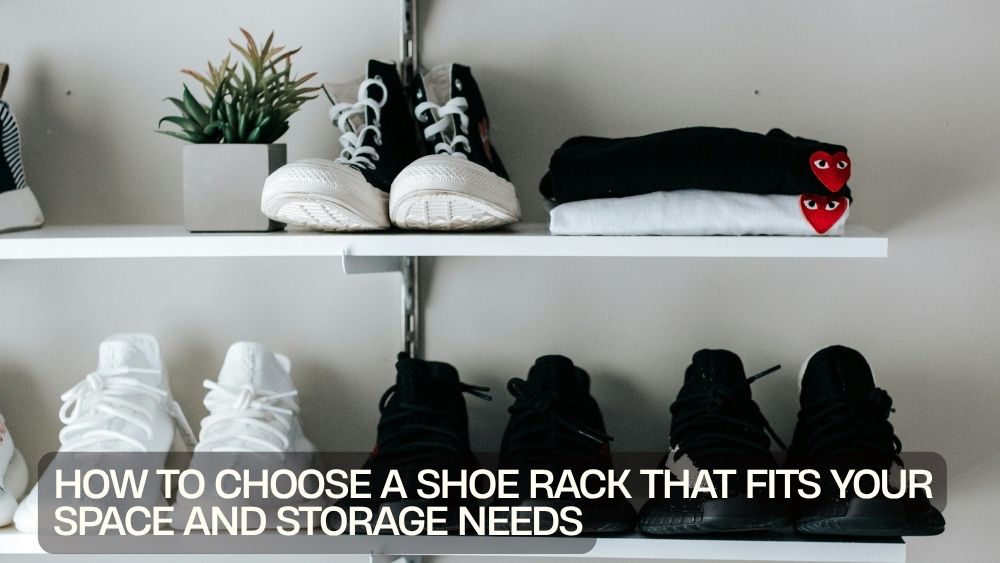
Shoes have a curious talent for multiplying around the front door.
One pair becomes three. Three become a small collection. Before long, the entryway is doing double duty as a shoe showroom, obstacle course, and daily drop zone.
The solution is not necessarily a bigger house. It is better organization.
Choosing the right shoe rack can turn scattered footwear into an orderly storage system while making your entryway feel cleaner and easier to use. But the best shoe rack depends on more than how many pairs you own.
You need to consider available floor space, storage capacity, accessibility, household routines, design, and whether you want open or concealed storage.
This complete shoe rack buying guide will help you work through those decisions before choosing a solution for your home.
Start by Measuring Your Available Space
Before looking at styles, measure the space where your shoe storage will live.
Check the width of the area, available height, and how much depth you can comfortably use without blocking doors or walkways.
This is especially important when choosing shoe storage for an entryway. A cabinet that looks compact online can feel bulky if it extends too far into a narrow hallway.
For inspiration, browse the TotalFindz shoe racks and storage benches collection to compare different approaches to footwear organization.
Think vertically when floor space is limited. A taller shoe organizer can provide substantial capacity without consuming the footprint of a wide cabinet.
Consider How Many Pairs You Need to Store
The right shoe rack size should reflect your household rather than your current pile of shoes.
Count everyday sneakers, formal shoes, boots, sandals, slippers, and seasonal footwear. Then consider whether other family members will use the same storage.
A small household may only need a compact organizer, while a busy family could benefit from practical shoe racks for family homes with multiple shelves or compartments.
It is also wise to leave some room for future purchases. A shoe rack filled to maximum capacity on day one gives you very little flexibility.
Open Shoe Racks Make Everyday Shoes Easy to Reach
If your household constantly grabs shoes on the way out, accessibility matters.
Open shoe racks for easy access make it simple to see your footwear collection and quickly grab the pair you need.
The VASAGLE 5-tier shoe storage rack is an example of a tiered approach that keeps footwear visible while using vertical space.

Open shelving can work particularly well in mudrooms, utility areas, casual entryways, and households where shoes are frequently put on and removed throughout the day.
The trade-off is visibility. Everything stays on display, so organization matters.
Group shoes by person, type, or frequency of use to keep the rack from becoming a visual jumble.
Choose Closed Storage for a Tidier Look
If your priority is a cleaner-looking entryway, closed storage may be the better choice.
Closed shoe cabinets for tidy spaces hide footwear behind doors or compartments, reducing visual clutter and creating a more streamlined appearance.
The shoe storage cabinet with soft-close hinges and adjustable shelves offers a more concealed storage approach while providing adjustable interior organization.

Adjustable shelving can be especially useful because not every pair of shoes has the same shape or height.
This type of cabinet works well when you want your entryway to feel more like a finished part of the home rather than a storage zone.
Go Vertical in Small Entryways
Small hallways require clever use of dimensions.
Instead of spreading shoe storage horizontally, look upward.
Space-saving shoe storage ideas often involve tall, narrow furniture that maximizes vertical capacity while preserving valuable walking space.
The HOOBRO 9-tier tall shoe cabinet with 24 cubbies and 3 hooks demonstrates how vertical storage can combine substantial footwear capacity with additional hanging space.

The hooks can provide a convenient location for smaller entryway essentials such as bags, keys, or other frequently used accessories.
For apartments and compact homes, this kind of configuration can be particularly useful because one vertical unit can address several organization needs.
Look for Multi-Tier Storage When Capacity Matters
A multi-tier shoe rack for organized footwear gives you multiple levels without requiring a large piece of furniture.
Tiered designs work especially well when you have several pairs of everyday shoes and want to keep them visible.
Assigning each level a purpose can make the system even easier to maintain.
For example, the lower shelves can hold heavier everyday shoes, middle levels can store frequently worn footwear, and upper shelves can hold less frequently used pairs.
This simple hierarchy makes it easier to return shoes to their proper place.
Think About Your Household's Daily Habits
Storage should follow your routine.
If everyone enters through the same door, the shoe rack should be positioned close to that entrance.
If children use the space, lower compartments should be easy for them to access. If adults primarily use the storage, taller cabinets may be more practical.
Entryway shoe racks for everyday organization work best when they make the correct behavior effortless.
If putting shoes away requires walking across the house, organization will probably not last.
Keep the storage close to where shoes naturally come off.
Consider a Shoe Bench for Added Function
A shoe rack does not have to be storage alone.
For entryways where people regularly sit down to put on or remove shoes, a shoe bench can combine seating with organization.
The 2-door shoe bench storage cabinet with adjustable shelves brings those functions together.

This type of shoe storage bench for entryways can be particularly useful in family homes because it gives people a convenient place to sit while keeping footwear organized underneath.
It also reduces the need for separate furniture.
When space is limited, multifunctional furniture can be a very smart move.
Decide Between Open and Concealed Storage
There is no universal winner between open and closed shoe storage.
Instead, consider how you use your entryway.
Choose open storage if:
- You want quick visual access.
- Shoes are used frequently.
- You prefer simple, accessible organization.
- You have a casual mudroom or utility space.
Choose closed storage if:
- You prefer a minimalist appearance.
- You want footwear hidden from view.
- Your entryway doubles as a polished living area.
- You want to reduce visual clutter.
Both can deliver functional shoe storage for clutter-free homes when matched to the right space.
Think About Adjustable Shelves
Shoe collections are rarely uniform.
A pair of low-profile sneakers takes up very different vertical space from boots or high-top shoes.
That makes adjustable shelving a valuable feature.
The VASAGLE LIRY Collection shoe storage cabinet with three flip drawers offers a concealed organization format that can help maintain a cleaner entryway appearance.

Flip drawers are also useful when floor space is limited because the cabinet's design keeps the storage footprint relatively efficient.
Match the Rack to Your Home's Style
Practicality matters, but appearance matters too.
A shoe rack sits near one of the first areas people see when entering your home. Choosing a piece that complements the surrounding furniture can make the storage feel intentional.
For stylish shoe racks for modern homes, consider finishes and shapes that work with your existing décor.
White cabinets can create a bright, streamlined appearance. Rustic finishes can add warmth. Darker furniture can complement industrial or contemporary interiors.
The best shoe storage should look like part of the room, not an afterthought.
Use Narrow Vertical Designs for Tight Hallways
A hallway can be one of the most difficult places to add furniture.
There is usually plenty of wall height but very little floor depth.
A narrow vertical rack can solve that problem.
The 7-tier vertical shoe rack for front door is designed around this vertical-storage principle.

This style can be useful for compact shoe organizers for apartments, narrow entryways, and front-door areas where a wider cabinet would interfere with movement.
Before placing any tall rack, however, make sure there is enough clearance around doors, switches, trim, and other fixtures.
Think Beyond Shoes
Your entryway is rarely used for shoes alone.
Bags, umbrellas, hats, keys, pet accessories, and other everyday items often gather nearby.
That is why entryway furniture for shoes and accessories can provide more value than a basic footwear rack.
Hooks, drawers, shelves, and bench seating can help create a more complete organization system.
When selecting a unit, think about the entire entryway routine rather than focusing only on footwear.
Prioritize Durability for Everyday Use
A shoe rack can experience surprisingly heavy daily traffic.
Shoes are constantly being pulled out, returned, shifted, and sometimes dropped onto shelves.
For durable shoe racks for everyday use, look for a construction and configuration that suit your household's activity level.
Families with children may need sturdier storage than a single adult household. If the rack will hold heavier footwear, consider how much weight each shelf needs to support.
Durability is especially important when the storage unit will be moved or repositioned frequently.
Keep Frequently Used Shoes Within Reach
Organization becomes much easier when the most-used items occupy the easiest locations.
Keep everyday sneakers, slippers, and frequently worn footwear at comfortable heights.
Move formal shoes, seasonal footwear, or rarely used pairs toward less accessible areas.
This creates a natural storage hierarchy and helps prevent the entire rack from being disturbed every morning.
It is one of the simplest modern shoe organization ideas for home because it works with your routine instead of against it.
Leave Room for Growth
When choosing the right shoe rack size, avoid calculating capacity too tightly.
If you own 12 pairs today, a rack designed for exactly 12 pairs may already feel crowded after a few months.
Give yourself some breathing room.
Extra capacity also makes it easier to separate footwear by person or season without constantly rearranging everything.
The goal is not maximum storage at any cost. It is useful storage that remains manageable.
Your Shoe Rack Buying Checklist
Before purchasing, run through this quick checklist:
Measure the space. Check width, height, and depth.
Count your footwear. Include household members and seasonal shoes.
Choose your storage style. Decide between open shelves, cabinets, drawers, or a combination.
Consider accessibility. Frequently used shoes should be easy to reach.
Think vertically. Tall designs can be excellent for small spaces.
Consider multifunctionality. A shoe bench or cabinet with hooks may solve several problems at once.
Match your décor. Choose a finish that works with your entryway.
Check capacity. Leave room for future footwear.
Prioritize durability. Everyday storage needs to withstand everyday use.
Create an Entryway That Works Better Every Day
The best shoe rack is not necessarily the biggest, tallest, or most elaborate option.
It is the one that fits your space, matches your storage needs, and makes everyday organization easier.
For compact homes, vertical storage can unlock valuable floor space. For busy households, larger cabinets and multi-tier racks can keep growing collections under control. For polished interiors, closed cabinets can hide clutter. And for practical entryways, shoe benches can combine storage with a comfortable place to sit.
Ultimately, choosing the right shoe rack size comes down to understanding your home and your habits.
Measure first. Think about capacity. Consider how quickly you need access. Then choose a design that makes putting shoes away almost automatic.
When storage fits the way you live, the front door becomes an arrival point again, not the headquarters of the household shoe pile.