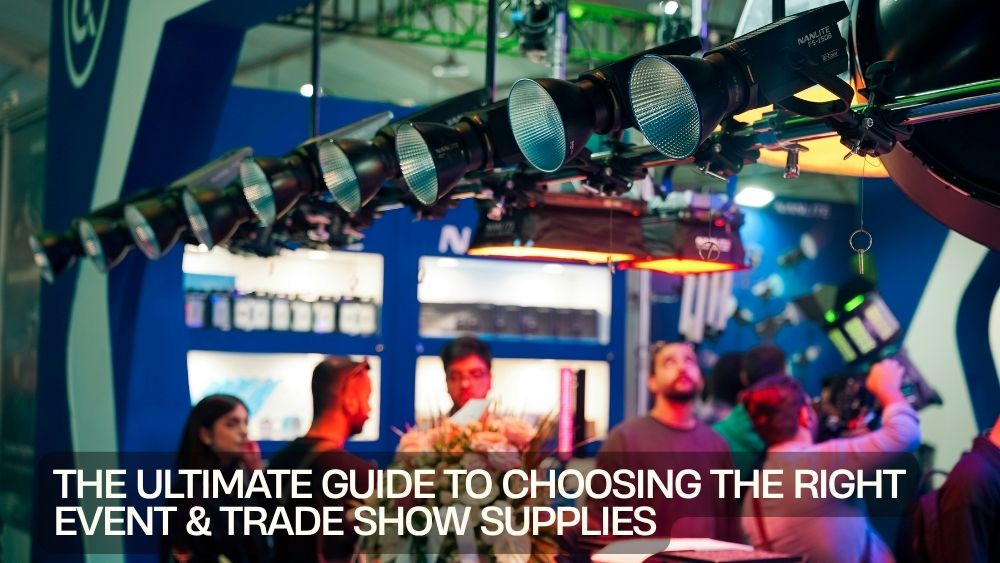
A successful trade show booth does more than occupy a space on the exhibition floor. It creates a first impression, gives your brand a place to tell its story, and provides a practical environment where conversations can begin.
But building that environment takes more than a banner and a table.
From display furniture and booth organization to promotional elements and event equipment, the right supplies can make setup smoother and your entire presentation more professional.
Whether you are preparing for a trade show, conference, expo, product launch, corporate gathering, or outdoor event, this ultimate guide to choosing the right event and trade show supplies will help you build a setup that looks polished and works efficiently.
Start with Your Event Goals
Before ordering supplies, define what you want your booth or event space to accomplish.
Are you showcasing products? Generating leads? Meeting existing customers? Demonstrating a service? Creating brand awareness?
Your objective should influence every purchasing decision.
For example, a product-focused exhibition may require display surfaces and demonstration areas, while a networking event may benefit more from comfortable conversation zones and convenient tables.
Browse the TotalFindz event and trade show supplies collection for ideas that can help shape your setup.
The strongest trade show essentials for businesses and brands are not necessarily the most elaborate. They are the supplies that directly support the event's purpose.
Plan Your Booth Before You Buy
A booth can look fantastic on paper and become surprisingly awkward once everything is placed inside it.
Start with the available floor space.
Measure the booth dimensions and identify entrances, walls, electrical access, storage restrictions, and any required walkways.
Then create a rough layout.
Decide where visitors will stand, where staff will work, where products will be displayed, and where conversations can happen.
This simple planning stage can prevent you from purchasing professional booth supplies for trade shows that ultimately make the space feel crowded.
Remember that your booth needs to work for people, not just furniture.
Choose Display Furniture That Earns Its Space
Tables are among the most useful pieces of event furniture because they can serve several purposes.
They can display brochures, hold promotional products, support demonstrations, provide registration space, or become a casual meeting point.
The folding portable bar table with dual storage shelves and carry bag offers a combination of portability and storage that can be useful for exhibitors who need practical furniture without a complicated setup.

Storage shelves are particularly helpful because they allow supplies to remain close without covering the main tabletop.
That makes the furniture part of your organization system rather than simply another surface.
Make Portability a Priority
Trade shows often involve transportation, setup, teardown, and sometimes multiple event locations.
Heavy or complicated equipment can turn those stages into unnecessary work.
Portable trade show supplies for easy setup can make a significant difference, especially for smaller teams or businesses attending multiple exhibitions.
Look for folding designs, manageable dimensions, carry bags, and equipment that can be assembled without specialized tools whenever possible.
The less time your team spends wrestling with furniture, the more time they can spend preparing the actual presentation.
Create a Flexible Hospitality Area
Depending on the event, your booth may need more than display space.
A small hospitality area can give visitors somewhere to pause, speak with staff, or learn more about your business without standing in the middle of a crowded aisle.
A portable bar-style table can work well for casual interaction.
The portable folding bar table set with storage shelf and carry bag, 2-pack provides multiple surfaces that can help create separate areas within an exhibition or event space.

One table could support promotional materials while another handles demonstrations, refreshments, or conversations.
That flexibility is valuable when booth layouts change from one event to another.
Think About Storage from the Beginning
One of the most overlooked parts of booth planning is storage.
Where will extra brochures go?
What happens to packaging?
Where will staff keep personal belongings?
Where do backup promotional items live?
Without a plan, the answer is often "behind the table," which can quickly become messy.
Booth organization supplies for exhibitors should help keep the visible area clean while ensuring staff can access essential materials quickly.
Use drawers, shelves, containers, or concealed storage where possible.
A tidy booth communicates attention to detail before anyone says a word.
Make Your Display Visually Interesting
A booth needs to attract attention in an environment where dozens of businesses may compete for the same visitors.
That makes attractive trade show display accessories important.
Use a clear visual hierarchy.
Your brand name should be easy to identify. Your primary message should be understandable quickly. Products or demonstrations should be positioned where people can see them without entering the booth.
Avoid filling every available surface.
A crowded display can make your message harder to understand.
Instead, give important elements room to breathe.
Consider Interactive Event Equipment
Static displays have their place, but interactive elements can create a more memorable experience.
Depending on the event, entertainment equipment can help create an atmosphere that attracts attention and encourages people to stop.
For outdoor celebrations, promotional events, pool parties, or entertainment-focused gatherings, the 115W foam party machine with tripod stand offers an example of how event equipment can move beyond traditional display furniture.

Not every trade show needs something this energetic, of course. The broader lesson is to match equipment to the event's audience and purpose.
The right interactive element should reinforce the experience rather than distract from your brand.
Build a Strong Promotional Supply Strategy
Promotional materials can help visitors remember your business after the event ends.
Depending on your goals, these might include brochures, product cards, samples, branded merchandise, discount information, QR codes, or printed guides.
The important part is relevance.
Don't distribute promotional items simply because you can.
Ask whether the item supports your message or provides something genuinely useful.
Strong promotional supplies for business events should extend the conversation beyond the booth.
Make Your Brand Easy to Recognize
Brand consistency is one of the simplest ways to create a professional presentation.
Use consistent colors, typography, messaging, imagery, and logos across your booth materials.
This creates a unified appearance even when your setup includes several different pieces of equipment.
Your branded display ideas for trade show booths should make the business recognizable from a distance and understandable at close range.
Think about the visitor's journey.
First, they notice your booth.
Then they identify your brand.
Then they understand what you offer.
Finally, they decide whether to stop and engage.
Your display should support that sequence.
Prepare for Conferences and Expos
Different events require different setups.
A large industry expo may call for a more extensive booth with product displays, demonstrations, literature, seating, and storage.
A conference may require a smaller footprint focused on branding and conversations.
Outdoor events may require equipment that can handle a different environment altogether.
That is why event supplies for conferences and expos should be selected according to the venue rather than using one universal kit for every occasion.
Build a core supply collection that can be expanded or reduced depending on the event.
Choose Equipment That Saves Setup Time
Event days rarely leave much room for complicated assembly.
Your team may have limited access to the venue during setup, and neighboring exhibitors may also be working around you.
Prioritize event setup supplies for exhibitions that are quick to assemble and easy to transport.
Folding tables are particularly useful because they can provide substantial functionality while remaining relatively simple to pack away.
Practice assembling your equipment before the event.
It sounds basic, but a ten-minute rehearsal can reveal missing parts, awkward connections, or layout problems before you are standing inside a busy exhibition hall.
Design for Visitor Flow
Your booth should have a natural rhythm.
Visitors need to be able to approach without feeling blocked.
Staff should have enough space to move.
Products should remain visible.
Important information should be accessible without forcing visitors to search.
This is where smart trade show booth planning ideas become valuable.
Instead of placing every item wherever there is an empty spot, create zones.
You might have:
- A brand introduction area
- A product display zone
- A demonstration space
- A conversation area
- A literature or promotional station
- A hidden storage area
Even a small booth can benefit from this simple structure.
Keep the Setup Comfortable for Staff
Visitors are important, but your team will spend hours inside the booth.
Consider their comfort too.
Staff may need somewhere to organize materials, access water, store bags, recharge devices, and take short breaks.
A functional setup reduces fatigue and helps employees remain focused throughout the event.
This is one reason practical event display solutions for exhibitions should balance appearance with usability.
A beautiful booth that is uncomfortable to work in can become a long day very quickly.
Choose Supplies That Can Work at Multiple Events
Buying equipment for a single event can become expensive.
Whenever possible, choose versatile furniture and accessories that can be adapted for different occasions.
A folding table might serve at a trade show this month, a product launch next month, and a company event later in the year.
This makes multi-purpose event supplies a smart investment for businesses that participate in exhibitions regularly.
Look for neutral, professional designs that can work with different branding and layouts.
Don't Forget the Practical Details
Some of the most important supplies are the least glamorous.
Create an event checklist covering:
- Extension cords and power accessories
- Cable management
- Cleaning supplies
- Tape and basic tools
- Product literature
- Promotional materials
- Staff essentials
- Storage containers
- Signage
- Backup supplies
The purpose of the checklist is simple: prevent small problems from becoming event-day emergencies.
Your practical supplies for event exhibitors should support the entire experience, not just the visual presentation.
Think About the Visitor Experience
A trade show booth is ultimately an experience.
A visitor should be able to understand who you are, what you offer, and why it matters without navigating a maze of tables and displays.
Keep your messaging concise.
Make important information visible.
Give visitors enough space to explore.
And make it easy for interested people to take the next step, whether that means scanning a QR code, speaking with a representative, collecting a brochure, or scheduling a follow-up.
These details can transform supplies for creating memorable trade show displays from simple equipment into part of your marketing strategy.
Build a Reusable Event Kit
If your company attends events regularly, create a reusable kit.
Keep a master inventory of furniture, signage, promotional materials, tools, cables, storage equipment, and other essentials.
After each event, record what was used, what was missing, and what could be improved.
Over time, your setup becomes more efficient.
You also gain a clearer understanding of which essential trade show supplies for professional events genuinely deliver value.
The Final Buying Checklist
Before purchasing event or trade show supplies, ask:
Does it support the event goal?
Does it fit the available space?
Is it easy to transport?
Can it be assembled quickly?
Does it provide useful storage?
Does it support your branding?
Will visitors be able to move comfortably around it?
Can you reuse it at future events?
Will your staff find it practical to use?
If the answer is yes across most of these questions, you are probably building a useful event setup rather than simply accumulating equipment.
Create a Booth That Works as Hard as Your Team
The best trade show setup is not necessarily the largest or most expensive.
It is the one that combines clear branding, smart organization, practical furniture, efficient transportation, and a comfortable visitor experience.
From portable tables and storage solutions to promotional materials and interactive equipment, every piece should have a purpose.
Start with your goals. Measure your space. Plan visitor flow. Choose portable equipment. Build in storage. Keep branding consistent. And select supplies that can adapt to future events.
With the right planning, your booth becomes more than a display.
It becomes a compact, functional stage for your brand.
And when setup is organized, the message is clear, and visitors know exactly where to look, your event team can spend less time solving logistical puzzles and more time doing what they came for: making meaningful connections.