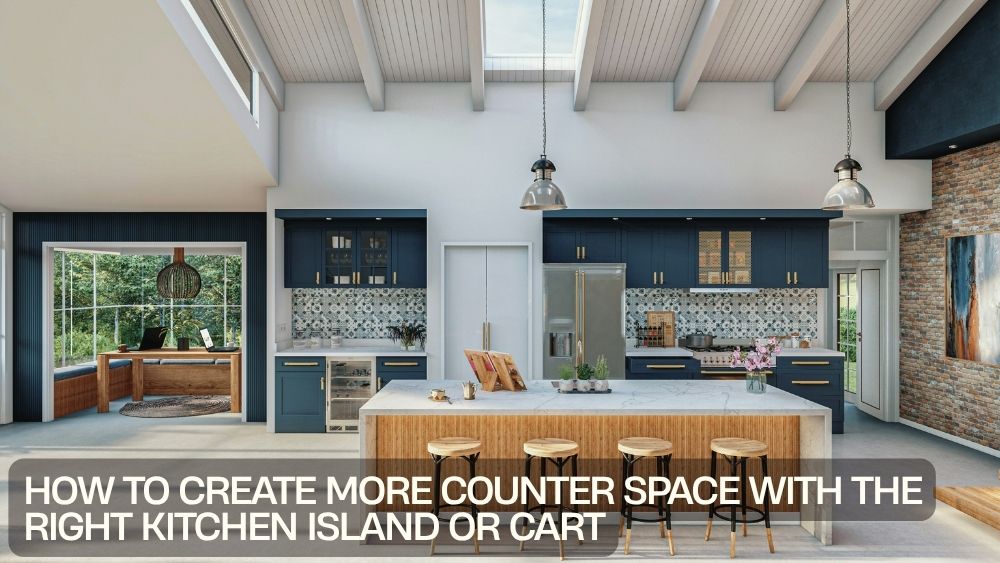
A busy kitchen can run out of counter space surprisingly fast.
One minute you are preparing dinner. The next, the countertop is covered with a cutting board, mixing bowls, ingredients, appliances, and a mug that somehow has nothing to do with cooking.
That is where the right kitchen island or cart can change the game.
Instead of squeezing another appliance onto an already crowded counter, you can add a dedicated prep surface, extra storage, and sometimes even a mobile workstation.
The trick is choosing the right piece for your kitchen, cooking habits, and available floor space.
Why Extra Counter Space Matters
Counter space is one of the most valuable resources in any kitchen.
You need room to chop vegetables, prepare ingredients, assemble meals, serve food, and place appliances. When that surface disappears under clutter, cooking becomes slower and less comfortable.
A kitchen island can create a permanent central workstation. A rolling cart can offer flexibility when you need an extra surface but do not want a fixed piece of furniture.
Both can provide valuable extra workspace for cooking without requiring a full kitchen renovation.
The right choice depends on how much space you have and how you plan to use it.
Kitchen Island or Kitchen Cart?
The first decision is whether you need a stationary island or a mobile cart.
Kitchen islands for extra counter space are ideal when you have enough room for a permanent central workstation. They can provide a substantial surface for food preparation while adding shelves, cabinets, or drawers underneath.
Kitchen carts take a more flexible approach.
Kitchen carts for small kitchens can move around as needed. You can position one beside your main counter while preparing food, roll it closer to the dining area when serving, or move it out of the way when you need more floor space.
If flexibility is your priority, mobility deserves serious consideration.
Measure Before You Buy
Before choosing furniture, grab a measuring tape.
Measure the available area and consider how much walking space will remain around the island or cart.
Do not focus only on the furniture dimensions. Think about doors, drawers, appliances, and people moving through the kitchen.
A beautiful island that blocks a major walkway is not exactly a kitchen upgrade.
For compact kitchens, a slimmer cart may provide the extra surface you need without making the room feel crowded.
For larger kitchens, a substantial island can become a genuine centerpiece.
Consider How You Prepare Meals
Your cooking habits should influence your choice.
If you frequently chop, mix, knead, or assemble ingredients, prioritize a generous countertop.
If you mostly need somewhere to place small appliances, ingredients, or serving dishes, a more compact design may be enough.
For serious meal preparation, look for kitchen islands for meal preparation with a durable and spacious work surface.
A dedicated prep station can make your workflow smoother because you can separate preparation from other kitchen activities.
Look for Built-In Storage
Extra counter space is great. Extra storage is even better.
Many modern islands and carts combine a worktop with shelves, cabinets, drawers, racks, and other storage features.
This gives you an opportunity to move items away from your main countertops.
Store cookware, serving dishes, ingredients, towels, or frequently used kitchen accessories underneath the work surface.
A storage-focused design can also help create a cleaner kitchen.
Instead of adding another standalone storage cabinet, you get workspace and organization in one piece.
Choose a Kitchen Island With Shelving
Open shelves can be particularly useful.
They give you quick access to items you use regularly while creating opportunities to organize baskets, cookbooks, jars, or decorative pieces.
The 55-inch Farmhouse Kitchen Island Coffee Bar Table combines a generous island format with multiple storage shelves.

A piece like this can serve as a prep station while also providing dedicated storage.
Open shelving also makes it easier to see what you have.
That can be useful when you are trying to keep everyday kitchen supplies within reach rather than buried behind cabinet doors.
Consider a Dedicated Prep Station
If cooking is the main reason you need more counter space, choose a design that prioritizes the work surface.
The 55-inch Farmhouse Center Kitchen Island is designed around the idea of a central preparation area.

A larger surface gives you room to spread out ingredients instead of constantly moving items around.
That little bit of breathing room can make meal preparation feel considerably more organized.
Go Mobile When Flexibility Matters
A mobile island can be an excellent solution for kitchens that need to adapt.
Mobile kitchen islands can move with your workflow.
Need extra prep space? Roll the island closer to your main counter.
Need room for guests? Move it elsewhere.
Need an additional serving station? Position it where it works best.
The 43.7-inch Rolling Kitchen Island Cart offers a compact rolling format with storage features.

This type of design is especially useful for households where the kitchen needs to perform multiple jobs throughout the day.
Use a Cart in a Small Kitchen
Small kitchens do not have to surrender to countertop chaos.
A carefully chosen cart can create a practical prep surface without permanently consuming the available floor area.
Look for a narrow design that fits comfortably into your layout.
Storage is another important consideration. A cart with drawers or cabinets can hold items that would otherwise occupy valuable countertop or cupboard space.
For apartment kitchens, this can be especially useful.
A flexible cart can provide an additional workstation without requiring major changes to the room.
Create a Coffee Station
Your kitchen island does not have to be used exclusively for food preparation.
A larger island can double as a coffee station.
Place a coffee maker, mugs, containers, and other essentials together in one organized area. Open shelving underneath can hold additional supplies.
The farmhouse coffee bar island can work particularly well for this kind of setup.
It gives the kitchen another functional zone while adding character to the room.
Think About Your Kitchen Style
Function matters, but appearance matters too.
Your island or cart should feel connected to your existing kitchen furniture.
Farmhouse designs can add warmth through wood-inspired finishes and traditional details.
Modern designs tend to emphasize clean lines and simple silhouettes.
Darker finishes can create contrast, while lighter finishes can help maintain a brighter appearance.
Choose a piece that complements the room rather than trying to make every furniture item match perfectly.
A little contrast can make a kitchen feel more layered and intentional.
Add a Rolling Island With Smart Accessories
Some carts go beyond simple shelves and countertops.
Features such as spice racks, towel racks, hooks, and drawers can make a workstation significantly more useful.
The rolling kitchen island with rubber wood top, for example, combines a work surface with storage-oriented details.

These smaller features can have a big impact on your daily routine.
Instead of searching through cabinets for frequently used spices or towels, you can keep them directly at the workstation.
Consider a Second Mobile Workstation
Sometimes your kitchen needs more than one type of workspace.
A cart can serve as a secondary station for appliances, ingredients, or serving items while the main counter remains available for preparation.
The rubber wood kitchen island trolley in navy blue offers another mobile approach.

Its rolling format allows you to adapt the workstation to different tasks.
This can be particularly helpful during busy cooking sessions when several activities happen at once.
Keep Organization at the Center
Adding furniture does not automatically create organization.
You need to decide what belongs in the island or cart.
Create categories.
Keep spices together. Store towels in one place. Group cooking tools by frequency of use. Use baskets for smaller items that can otherwise become difficult to control.
Think about accessibility.
Items you use every day should be easiest to reach. Less frequently used supplies can go into lower shelves or closed storage.
This approach turns your island into a genuine kitchen storage solution, rather than another place where clutter collects.
Use Vertical Storage Wisely
Not every storage solution needs to sit underneath the countertop.
Vertical shelving can help you use the available height of your kitchen.
For example, additional shelving can hold cookware, pantry containers, appliances, or decorative items.
The VEVOR five-tier storage shelving can provide a separate storage solution when you need more capacity beyond the island itself.
Just remember to keep the kitchen visually balanced.
Too much open storage can make a room feel busy, so combine practical storage with intentional styling.
Think About Surface Material
The countertop is the working heart of your island or cart.
Consider how you use it before choosing a material or finish.
If the surface will regularly handle food preparation, prioritize a design that suits your cleaning and maintenance routine.
A wood-style top can bring warmth and character to the kitchen. Other finishes may create a more contemporary appearance.
The important thing is to choose a surface that matches both your practical requirements and your interior style.
Leave Enough Room Around the Island
An island should improve movement, not interrupt it.
Once you know the dimensions of your preferred design, visualize it in your kitchen.
Imagine opening nearby cabinets. Imagine two people preparing dinner at once. Think about how you will move from the refrigerator to the sink and stove.
This is particularly important when considering kitchen island ideas for small spaces.
A slightly smaller island that leaves comfortable movement can be far more useful than an oversized one that creates bottlenecks.
Make the Island Work Harder
A well-designed kitchen island can perform several jobs at once.
It can become:
- A food preparation station
- Extra countertop space
- A storage cabinet
- A coffee bar
- A serving station
- A baking workspace
- A display area
- A mobile workstation
That is what makes an island or cart such an effective piece of functional kitchen furniture.
You are not simply adding another table.
You are adding a flexible workstation that can adapt to the way your kitchen operates.
Final Thoughts
Creating more counter space does not always mean remodeling your kitchen.
The right island or cart can give you additional workspace while also improving storage, organization, and everyday functionality.
Start by measuring your available space. Then think about your cooking habits, storage requirements, preferred style, and need for mobility.
Choose a substantial island if you have room for a permanent workstation. Pick a rolling cart if flexibility matters more. For smaller kitchens, prioritize compact proportions and smart storage.
Most importantly, choose furniture that solves an actual problem.
When your ingredients have somewhere to land, your appliances have a place to live, and your prep area finally has some breathing room, the kitchen starts working with you instead of against you.
And suddenly, that once-crowded countertop has room to breathe.