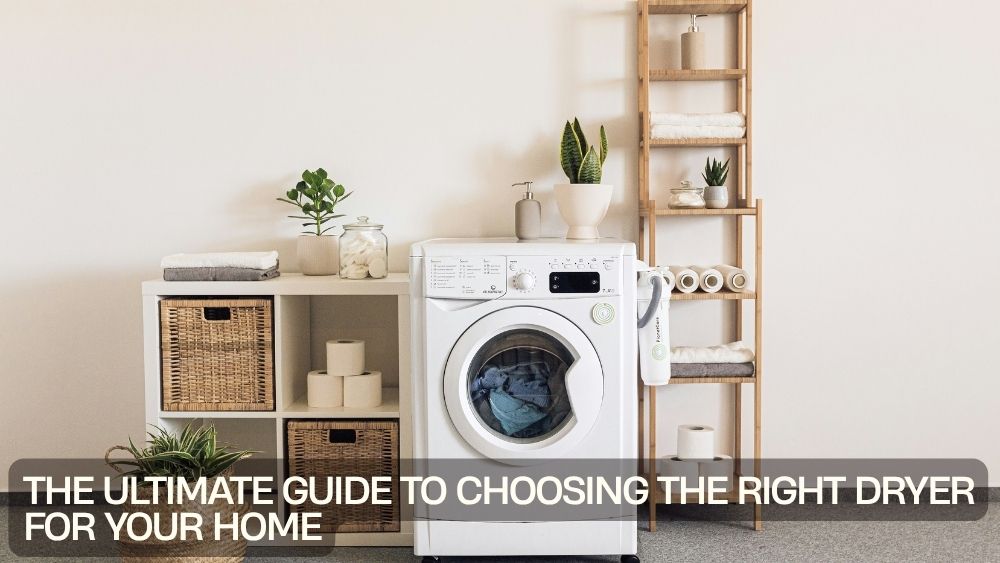
Laundry never really stops. Clothes pile up, towels need refreshing, shoes get soaked, and busy mornings rarely leave enough time for anything to air-dry. The right dryer can make these everyday tasks much easier.
But choosing a dryer is not simply about picking the biggest or most powerful model. Your available space, drying needs, household size, energy use, and preferred features all matter.
From compact clothes dryers for apartments to specialized shoe and hair dryers, today's options cover a surprisingly wide range of needs. The trick is finding the one that fits your routine instead of buying a machine that does far more, or far less, than you actually need.
If you're ready to explore your options, start by browsing the TotalFindz dryer collection.
Start by Identifying What You Need to Dry
Before comparing models, decide what you actually want your dryer to handle.
Are you mainly drying everyday clothing? Do you live in an apartment with limited space? Do you need a portable solution for occasional laundry? Or are you looking for a specialized dryer for shoes or personal grooming?
These questions immediately narrow your choices.
For everyday laundry, a clothes dryer makes the most sense. If space is limited, a compact electric dryer can offer useful drying capacity without demanding an entire laundry room.
Specialized dryers serve different purposes. A shoe dryer targets wet footwear, while a hooded hair dryer is designed for hair care rather than clothing.
Understanding the difference prevents a common buying mistake: choosing a product based only on the word "dryer" rather than its intended purpose.
Choose the Right Dryer Size
Size matters twice.
First, consider the physical dimensions of the dryer. Measure the area where you plan to place it and leave enough room for ventilation, doors, controls, and safe operation according to the manufacturer's instructions.
Second, consider drying capacity.
A single person with relatively small laundry loads may not need a large appliance. A family that washes clothes frequently will usually benefit from greater capacity.
This is why a dryer size and capacity guide should always begin with your household's actual laundry habits.
Think about how often you wash clothes and how large your typical loads are. Buying too small can mean running multiple cycles. Buying too large can take up unnecessary space.
The sweet spot is a dryer that comfortably handles your regular routine.
Compact Dryers for Small Spaces
Apartments, dorms, guest rooms, and compact homes often present a familiar challenge: there simply isn't much room for large laundry appliances.
That's where compact dryers for small spaces can make a major difference.
A smaller dryer can fit into areas where a traditional full-size appliance would be impractical. Portable models can also provide additional flexibility when you don't have a dedicated laundry room.
The VEVOR portable clothes dryer uses PTC heating and includes an LED display and timer, offering a portable approach to everyday clothes drying.

For people living in smaller homes, portability can be just as important as drying performance.
Think About Drying Speed
Nobody wants to wait forever for a favorite shirt to dry.
Drying speed depends on several factors, including the dryer's power, load size, fabric type, moisture level, and selected settings.
A higher-powered dryer may reduce drying time, but power alone does not determine performance. The machine should also provide settings appropriate for different materials and loads.
For clothing, look for controls that let you adjust the drying process rather than relying on a single setting for everything.
This gives you more control and can help you avoid unnecessarily exposing delicate fabrics to excessive heat.
Explore Different Drying Settings
Modern dryers can offer multiple modes designed for different laundry needs.
Depending on the model, you may find settings for different fabrics, drying levels, temperatures, or cycle durations.
Multiple settings can make a dryer more practical because not every load needs the same treatment.
Towels may require a different approach from lightweight clothing. Delicate fabrics may need gentler conditions. Everyday garments may benefit from a standard cycle.
When comparing efficient dryers for home, look beyond the headline power rating. Consider how effectively the available settings match the laundry you actually do.
Consider Energy Efficiency
Energy use deserves attention when choosing laundry appliances.
A dryer can become a regular household appliance, which means its operating cost can add up over time. Choosing an appropriately sized machine and using suitable cycles can help avoid unnecessary energy consumption.
Look for models with efficient heating systems and practical controls. Avoid running a dryer with a tiny load if you can combine it safely with other laundry.
At the same time, don't automatically choose the smallest machine simply because it consumes less energy. If you constantly need multiple cycles because the capacity is too small, the overall process may become less convenient.
The best energy-efficient laundry dryer is one that balances capacity, performance, and your actual usage.
Portable Dryers Offer More Flexibility
Portability can be a major advantage when you don't want a permanent laundry setup.
A portable dryer can work well in smaller homes, temporary living spaces, or situations where you need additional drying capacity.
The VEVOR portable clothes dryer is particularly relevant for users looking for a compact drying solution.
Portable designs can also make storage easier when the dryer is not in use.
Before buying, check the product's dimensions, power requirements, drying capacity, timer functions, and recommended usage.
Convenience comes from choosing a portable model that genuinely fits your routine.
Don't Forget About Shoes
Clothes are not the only things that get wet.
Rain, snow, outdoor activities, and everyday use can leave shoes damp. Waiting for them to air-dry can be frustrating, especially when you need them again the next morning.
A dedicated shoe dryer can solve that problem more directly.
The VEVOR foldable two-tube shoe and boot dryer is designed specifically for drying footwear and features a foldable design.

This type of appliance makes sense for households that regularly deal with wet shoes or boots.
Instead of expecting your main clothes dryer to handle everything, a specialized shoe dryer can provide a purpose-built solution.
Choose a Dryer for Everyday Laundry
If your main goal is drying clothes, focus on functionality first.
An effective clothes dryer should fit your available space, accommodate your typical load size, and offer controls that suit your laundry routine.
For apartment residents or people who want a smaller appliance, the HOMCOM compact electric portable clothes dryer offers 3.22 cubic feet of capacity, 1300W power, and seven drying modes.

A compact machine like this can be useful when a conventional laundry setup isn't practical.
The important thing is to match capacity to your household instead of assuming that bigger automatically means better.
Look at the Controls
Controls may seem like a minor detail until you use the appliance regularly.
A clear interface makes it easier to select the right cycle, adjust settings, and monitor the drying process.
Digital displays can provide useful information about timers or selected modes. Simple controls can also make everyday operation less frustrating.
If you have several people using the dryer, intuitive controls become even more valuable.
When comparing dryer features to consider, prioritize features that improve daily usability rather than features you are unlikely to use.
Timers Can Make Life Easier
A timer is a surprisingly practical feature.
It allows you to set a drying duration based on the type and size of the load. This can make portable dryers especially convenient because you can plan the drying process around your routine.
The VEVOR portable dryer includes a timer that can help users manage drying sessions more conveniently.
A timer won't replace good judgment. Always follow the manufacturer's instructions and recommended load limits.
But when used correctly, it can make a drying routine feel much more organized.
Think About Your Available Space
A dryer should fit your home without turning the surrounding area into an obstacle course.
Measure the available space before purchasing. Check the product dimensions carefully and consider how the appliance will be accessed.
For compact homes, portability and foldability can be particularly valuable.
The foldable design of a shoe dryer, for example, can make storage easier when you don't need it.
For clothing dryers, consider whether you have enough room for installation, loading, unloading, and ventilation.
Good planning before purchase can prevent plenty of headaches later.
Consider Your Household Size
Household size influences both dryer capacity and frequency of use.
A single person may have smaller loads and less frequent drying needs. Couples may need a moderate-capacity option. Families can quickly generate substantial amounts of laundry.
If you have children, sportswear, towels, bedding, and frequent clothing changes can increase your drying workload.
Rather than choosing based purely on household size, look at your weekly laundry volume.
A larger family with efficient laundry habits may need less capacity than you expect, while a smaller household that washes frequently may benefit from a larger machine.
Your laundry basket is a better advisor than a generic rule.
Separate Everyday and Specialized Drying
One dryer does not necessarily need to do everything.
You may use a clothes dryer for laundry and a shoe dryer for footwear. If you're also interested in personal grooming equipment, a specialized hair dryer can handle that separate task.
For example, the VEVOR professional hooded dryer is a floor-standing hooded hair dryer with a timer, temperature settings, and adjustable wind speed.

It is intended for hair care rather than laundry.
This distinction matters because the right tool depends entirely on what you are drying.
Prioritize Practical Features
The most useful dryer features are the ones you will actually use.
Consider:
- Suitable drying capacity
- Multiple drying modes
- Adjustable temperature options
- Timer controls
- Digital displays
- Compact dimensions
- Portability
- Foldable construction
- Easy-to-use controls
- Appropriate power requirements
Not every household needs every feature.
A simple dryer with the right capacity can be more useful than a feature-packed model that doesn't fit your space or routine.
Make Safety and Maintenance a Priority
Always follow the manufacturer's instructions for installation, operation, cleaning, ventilation, and load limits.
Do not overload a dryer simply to finish laundry faster. Use the recommended settings for different materials and keep the appliance's ventilation requirements in mind.
Regular maintenance can also help your dryer operate properly.
Check the manufacturer's guidance for cleaning filters, vents, heating components, and other relevant parts. For specialized products such as shoe dryers, follow the instructions for appropriate footwear and drying conditions.
Good maintenance keeps your appliance working as intended and helps protect the items you are drying.
Build a Smarter Laundry Routine
The right dryer can do more than remove moisture. It can make your entire laundry routine more predictable.
Sort clothes before drying. Select suitable cycles. Avoid unnecessary loads. Remove items when the cycle finishes if the manufacturer recommends it.
For compact living spaces, plan where the dryer will be stored and operated.
For families, choose capacity around your typical laundry volume.
For outdoor enthusiasts, consider whether a dedicated shoe dryer would solve a recurring problem.
The goal is not simply to own a dryer. It is to create a laundry system that works smoothly.
Find the Right Dryer for Your Home
Choosing the right dryer comes down to matching the appliance to your lifestyle.
For everyday laundry, focus on capacity, drying modes, efficiency, and ease of use. For apartments and small homes, prioritize compact dimensions and portability. For wet footwear, consider a specialized shoe dryer. For personal grooming, choose equipment designed specifically for hair.
There is no single "best dryer" for every household.
The best choice is the one that fits your space, handles your regular needs, and offers practical features you will genuinely use.
Whether you're searching for best dryers for home use, a compact clothes dryer, a portable drying solution, or specialized equipment, take time to compare the details before making your decision.
Explore the TotalFindz dryer collection to discover options for different home and personal drying needs.
A little planning can turn drying from another household chore into one less thing competing for your time. And frankly, your laundry basket has already demanded enough attention.