Forestry work can look simple from a distance. Cut a tree, clear some brush, move the wood, and keep the land in shape. In reality, every job brings its own challenges, from removing small trees and branches to handling demanding logging and land-clearing projects.
That makes choosing the right forestry equipment more important than simply picking the biggest or most powerful tool available.
The best equipment matches the job. It should provide enough power for the material you are handling, remain practical for the work environment, and help you complete tasks efficiently without unnecessary complexity.
Whether you manage wooded land professionally, maintain a private property, or take on occasional outdoor projects, this forestry equipment buying guide will help you understand what to consider before making a choice.
Start With the Job Requirements
The smartest way to select forestry equipment is to begin with the task rather than the tool.
Are you cutting small branches? Removing mature trees? Clearing a wooded area? Processing firewood? Maintaining trails? Handling logs?
Each task places different demands on equipment.
For example, light property maintenance may require compact forestry tools that are easy to control and transport. Larger logging operations may call for equipment designed for extended, demanding work.
Think about the material involved, the size of the trees, the frequency of use, and the environment where you will operate.
A clear understanding of these factors makes it easier to narrow down your options.
Build Around Essential Forestry Tools
A well-planned forestry setup does not need every tool imaginable. Instead, it should contain equipment that solves your most common problems.
The forestry and logging equipment collection is a useful starting point when exploring equipment for tree cutting, land maintenance, wood handling, and outdoor forestry projects.
Start with the jobs you perform most often.
If cutting trees and large branches is a regular part of your work, a chainsaw may become one of the most important pieces of equipment in your setup. If clearing and processing wood are bigger priorities, additional logging and wood-processing tools may be necessary.
The goal is simple: create a collection that supports your workflow rather than filling your storage area with equipment you rarely use.
Choose Chainsaws Based on the Material
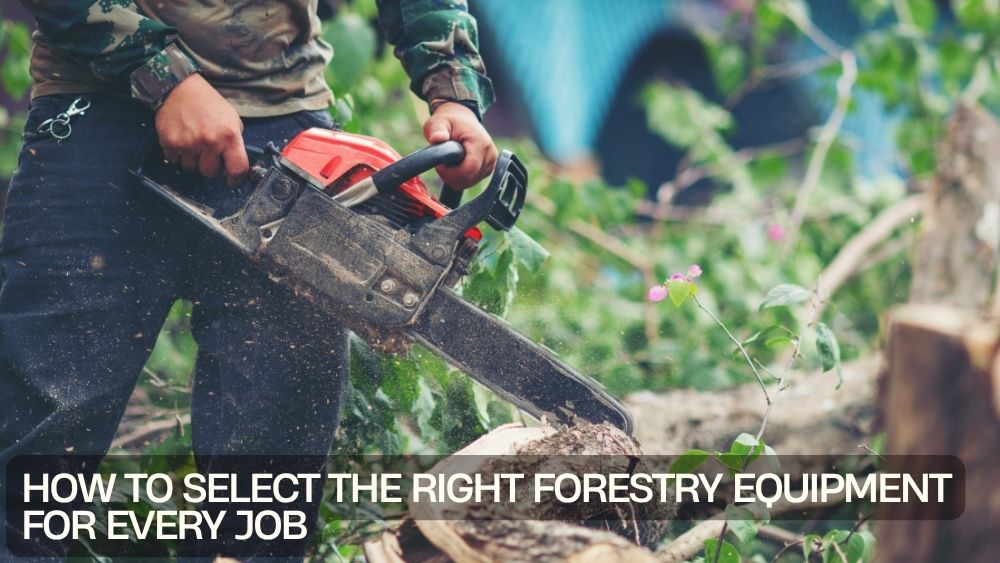
Chainsaws are among the most recognizable pieces of forestry equipment, but they are not all designed for the same workload.
Engine power, guide-bar length, weight, handling, and intended application all matter.
For larger cutting jobs, a more powerful saw can provide the performance needed to work through substantial wood. Smaller models may be more practical for lighter trimming, pruning, or occasional property maintenance.
One option to consider for demanding cutting applications is the 62cc gas-powered chainsaw with 20-inch and 22-inch guide bars. Its larger engine and choice of guide-bar sizes make it suited to users looking for substantial cutting capability.

However, bigger is not automatically better.
A powerful chainsaw can become tiring to handle if the job does not require that level of performance. Selecting equipment that you can operate comfortably and appropriately for the task is just as important as engine specifications.
Consider Guide-Bar Length Carefully
Guide-bar length is another important factor when choosing tree cutting equipment.
A longer bar can provide greater cutting capacity for larger wood, while a shorter bar can offer easier handling for smaller jobs.
If your forestry work involves trees of varying sizes, flexibility can become especially valuable.
A chainsaw offering different guide-bar options can give you more versatility across projects. That can be useful for professionals who move between land-clearing jobs and property maintenance.
Still, guide-bar size should always match the saw's specifications and the work being performed. The objective is controlled, appropriate cutting rather than simply choosing the longest bar available.
Think About Frequency of Use
How often will you use the equipment?
This question can completely change your purchasing decision.
Someone clearing a small property once or twice a year may prioritize straightforward operation, storage, and overall practicality. A professional land manager or logging worker who uses equipment regularly may place greater emphasis on durability, performance, serviceability, and long-term value.
Frequent users should also consider how equipment fits into their broader workflow.
A tool that saves meaningful time on every project can become much more valuable over months or years than a cheaper option that slows down the work.
Match Equipment to Land Conditions
Forestry projects rarely happen on perfectly flat, open ground.
You may encounter slopes, dense vegetation, uneven terrain, fallen branches, wet areas, rocks, or tightly packed trees.
These conditions influence equipment selection.
For example, equipment used in dense woodland needs to remain manageable when movement is restricted. Land-clearing projects may require tools that can handle heavier vegetation and larger pieces of wood.
Before purchasing forestry gear, consider how easily you can transport, position, and operate it within your actual working environment.
The tool needs to work in the forest, not just look impressive on a specification sheet.
Think Beyond Tree Cutting
Forestry work involves much more than cutting trees.
After a tree comes down, the work continues.
Branches need to be removed. Logs may need to be cut into manageable sections. Wood may need to be moved, stacked, or processed. Cleared areas may need additional maintenance.
That is why a complete forestry equipment setup should address multiple stages of the job.
Consider your entire workflow:
Cut → clear → process → move → organize → maintain.
Thinking this way can reveal equipment gaps that are easy to overlook when focusing on a single tool.
Choose Equipment for Land Clearing
Land clearing can be especially demanding because vegetation comes in many forms.
A project might involve small trees, thick brush, branches, fallen timber, and larger logs.
The right equipment depends on the density and scale of the area.
For smaller projects, practical forestry tools can help you work through manageable sections efficiently. Larger commercial or professional clearing operations may require specialized machinery and multiple workers.
Before choosing equipment, estimate the area you need to clear and the type of vegetation involved.
This helps prevent two common mistakes: purchasing equipment that is underpowered for the project or investing in machinery that is unnecessarily large for the work.
Consider Wood Processing Needs
Cutting a tree is only one part of the process.
If your project involves firewood production, timber preparation, or general wood handling, consider what happens after the initial cut.
Wood-processing tools can help transform larger pieces into more manageable sections.
Think about the final purpose of the wood. Are you preparing firewood? Clearing fallen timber? Managing storm-damaged trees? Processing logs for another use?
Your answer should influence the equipment you select.
A forestry setup becomes much more efficient when each tool has a clear role.
Prioritize Durability for Demanding Jobs
Forestry environments can be tough on equipment.
Dirt, dust, moisture, wood chips, vibration, transportation, and repeated use can all put pressure on tools.
For professional land management and frequent logging work, durability should be high on your checklist.
Look for equipment designed around the demands of outdoor work and consider construction quality, engine design, replacement parts, maintenance requirements, and overall usability.
A durable tool is not simply one that survives a single difficult job. It should continue performing reliably when the work becomes part of your regular routine.
Do Not Ignore Maintenance
Even excellent forestry equipment needs proper maintenance.
Chainsaws, for example, require attention to areas such as chain condition, lubrication, air filtration, fuel systems, and other manufacturer-specified maintenance points.
Regular care helps keep equipment operating properly and can reduce avoidable downtime.
Create a simple maintenance routine based on how frequently you use each tool.
For professional operations, keeping maintenance records can also help identify recurring problems before they become larger interruptions.
Safety Belongs in the Equipment Decision
Forestry work involves powerful cutting equipment and unpredictable outdoor conditions, so safety should be part of the purchasing process from the beginning.
Appropriate protective equipment may include hearing protection, eye and face protection, gloves, protective clothing, sturdy footwear, and chainsaw-specific protective gear where applicable.
Operators should also follow the equipment manufacturer's instructions and receive appropriate training before using powerful machinery.
Never choose equipment solely because it has impressive specifications. The right tool should also be one you can operate responsibly within your skill level and working environment.
Consider Portability and Storage
Forestry equipment often travels between work areas.
That makes portability worth considering, especially for property managers, contractors, and professionals working across multiple sites.
Think about transportation, storage space, fuel requirements, tool organization, and how quickly equipment can be prepared for use.
Compact and manageable tools can make smaller jobs much easier. Larger equipment may offer more capability but also requires more planning for transportation and storage.
Your equipment should fit into your operation from start to finish.
Build a Flexible Forestry Setup
You do not need to buy everything at once.
A better strategy is to build your forestry equipment collection around your most frequent tasks.
Start with the essential tools for cutting and clearing. Then add equipment for processing, handling, maintenance, and specialized projects as your workload grows.
This approach makes your setup more adaptable.
For example, a property owner might need basic tree-cutting equipment, while a professional land-management operation may gradually add more specialized logging tools.
The best forestry setup evolves with the work.
Make Performance and Practicality Work Together
When comparing forestry equipment, it is tempting to focus entirely on horsepower, bar length, capacity, or other specifications.
Numbers matter, but they are only part of the equation.
Ask practical questions too:
- Is the equipment comfortable to handle?
- Does it suit the type of work I perform?
- Can I transport it easily?
- Is maintenance manageable?
- Is it appropriate for my experience level?
- Will I use its full capability?
- Does it complement the rest of my equipment?
These questions turn a basic product comparison into a smarter purchasing decision.
The Right Forestry Equipment Makes Work More Efficient
Selecting forestry equipment is ultimately about matching capability with purpose.
The best equipment for professional land management may not be the best choice for occasional property maintenance. Likewise, equipment suited to small clearing projects may struggle when faced with larger logging demands.
Start with the job. Consider the material, terrain, workload, frequency of use, and desired outcome. Then evaluate power, size, durability, handling, maintenance, and safety.
From essential cutting tools to specialized logging equipment, a carefully chosen setup can make outdoor work more organized and efficient.
Explore the forestry and logging equipment range to discover tools for different outdoor tasks, and consider versatile cutting equipment when tree maintenance or wood processing sits at the heart of your projects.
The smartest forestry setup is not necessarily the largest one. It is the one where every tool has a purpose and every piece of equipment earns its place.