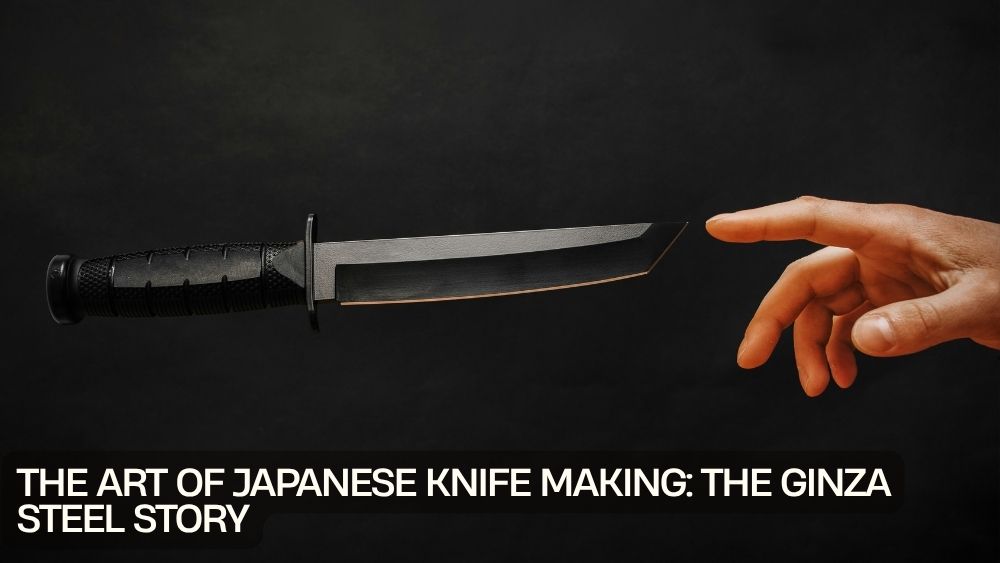
Few kitchen tools carry the cultural depth, craftsmanship, and precision of a Japanese knife. What appears to be a simple blade is often the result of generations of knowledge, carefully selected materials, disciplined forging techniques, and an unwavering focus on detail.
The story behind Japanese knife making stretches back centuries. Influenced by traditional metalworking, sword forging, and regional craftsmanship, Japanese blades developed a reputation for exceptional sharpness, balance, and precision. Today, that heritage continues through modern makers and collections such as Ginza Steel, where traditional influences meet contemporary kitchen design.
The Ginza Steel story reflects this fascinating relationship between heritage and modern craftsmanship. Its collection brings together forged steel knives, Damascus blades, Japanese-style santoku knives, specialty blades, and thoughtful storage accessories.
For anyone interested in the art of Japanese knives, understanding how these blades developed makes using them even more rewarding.
Explore the complete Ginza Steel Collection to discover a selection inspired by the precision and beauty associated with Japanese kitchen knives.
The Origins of Japanese Knife Making
The history of Japanese knife craftsmanship is deeply connected to Japan's broader tradition of metalworking.
For centuries, Japanese craftsmen refined techniques for producing strong, sharp blades. Sword making played an important role in developing the country's reputation for sophisticated steel craftsmanship.
Over time, these techniques influenced tools used in everyday life, including kitchen knives.
The result was a distinct approach to blade making that emphasized sharpness, precision, balance, and careful craftsmanship.
From Samurai Swords to Kitchen Knives
The influence of the samurai sword remains an important part of the story surrounding Japanese blades.
The famous katana required exceptional control over steel, heat treatment, shaping, polishing, and sharpening. Although modern kitchen knives serve a completely different purpose, the knowledge developed through traditional sword making influenced Japanese metalworking as a whole.
The Samurai sword influence on Japanese knives can be seen in the country's long-standing respect for precision blade craftsmanship.
Japanese kitchen knives eventually evolved into specialized tools designed for specific ingredients and preparation techniques.
Traditional Japanese Knife Craftsmanship
Traditional Japanese knives are often associated with meticulous handwork.
A traditional craftsman may carefully shape, heat, hammer, grind, sharpen, and polish a blade through a series of highly controlled processes.
This approach differs from mass-produced manufacturing because craftsmanship remains central to the finished product.
The goal isn't simply to produce a sharp blade. It is to create a tool with a carefully considered relationship between:
- Blade geometry
- Steel composition
- Hardness
- Balance
- Edge profile
- Handle design
- Intended use
That attention to detail defines much of the traditional Japanese knife forging techniques used throughout the country's knife-making regions.
How Japanese Knives Are Made
The Japanese knife making process explained in simple terms begins with selecting appropriate steel.
The steel is then shaped and treated to develop the desired characteristics. Depending on the knife and manufacturing method, the blade may be forged, ground, heat-treated, polished, and sharpened through multiple stages.
Each stage affects the final performance.
Heat treatment is particularly important because it influences hardness, durability, and edge retention. Grinding then establishes the blade geometry, while sharpening creates the cutting edge.
Finally, craftsmen carefully finish the blade and attach the handle.
The finished knife represents the combined work of material science, craftsmanship, and practical culinary knowledge.
The Importance of Japanese Blacksmithing Techniques
Japanese blacksmithing techniques for knives have developed through centuries of experimentation and refinement.
Traditional forging involves carefully controlling temperature and shaping steel through repeated hammering. Skilled craftsmen learn to recognize subtle changes in the material and adjust their techniques accordingly.
Modern manufacturing may use advanced machinery and controlled processes, but many Japanese knife makers continue to preserve traditional principles.
This combination of old and new gives contemporary Japanese knives their distinctive identity.
Sakai Knife Making and Its Long History
When discussing Japanese knives, Sakai deserves special attention.
Sakai knife making has a long-standing reputation for producing high-quality culinary blades. The region became an important center for blade craftsmanship and developed deep expertise in specialized kitchen knives.
The 600 years of Sakai knife making history demonstrate how deeply knife production is connected to the region's identity.
Sakai craftsmen developed specialized skills that were passed between generations, helping establish the area as one of Japan's most respected knife-making centers.
Sakai and Seki: Two Famous Knife-Making Cities
Japan has several important knife-making regions.
Among the most recognized are Sakai and Seki.
Sakai is particularly famous for professional kitchen knives and traditional craftsmanship. Seki, meanwhile, developed a strong reputation for blade manufacturing and metalworking.
The comparison between these regions demonstrates that Japanese knife making is not a single technique. It represents a collection of regional traditions, materials, methods, and philosophies.
Each area contributes something different to Japan's broader knife-making heritage.
Handmade Japanese Knives
The appeal of handmade Japanese knives comes from the connection between the maker and the finished tool.
Hand craftsmanship allows subtle decisions to influence the final blade. The craftsman can focus on geometry, balance, finish, and sharpening rather than treating the knife as a generic manufactured object.
The Zuiun Japan Handmade Petty Knife, available through the Ginza Steel collection, illustrates this appreciation for Japanese-style craftsmanship. Its Damascus steel construction and 150mm format make it a distinctive addition to a carefully selected kitchen knife collection.
You can explore the Zuiun Japan Handmade Petty Knife as part of the collection.

The Beauty of Damascus Steel
Damascus steel has become one of the most recognizable styles in modern Japanese-inspired knives.
The distinctive layered pattern creates an eye-catching appearance while reflecting the blade's sophisticated construction.
The Ginza Steel Damascus knives collection includes blades designed around this visual tradition.
The Seiryu 青龍 Series Santoku Knife combines VG10 steel with a Damascus-style finish and an 180mm santoku profile.

For cooks who appreciate both performance and presentation, a Damascus blade can become a centerpiece of the kitchen.
Understanding VG10 Damascus Knives
Ginza Steel VG10 Damascus knives combine a well-known Japanese stainless steel with a layered aesthetic.
VG10 is widely associated with Japanese kitchen knives because it can offer a useful balance of hardness, edge retention, corrosion resistance, and sharpening performance when properly manufactured and maintained.
The Damascus pattern adds visual character.
The result is a knife that can look as impressive on a countertop as it does during food preparation.
AUS10 and Modern Japanese Knife Making
The evolution of Japanese knives has also introduced modern steels such as AUS10.
Ginza Steel AUS10 Damascus knives represent the modern side of Japanese knife development, where contemporary metallurgy supports traditional design principles.
Modern steels can provide useful combinations of edge retention, toughness, corrosion resistance, and ease of maintenance.
This demonstrates that traditional vs modern Japanese knife making is not necessarily a competition between two opposing ideas.
Instead, modern technology can complement traditional design philosophies.
The Ginza Steel Kuchen Series
The Ginza Steel Kuchen Series Eisenkraft Chef Knife 210mm represents the practical side of Japanese-inspired kitchen equipment.

A 210mm chef knife offers versatility for everyday preparation. It can handle a wide range of ingredients and become the primary blade used for chopping, slicing, and general kitchen work.
The knife's design reflects an important principle of Japanese kitchen tools: performance should support the cook rather than complicate the cooking process.
Santoku Knives: A Japanese Kitchen Favorite
The santoku has become one of the most popular Japanese-style knife designs worldwide.
Its name is commonly associated with three kitchen tasks, often described as slicing, dicing, and chopping.
The Alpha Olive Santoku Knife combines a forged steel blade with an olive wood handle.

The result is a knife that brings together practical functionality and natural visual appeal.
The Seiryu santoku offers another interpretation, using an 180mm VG10 Damascus steel blade.
Together, these examples demonstrate how one traditional knife format can appear in several modern configurations.
Single-Bevel Japanese Knife Making
Another important part of Japanese knife tradition is the Japanese single-bevel knife making approach.
Single-bevel knives have traditionally been associated with specialized culinary applications. Their geometry allows skilled cooks to perform precise cuts and detailed preparation.
These knives require a different sharpening approach from many Western-style double-bevel knives, making proper maintenance particularly important.
This specialization highlights one of the defining characteristics of Japanese knife culture: there is often a specific tool for a specific culinary purpose.
Specialized Japanese Kitchen Knives
The Ginza Steel collection also includes specialized knives designed for particular food-preparation tasks.
The Alpha Olive Slicing Ham Knife features a longer blade designed for slicing applications.

The Alpha Olive Hard Cheese Knife focuses on hard cheese preparation.

These specialized designs demonstrate how Japanese-inspired kitchen tools can move beyond the traditional chef knife or santoku.
Instead of forcing one blade to handle every task, cooks can select the knife that best matches the ingredient and preparation technique.
Japanese Knife Making for Beginners
For people new to Japanese knives, the range of choices can feel overwhelming.
A simple starting point is to identify your cooking habits.
If you prepare a wide variety of ingredients, a chef knife or santoku can provide excellent versatility.
If you enjoy detailed preparation, a petty knife may complement your primary blade.
If you regularly prepare specific foods, specialized knives can make those tasks easier.
Beginners should also learn basic sharpening, cleaning, drying, and storage practices.
A quality knife deserves quality care.
Protecting Japanese Knives with Proper Storage
Knife storage plays an important role in maintaining a collection.
The Ginza Steel Magnetic Wood Knife Block offers a practical storage solution while keeping knives visible and accessible.

For compatible blades, the Ginza Steel Magnolia Wood Saya provides a protective wooden covering.

Proper storage helps prevent unnecessary contact between blades and other kitchen objects.
It also makes the kitchen more organized.
Traditional Craftsmanship Meets Modern Design
The story of Japanese knives doesn't end with tradition.
Modern manufacturers continue to experiment with new steels, production techniques, handle materials, and blade finishes.
This creates a fascinating intersection between history and innovation.
A modern Japanese knife can reflect centuries-old design principles while using contemporary materials and manufacturing technology.
That balance is central to the appeal of collections such as Ginza Steel.
The Ginza Steel Knife Collection
The Ginza Steel knife collection brings together a variety of styles for different culinary preferences.
From chef knives and santoku blades to handmade petty knives and specialized slicing tools, the range demonstrates how diverse Japanese-inspired kitchen knives can be.
Some products emphasize traditional aesthetics.
Others focus on modern steel technology.
Some prioritize versatility, while others target specific culinary tasks.
Together, they tell a broader story about how Japanese knife making continues to evolve.
Why Japanese Knives Remain So Popular
The worldwide popularity of Japanese knives comes from more than sharpness.
Cooks appreciate their:
- Precision
- Specialized designs
- Distinctive aesthetics
- Blade variety
- Ergonomic possibilities
- Rich craftsmanship
- Cultural heritage
A Japanese knife can become more than another kitchen tool. For many cooks, it becomes part of their cooking ritual.
The weight, balance, sound, texture, and movement of a well-designed blade can influence the entire preparation experience.
Final Thoughts
The art of Japanese knife making is a story of patience, precision, innovation, and tradition.
From the historic workshops of Sakai and Seki to contemporary Japanese-inspired collections, knife makers continue to build on centuries of knowledge. Traditional forging techniques, Japanese blacksmithing, specialized blade geometry, modern steels, and Damascus finishes all contribute to the remarkable diversity of Japanese kitchen knives.
The Ginza Steel story sits within this larger tradition by bringing together carefully designed chef knives, santoku knives, Damascus blades, handmade Japanese-style knives, specialty cutters, and practical storage accessories.
Whether you're a professional cook, an enthusiastic home chef, or simply beginning your journey into Japanese knives, understanding the history behind these tools makes the experience richer.
Explore the Ginza Steel Collection and discover a selection that celebrates the enduring connection between Japanese craftsmanship and modern culinary performance.