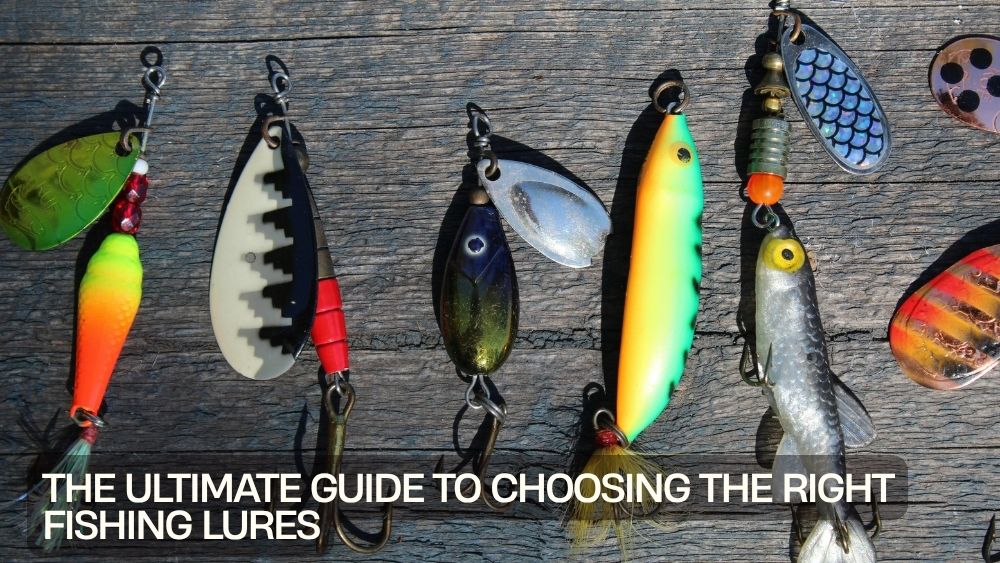
Fishing rarely comes down to luck alone. The right lure, presented in the right place at the right time, can completely change your day on the water.
But with countless shapes, colors, sizes, materials, and actions available, choosing the right lure can feel like opening a tackle box during a windstorm. Where do you start?
The answer is simpler than it seems.
You need to understand the fish you're targeting, the water you're fishing, the conditions you're facing, and how different lures behave underwater. Once those pieces come together, selecting fishing lures becomes much more intuitive.
This guide walks through the essentials so you can build a smarter tackle box and make every cast count.
Start With the Fish You're Targeting
The first step in learning how to choose the right fishing lure is identifying your target species.
Different fish respond to different prey profiles. Bass may attack crankbaits, spinnerbaits, jigs, and soft plastics. Trout often respond well to smaller spinners and natural-looking presentations.
Your lure should imitate something the fish already recognizes as food.
Think about the local forage, too. If baitfish dominate the water, a lure with a baitfish profile can make sense. If insects or small crustaceans are common, a smaller finesse presentation may perform better.
Target species should always guide your starting point.
Freshwater vs. Saltwater Fishing Lures
Water type also affects your lure selection.
Fishing lures for freshwater fishing come in an enormous range of styles designed for species such as bass, trout, pike, walleye, and panfish.
Freshwater environments also vary dramatically. A shallow pond requires a different approach from a deep reservoir or fast-moving stream.
Saltwater adds another layer of complexity. Fishing lures for saltwater fishing often need to handle larger predators, stronger currents, greater casting distances, and harsher conditions.
Always choose equipment appropriate for the environment and target species.
Understand Lure Categories
You don't need every lure ever invented.
However, understanding the major categories gives you a useful foundation.
Artificial lures generally fall into several broad groups, including soft plastics, hard baits, spinnerbaits, jigs, and topwater lures.
Each creates a different combination of movement, vibration, flash, sound, and profile.
Your job is to choose the presentation that matches what the fish are likely to respond to.
Soft Plastic Fishing Lures
Soft plastic fishing lures offer tremendous versatility.
They can imitate worms, minnows, crawfish, frogs, and other prey. Anglers can rig them in different ways to fish shallow cover, vegetation, deeper water, or open areas.
Finesse presentations can also work when fish become cautious or pressured.
The olive green weedless Ned rig jigs are an example of a compact finesse-style presentation designed around a weedless jig configuration.

Soft plastics are particularly useful because you can change how they move simply by changing the rigging and retrieval technique.
Hard Bait Fishing Lures
Hard baits offer a different style of presentation.
They often create pronounced movement, vibration, flash, or sound. This makes them useful when you want to attract fish from a greater distance or cover water efficiently.
Crankbaits are one of the most recognizable examples.
Crankbaits for bass fishing can cover different depths and produce distinct actions depending on their design. Choose the running depth and action based on where the fish are holding.
Don't automatically reach for the biggest or loudest bait. Match the lure to the conditions.
Spinner Lures for Active Fish
When fish are active, flash and vibration can be extremely effective.
Spinner lures for active fish create visual flashes and underwater vibration as the blade rotates. This can help predators locate the lure, particularly when visibility isn't perfect.
A single-hook Colorado spinner with a green speckled blade provides a compact option for anglers looking for this type of presentation.

Colorado-style blades generally produce strong vibration, making them useful when you want your lure to create noticeable underwater movement.
Spinnerbaits for Cover and Structure
Spinnerbaits are another versatile option, particularly for bass fishing.
They combine blades, skirts, and hooks into a lure that can move through different environments while creating flash and vibration.
The premium Fire Tiger spinner bait with Willow and Colorado blades combines two blade styles to create a varied presentation.

The blade combination can influence how much flash and vibration the lure generates.
That gives anglers another way to adapt their presentation to changing conditions.
Jig Lures Offer Versatility
Jig lures for versatile fishing deserve a place in many tackle boxes.
Jigs can work around structure, vegetation, rocky areas, and other productive locations. You can also vary their presentation through different retrieves and rigging methods.
A weedless orange Fire Tiger swim jig offers a colorful presentation designed to move through areas where vegetation or cover can make traditional lure presentations difficult.

Weedless designs can help reduce unwanted snags while allowing anglers to fish closer to cover.
Topwater Lures for Surface Fishing
Few fishing moments are more exciting than watching a fish attack a lure on the surface.
Topwater lures for surface fishing create movement at or near the water's surface. They can imitate injured prey, frogs, insects, or baitfish depending on the design.
Topwater fishing often becomes particularly interesting during low-light periods or when fish are actively feeding near the surface.
Pay attention to surface activity. If baitfish are breaking the surface or predators are visibly feeding, it's a good reason to consider a surface presentation.
Size Matters More Than You Think
A fishing lure size and color guide should always start with the natural food available in the water.
If fish are feeding on small baitfish, throwing an oversized lure may not match the hatch. Likewise, larger predators feeding on substantial prey may respond better to a larger profile.
Start by observing the environment.
Look for baitfish, insects, crustaceans, or other visible prey. Then select a lure that offers a reasonably convincing profile.
Matching the size of the forage can make your presentation look much more natural.
Choosing Lure Colors
Color selection can become surprisingly complicated, but you don't need dozens of shades.
Natural colors often work well in clear water because they can produce a subtle presentation.
Brighter colors can help in stained water or low-visibility conditions by making the lure easier for fish to detect.
Fire Tiger patterns, for example, provide a bold combination of contrasting colors. The Fire Tiger weedless swim jig uses this type of attention-grabbing pattern.
Instead of asking which color is universally best, ask which color provides the right visibility for today's conditions.
Water Clarity Changes Everything
Water clarity should influence your lure choice.
In clear water, fish can inspect a lure closely. More natural colors and subtle movements can become useful.
In muddy or stained water, visibility decreases. Strong vibration, flash, contrast, or a larger profile may help fish locate your lure.
This is where spinnerbaits and vibrating presentations can become valuable.
Don't lock yourself into one lure simply because it worked yesterday. Water conditions can change overnight.
Consider Water Depth
Depth is another major factor.
Fish don't always stay near the surface. They may suspend in the middle of the water column or hold near the bottom.
Choose a lure that can reach the depth where fish are feeding.
Crankbaits with different diving ranges, weighted jigs, and various soft-plastic rigs allow anglers to target different portions of the water column.
Your lure needs to spend time where the fish actually are.
Learn the Importance of Lure Action
Fishing lure action and presentation often matter as much as the lure itself.
Two anglers can use the same lure and get completely different results because they retrieve it differently.
Try varying your speed.
Experiment with pauses, steady retrieves, short twitches, lifts, drops, and changes in direction.
Sometimes fish want an aggressive presentation. Other times, they prefer something slow and subtle.
Let the fish tell you what works.
Match Your Lure to the Season
Seasonal fishing lure selection can help you adapt throughout the year.
Fish behavior changes as water temperature changes. Feeding patterns, prey availability, and preferred depths can shift with the seasons.
During warmer periods, fish may become more active and chase moving prey.
During colder periods, slower presentations can sometimes make more sense.
Instead of using the same lure all year, build a flexible tackle selection that lets you adjust to seasonal behavior.
Don't Forget the Tackle
Your lure doesn't work in isolation.
Your rod, reel, line, hooks, and terminal tackle all affect how effectively you can present it.
For anglers looking to expand their setup, the Streamside Golden Falcon surf rods offer options in multiple lengths for surf-fishing applications.

Choose tackle that matches the lure weight, fishing environment, target species, and casting requirements.
The right combination helps you control the lure and detect strikes more effectively.
Build a Smart Tackle Box
You don't need a tackle box overflowing with every color and variation.
Instead, build a versatile selection.
Consider carrying:
- A few natural-colored soft plastics
- Finesse jigs
- Weedless jigs
- Spinnerbaits
- Colorado spinners
- Crankbaits
- Surface lures
- Different lure sizes
- Several color patterns
- Terminal tackle and replacement components
This gives you enough flexibility to adapt without carrying an entire fishing store on your back.
Adapt to Changing Conditions
One of the most important lessons in lure selection is staying flexible.
Cloud cover can change visibility. Wind can alter surface activity. Rain can affect water clarity. Temperature changes can shift fish location.
If your current lure isn't producing, change something.
Try a different size.
Switch colors.
Move deeper.
Slow down your retrieve.
Or choose a lure that produces more vibration.
Fishing rewards observation. Pay attention to what the water is telling you.
Use the Right Lure for the Situation
There is no single answer to the question, "What is the best fishing lure?"
The better question is, "What presentation makes the most sense right now?"
For bass, you might reach for a spinnerbait, crankbait, jig, or soft plastic.
For trout in streams and lakes, smaller spinners and natural presentations may be productive.
For saltwater fishing, choose lures designed around the target species and environment.
Your fishing lure buying guide should therefore focus on versatility rather than chasing one supposedly perfect lure.
Final Thoughts
Choosing the right fishing lure becomes much easier when you stop thinking about lures as isolated products and start thinking about them as tools.
Match the lure to the target species.
Consider water type, depth, clarity, season, weather, and available forage.
Then think about size, color, action, and presentation.
A well-organized tackle box gives you options, but observation gives you the advantage.
Explore the TotalFindz fishing lures collection to discover different lure styles for building a versatile setup.
Whether you're chasing bass in freshwater, searching for trout in a stream, or heading toward saltwater, the right lure can turn an ordinary cast into the start of something much more exciting.