Some automotive problems announce themselves loudly.
Others whisper.
A rough idle, inconsistent engine performance, poor fuel economy, an illuminated check-engine light, or an emissions-related fault can sometimes come from a tiny leak that is almost impossible to see with a quick inspection.
That is where an automotive smoke machine can become a valuable diagnostic tool.
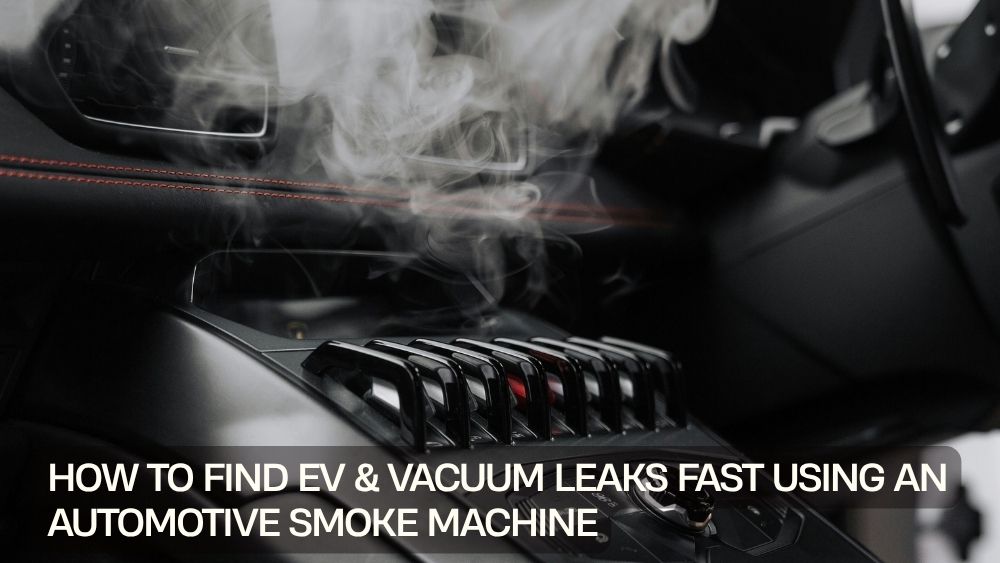
Instead of relying entirely on visual inspection, a smoke leak detector introduces visible smoke into an appropriate vehicle system. If there is an opening, crack, damaged hose, loose connection, or failed seal, smoke can escape from the problem area and make the leak easier to locate.
Smoke testing can be particularly useful for diagnosing vacuum leaks, intake-system leaks, EVAP leaks, and other suitable low-pressure systems.
In this guide, we'll explain how automotive smoke testing works, where it can help, how to perform a basic smoke test, what to look for, and how to use an automotive smoke machine safely.
What Is an Automotive Smoke Machine?
An automotive smoke machine is a diagnostic device designed to help technicians locate leaks in vehicle systems.
The machine produces a visible smoke or vapor that can be introduced into a compatible system. The technician then observes the vehicle for escaping smoke.
If smoke emerges from a hose connection, gasket area, pipe, fitting, or other opening, that location can provide a clue about the source of the leak.
This is especially helpful when a leak is:
- Too small to see
- Located behind components
- Hidden underneath the intake system
- Caused by a cracked hose
- Coming from an EVAP component
- Difficult to reproduce during normal operation
A smoke machine doesn't magically diagnose every automotive problem. It is a leak-location tool, and it works best when the technician understands which system is being tested and follows the correct test procedure.
Why Are Vacuum Leaks Difficult to Find?
Vacuum leaks can be frustrating because the problem may not be obvious during a visual inspection.
A hose can develop a small crack that only opens under certain conditions. A gasket can leak from an awkward location. A fitting can become loose without appearing obviously damaged.
Depending on the vehicle, an air or vacuum leak may contribute to symptoms such as:
- Rough or unstable idle
- Engine hesitation
- Lean-running conditions
- Check-engine-light codes
- Poor drivability
- Unusual engine sounds
- Reduced fuel economy
The symptoms themselves don't necessarily prove that a vacuum leak exists.
That is why a proper diagnostic process matters.
A smoke test can help narrow the search by making otherwise invisible escaping air easier to see.
How Does an Automotive Smoke Machine Find a Leak?
The basic concept is surprisingly simple.
The smoke machine creates visible smoke and introduces it into a suitable sealed or partially sealed system.
The technician then watches for smoke escaping.
Imagine filling a bicycle inner tube with air and looking for the place where it leaks. The principle is similar, except automotive smoke testing uses visible smoke to make the escaping path easier to identify.
A successful test depends on using the correct connection point, controlling pressure appropriately, and understanding the system being tested.
Too much pressure can potentially damage components or create misleading results, so technicians should follow the vehicle manufacturer's procedures and the smoke machine's instructions.
What Types of Leaks Can a Smoke Machine Help Find?
An automotive smoke machine can be useful for several types of diagnostic work, depending on the vehicle and the machine.
Vacuum Leaks
Vacuum leaks can occur around intake hoses, fittings, gaskets, and other components.
Introducing smoke into an appropriate section of the intake or vacuum system can reveal where smoke escapes.
Intake System Leaks
A leak in the intake system can allow unmetered air to enter the engine.
Smoke testing can help identify cracks, loose connections, damaged hoses, or leaking seals.
EVAP Leaks
The evaporative emissions system, commonly called the EVAP system, helps control fuel vapors.
A small leak in the EVAP system can trigger emissions-related diagnostic trouble codes.
Smoke testing is commonly used as part of EVAP leak diagnosis because escaping smoke can reveal the location of a small opening.
Other Low-Pressure Systems
Depending on the vehicle, equipment, and manufacturer's diagnostic procedure, smoke testing may also be appropriate for other systems where leak detection is required.
Always verify that the system is suitable for smoke testing before introducing smoke.
What About “EV” Leaks?
The word EV can create some confusion in automotive searches.
If you're referring to EVAP leaks, smoke testing can be a useful diagnostic technique for locating leaks in the evaporative emissions system.
If you're referring to electric vehicles, however, an automotive smoke machine is not a general-purpose tool for diagnosing high-voltage electrical-system faults.
Electric vehicles have high-voltage battery and electrical systems that require specialized procedures, equipment, and safety controls.
A smoke machine may have applications for suitable air, ventilation, cooling, or other low-pressure systems on some vehicles, but it should never be assumed to be appropriate for a high-voltage battery or electrical circuit.
Always follow the manufacturer's service procedures when working on EV high-voltage systems.
How to Perform a Basic Automotive Smoke Test
The exact process varies by vehicle and diagnostic application, but the general workflow looks like this.
Step 1: Identify the System
Before connecting anything, determine exactly which system you are testing.
For example, you might be investigating an intake leak or an EVAP leak.
Do not simply introduce smoke into an unknown system.
Step 2: Inspect the Vehicle
Perform a visual inspection first.
Look for:
- Cracked hoses
- Loose clamps
- Damaged connectors
- Broken vacuum lines
- Disconnected pipes
- Damaged seals
- Signs of previous repairs
Sometimes the problem is visible without a smoke test.
Step 3: Follow the Correct Connection Procedure
Connect the smoke machine to the appropriate test port or access point.
The correct connection varies by vehicle and system.
Use suitable adapters and follow the vehicle manufacturer's recommended procedure.
Step 4: Seal Appropriate Openings
A smoke test may require certain openings to be blocked or isolated.
The objective is to allow smoke to travel through the system being tested rather than escaping through an intentional opening.
Step 5: Introduce Smoke at the Correct Pressure
Activate the smoke machine according to its instructions.
Do not exceed the pressure specified for the system being tested.
This is particularly important because automotive systems are designed to operate within specific pressure ranges.
Step 6: Inspect for Escaping Smoke
Use a bright light if necessary and inspect carefully.
Look around:
- Hoses
- Connections
- Gaskets
- Intake components
- Fittings
- Pipes
- Valves
- EVAP components
Even a small stream of smoke can identify a leak that would otherwise be difficult to locate.
Step 7: Repair and Retest
Once the suspected leak has been repaired, repeat the test.
A second smoke test can confirm whether the leak has actually been eliminated.
This verification step can save time and prevent replacing additional parts unnecessarily.
How to Find a Vacuum Leak With a Smoke Machine
For a suspected vacuum leak, the basic idea is to introduce smoke into an appropriate part of the intake or vacuum system.
The smoke should remain contained if the system is properly sealed.
If you see smoke escaping around a hose, gasket, fitting, or other component, investigate that location.
Pay particular attention to areas that are difficult to inspect visually.
A small leak around an intake component can be easy to overlook when the engine bay is crowded with wiring, hoses, and other components.
Smoke turns the invisible into something you can actually see.
How to Find an EVAP Leak With Smoke
EVAP diagnostics are another common application for automotive smoke machines.
A small EVAP leak may not produce an obvious visual symptom. In some cases, the vehicle's onboard diagnostic system detects a problem and stores a diagnostic trouble code.
A smoke test can then help identify where the vapor-control system is leaking.
The procedure must follow the vehicle's service information because EVAP systems differ between vehicles.
Technicians may need to isolate portions of the system, use a service port, operate valves, or follow specific testing procedures.
The goal is to introduce smoke into the appropriate portion of the EVAP system and observe where it escapes.
Why Smoke Testing Can Save Diagnostic Time
Traditional troubleshooting often involves checking components one at a time.
That can work, but it can also become a parts-swapping exercise.
A smoke test gives the technician a visual indication of where a leak may actually exist.
For example, instead of replacing several vacuum hoses because one might be leaking, a technician can potentially locate the escaping smoke and focus attention on the affected area.
That doesn't mean smoke testing eliminates all diagnostic work.
The technician still needs to interpret the evidence, confirm the fault, determine the underlying cause, and make the correct repair.
But a visible leak location can make the diagnostic process much more focused.
Choosing an Automotive Smoke Machine
If you're considering an automotive smoke leak detector, look at several specifications rather than choosing solely by price.
Smoke Output
The machine should produce enough visible smoke to make small leaks easier to identify.
Pressure Control
Controlled pressure is important because different automotive systems have different testing requirements.
Power Source
Check whether the machine operates from a vehicle battery, another DC source, or a different power supply.
Adapters
A selection of connectors and adapters can make it easier to test different vehicle systems.
Fluid or Smoke Medium
Follow the manufacturer's instructions for the approved smoke-producing fluid or medium.
Do not substitute random liquids simply because they appear to produce smoke.
Portability
For mobile technicians and home garages, a compact machine can be easier to store and transport.
A Portable Automotive Smoke Leak Detector for Diagnostic Work
For people looking for a dedicated tool for automotive leak diagnosis, TotalFindz offers a VEVOR automotive smoke machine leak detector designed for applications including vacuum and fuel-system leak detection.
VEVOR Automotive Smoke Machine Leak Detector

Before using any smoke machine, verify that its specifications and included accessories are suitable for the vehicle system you intend to test.
The vehicle's service documentation should always take priority when determining the correct testing method.
Common Smoke-Testing Mistakes to Avoid
Smoke testing is straightforward in principle, but a few mistakes can make results confusing or potentially damage equipment.
Using Too Much Pressure
More pressure does not automatically mean a better test.
Use the pressure recommended for the system and equipment.
Testing the Wrong System
A smoke machine is not a universal diagnostic solution.
Identify the system first and confirm that smoke testing is appropriate.
Ignoring Intentional Vents
Some automotive systems contain components designed to allow air or vapor movement.
Smoke escaping from an intentional vent does not necessarily indicate a fault.
Assuming Every Smoke Trail Is a Leak
Smoke can move around engine-bay components, especially where airflow is present.
Follow the smoke back to its actual source before deciding that a component is defective.
Skipping the Retest
After repairing a suspected leak, test again.
The first leak you find may not always be the only leak.
Safety Tips for Automotive Smoke Testing
Always follow the smoke machine manufacturer's instructions and the vehicle manufacturer's service procedures.
Keep the work area properly ventilated.
Avoid introducing smoke into systems that are not approved for testing.
Do not use smoke testing as a substitute for the specialized safety procedures required for high-voltage EV systems.
When working around fuel systems, ignition sources, hot engine components, or other hazardous areas, use appropriate precautions.
If you are unsure whether a particular vehicle system can safely be smoke-tested, consult the manufacturer's service information or a qualified automotive technician.
Frequently Asked Questions
What is an automotive smoke machine used for?
An automotive smoke machine is primarily used to locate leaks in suitable vehicle systems. Common applications include vacuum, intake, and EVAP leak diagnosis.
Can a smoke machine find a vacuum leak?
Yes. When properly connected to an appropriate vacuum or intake system, visible smoke can reveal escaping air around hoses, fittings, gaskets, or other components.
Can a smoke machine find an EVAP leak?
Yes. Smoke testing is commonly used to help locate leaks in appropriate portions of a vehicle's EVAP system.
Can I use an automotive smoke machine on an electric vehicle?
It depends on the system being tested. Smoke testing may be appropriate for certain low-pressure systems, but it should not be treated as a tool for diagnosing high-voltage battery or electrical faults. Follow the EV manufacturer's service procedures.
Does a smoke machine find every car problem?
No. It is a leak-detection tool, not a complete vehicle diagnostic system. A vehicle can have drivability, electrical, mechanical, sensor, or other faults that a smoke test will not identify.
How long does an automotive smoke test take?
The time varies depending on the vehicle, system, accessibility, and size of the suspected leak. A straightforward test can be relatively quick, while complex diagnostic work may take considerably longer.
Final Thoughts
Finding a small automotive leak can feel like searching for a pin in a garage full of hoses.
An automotive smoke machine gives technicians a much more visible way to approach the problem.
By introducing smoke into a suitable system and watching for where it escapes, you can potentially identify vacuum leaks, intake leaks, EVAP leaks, and other appropriate low-pressure system problems more efficiently.
The important word is appropriate.
Smoke testing works best when you know which system you're testing, use the correct connection points, control pressure properly, and follow the manufacturer's diagnostic procedures.
For EVAP and conventional vehicle leak diagnosis, it can be a valuable addition to a diagnostic toolkit. For electric vehicles, always distinguish low-pressure leak testing from high-voltage electrical diagnostics and use the specialized safety procedures required for EV systems.
With the right process, a problem that was previously invisible can leave a very obvious trail.