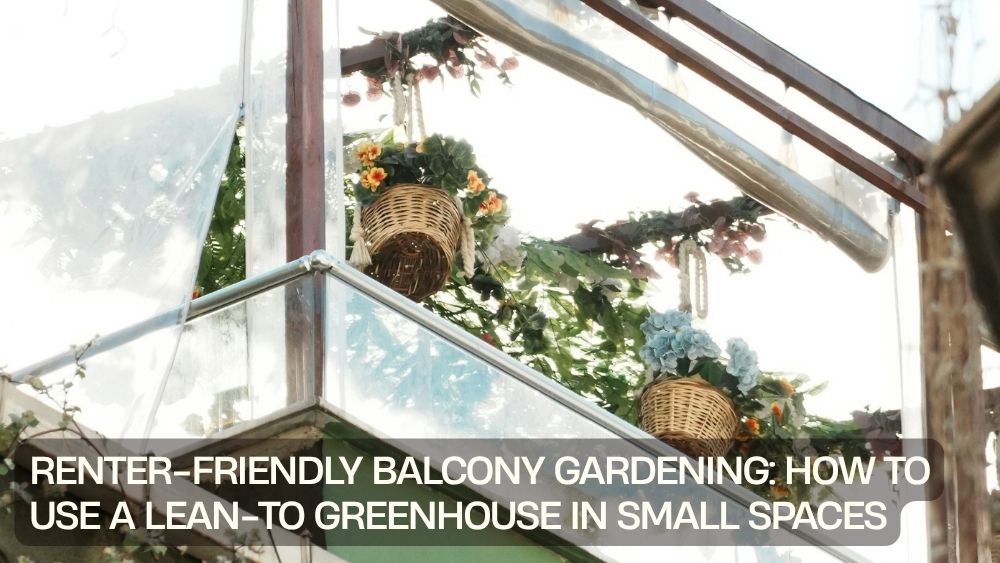
A balcony can be more than a place for a chair and a morning coffee. With the right setup, even a compact rental balcony can become a productive little growing space.
The challenge is making that happen without drilling into walls, building permanent structures, or turning your outdoor area into a jungle that requires a machete to reach the door.
That is where a lean-to greenhouse for balcony gardening can make a difference.
Designed to work against or alongside an existing wall, a lean-to greenhouse can give plants extra protection while making better use of limited square footage. For renters, it can also offer a more flexible approach to growing herbs, vegetables, flowers, seedlings, and other container plants.
Whether you have a narrow apartment balcony, townhouse patio, or compact rental outdoor space, here is how to make a lean-to greenhouse work without sacrificing your security deposit or your sanity.
Why Choose a Lean-To Greenhouse for a Balcony?
Traditional freestanding greenhouses can require a surprising amount of floor space. On a small balcony, every inch matters.
A lean-to design takes advantage of an existing wall or vertical surface. Instead of spreading outward, the greenhouse uses a narrower footprint while creating additional protected growing space.
That makes a small-space greenhouse particularly useful for apartment gardeners.
A lean-to greenhouse can help you:
- Organize plants vertically
- Protect seedlings from changing weather
- Extend your growing season
- Create a dedicated gardening zone
- Make better use of a narrow balcony
- Keep pots and gardening supplies more organized
- Grow plants in a more controlled environment
For renters, portability is another major consideration. A temporary gardening setup can be much more practical than permanent landscaping or structural modifications.
Start With Your Balcony Before Buying Anything
Before filling your shopping cart with seed trays and tomato plants, measure the space.
A greenhouse that looks compact online can feel considerably larger once it is sitting beside your balcony door.
Measure the available:
- Width
- Depth
- Height
- Door clearance
- Railing position
- Walking space
- Distance from the balcony edge
Also consider how you actually use the balcony.
If you regularly open the balcony door, hang laundry, sit outside, or store other belongings there, leave enough room for normal movement.
A successful balcony garden should make your space more useful, not turn every trip outside into an obstacle course.
Think Vertically When Floor Space Is Limited
Small-space gardening rewards vertical thinking.
Instead of arranging every pot across the floor, use shelves and multiple levels to increase growing capacity without increasing the footprint.
A 3-tier plant stand is particularly useful for this type of setup. Smaller plants, seedlings, herbs, and starter trays can occupy upper shelves while larger containers remain closer to the floor.
Giantex Walk-in Lean-to Greenhouse - with 3-Tier Plant Stand, 7’x 3.5’x 7’ Green House, PE Grid Cover

This creates something closer to a miniature vertical garden.
It also makes plant care easier because you can group plants according to their size, light requirements, or watering needs.
For example, you might keep:
Top shelf: Small herbs and seedlings
Middle shelf: Lettuce, compact flowers, or smaller vegetable plants
Bottom area: Larger containers and heavier pots
The exact arrangement depends on your plants and the amount of sunlight available.
Use a Lean-To Greenhouse as a Plant Protection Zone
A balcony exposes plants to conditions they would not experience indoors.
Wind can dry containers quickly. Sudden temperature changes can stress young plants. Heavy rain can damage delicate foliage, while intense sunlight can create excessive heat.
A covered greenhouse environment can provide an additional layer between your plants and the elements.
The key word is protection, not isolation.
Plants still need appropriate ventilation, light, water, and temperature management.
A greenhouse should not become a sealed glass box where the temperature climbs dramatically on a sunny afternoon.
Keep an eye on conditions inside, especially during warmer months.
Choosing the Right Plants for a Balcony Greenhouse
A greenhouse does not magically turn a tiny balcony into a farm.
Choose plants that match the space you actually have.
Compact herbs are an obvious starting point. Basil, parsley, cilantro, mint, thyme, oregano, and chives can work well in containers when their growing requirements are met.
Leafy greens can also be attractive choices for limited spaces. Lettuce, spinach, and similar crops can provide useful harvests without requiring enormous containers.
For vegetables, look for compact or patio-friendly varieties.
Cherry tomatoes, peppers, and other container-suitable crops can work well when they receive sufficient light and have adequate container space.
Flowers are another option. A balcony greenhouse can become a colorful nursery for seedlings before they move into larger containers or outdoor planters.
Create a Renter-Friendly Setup
The biggest advantage of a renter-friendly balcony garden is flexibility.
You generally want your setup to be removable without leaving permanent evidence behind.
Avoid unnecessary drilling, permanent anchors, or modifications to the building unless your landlord or property manager specifically allows them.
Instead, think in terms of movable furniture and gardening equipment.
A greenhouse can occupy one section of the balcony, while freestanding containers and plant stands fill the surrounding space.
Heavy planters can also help keep the overall setup stable, but do not assume that weight alone makes a greenhouse safe in strong winds.
Your building may have specific balcony rules, and local weather can be unpredictable.
Check Your Rental Rules First
This step is easy to overlook.
Before setting up a greenhouse, check your lease and any building or condominium rules.
Some properties restrict:
- Balcony structures
- Outdoor storage
- Greenhouses
- Hanging planters
- Items attached to railings
- Excessive balcony weight
- Changes to exterior appearance
For renters, five minutes of rule-checking can save a considerably longer conversation with a property manager later.
Also consider balcony load limits. Soil, ceramic pots, water, shelving, and gardening equipment can become surprisingly heavy.
A greenhouse itself may be lightweight, but the complete gardening setup can add substantial weight.
Make the Most of Sunlight
Sunlight is the currency of balcony gardening.
Before positioning your greenhouse, observe how sunlight moves across your balcony during the day.
A balcony that looks sunny at 9 a.m. may spend most of the afternoon in shade.
Likewise, a south-facing or west-facing space in some climates may receive intense afternoon sun that creates excessive heat inside a covered structure.
Watch your balcony for several days if possible.
Note where direct sunlight appears and disappears. Then position plants according to their light requirements.
Do not automatically place every plant in the brightest possible spot.
Some plants tolerate partial shade better than others.
Organize Plants by Their Needs
A greenhouse becomes much easier to manage when plants with similar requirements live together.
Instead of creating a random collection of pots, divide the space into simple categories.
You might have one section for herbs, another for seedlings, and another for plants that need more space.
Grouping plants also makes watering easier.
If one group needs frequent watering while another prefers the soil to dry slightly between watering sessions, separating them can prevent accidental overwatering.
Use simple plant labels, especially when growing several varieties.
Your future self will appreciate knowing whether that mystery seedling is basil, pepper, or the beginning of an extremely ambitious weed.
Keep Containers Lightweight and Practical
Balcony gardening requires more attention to container choice than traditional backyard gardening.
Large ceramic and stone pots can look beautiful, but they are heavy before you add soil and water.
For many balcony setups, lightweight containers can be easier to move and rearrange.
Drainage is equally important.
Containers should allow excess water to escape. Without adequate drainage, roots can remain excessively wet, creating problems for many common plants.
Use trays carefully as well. They can catch excess water, but they should not become permanent little swimming pools underneath your plants.
Use Your Greenhouse for Seed Starting
One of the most useful roles for a compact greenhouse is starting plants.
Instead of purchasing mature plants every time, you can begin certain plants from seeds or young seedlings.
A protected environment can make it easier to organize trays and monitor early growth.
Once plants become established, you can move suitable varieties into larger containers around the balcony.
This turns the greenhouse into a miniature propagation station.
It can also make seasonal gardening more interesting because you are not limited to whatever happens to be available at the garden center.
How to Use a Lean-To Greenhouse Through the Seasons
Your greenhouse routine should change throughout the year.
Spring
Spring is an excellent time to start seedlings and prepare container plants.
Monitor overnight temperatures and avoid assuming that the greenhouse will protect plants from every cold snap.
Summer
Ventilation becomes especially important.
A covered structure can heat up quickly under strong sunlight. Monitor the temperature and provide appropriate airflow.
Watering may also become more frequent depending on plant type, container size, sunlight, and local weather.
Fall
A greenhouse can become a useful transition zone as outdoor temperatures begin dropping.
Bring suitable plants into a protected environment while continuing to monitor ventilation and temperature.
Winter
Winter gardening depends heavily on your climate and the plants you grow.
A greenhouse cover alone should not be treated as a guarantee of frost protection.
If temperatures become unsuitable for your plants, you may need to move sensitive plants indoors or use another appropriate protection method.
A Practical Lean-To Greenhouse for Small Balconies
For renters who want a compact structure with built-in organization, a walk-in lean-to greenhouse can provide a useful combination of vertical storage and protected growing space.
One example is the Giantex walk-in lean-to greenhouse with a 3-tier plant stand, designed with a compact footprint and multiple growing levels.
Its lean-to format is particularly relevant to small-space gardeners who want to make use of vertical space rather than spreading containers across the entire balcony.
The three-tier arrangement can help separate smaller plants and seedlings while keeping the overall garden more organized.
When evaluating a greenhouse for your own balcony, however, always compare its dimensions with your available space before purchasing.
Keep the Greenhouse Accessible
A greenhouse should not become a storage closet with plants hiding somewhere behind the lawn chairs.
Leave enough space to walk in, reach shelves, inspect leaves, water plants, and remove containers.
Accessibility matters because gardening requires regular observation.
You need to spot:
- Dry soil
- Yellowing leaves
- Wilting
- Pests
- Damaged stems
- Excess moisture
- Overcrowding
A beautiful greenhouse that is impossible to access quickly becomes a decorative structure rather than a productive garden.
Don't Forget Ventilation
One of the most common mistakes with small greenhouse gardening is assuming that more warmth is always better.
It isn't.
Plants need an appropriate balance of light, temperature, humidity, and airflow.
On sunny days, temperatures inside a covered greenhouse can rise considerably.
Open or adjust ventilation as appropriate for the greenhouse design and weather conditions. Avoid leaving sensitive plants trapped in excessive heat.
Good airflow can also help reduce overly humid conditions.
Think of the greenhouse as a climate-management tool, not a magic plant bubble.
Make It Look Like Part of Your Home
A balcony greenhouse does not have to look like a miniature commercial nursery.
Use matching containers, simple labels, and organized shelving to make the area feel intentional.
You can also create a small gardening station beside the greenhouse with a compact watering can, hand tools, gloves, and plant labels.
Keep the floor clear and avoid allowing gardening supplies to spill into the rest of the balcony.
The result can feel more like a tiny outdoor room than a collection of gardening equipment.
Common Mistakes to Avoid
Even a simple balcony greenhouse benefits from a little planning.
Ignoring measurements: Always check the greenhouse dimensions against your balcony.
Blocking the balcony door: Keep entrances and exits clear.
Overloading the balcony: Account for soil, pots, water, shelves, and other equipment.
Skipping ventilation: Monitor heat and humidity, especially in summer.
Choosing oversized plants: Compact spaces need compact varieties.
Overwatering: Greenhouse conditions can change how quickly containers dry.
Ignoring wind: Lightweight structures and loose objects can become dangerous during strong weather.
Crowding plants: Plants need room for airflow and growth.
Forgetting rental restrictions: Check your lease and building policies before installation.
Build a Balcony Garden That Can Move With You
One of the best things about renter-friendly gardening is that it does not have to be permanent.
A well-planned lean-to greenhouse can become part of a modular balcony garden.
When you move, you can potentially rearrange the greenhouse, containers, shelves, and gardening tools in your next outdoor space.
That flexibility is valuable for renters who want the satisfaction of growing plants without committing to permanent landscaping.
Your balcony may be small, but your gardening possibilities do not have to be.
Frequently Asked Questions
Can I use a lean-to greenhouse on an apartment balcony?
Potentially, yes, provided the greenhouse fits the available space and complies with your lease, building rules, and local requirements. Always consider balcony load limits and weather conditions before setting one up.
What can I grow in a small balcony greenhouse?
Herbs, leafy greens, flowers, seedlings, and compact vegetable varieties can be suitable choices. Select plants according to available light, container size, temperature, and growing requirements.
Is a lean-to greenhouse good for renters?
It can be a practical option because it uses vertical space and can form part of a movable gardening setup. Renters should avoid permanent modifications unless they have permission.
How do I keep a balcony greenhouse cool?
Monitor the temperature regularly and provide appropriate ventilation. During hot weather, avoid allowing the greenhouse to become excessively hot, and choose plant varieties suited to your conditions.
Do balcony greenhouses protect plants from frost?
A greenhouse can provide some environmental protection, but the level of protection varies with the structure, covering, outdoor temperature, wind, and plant type. Do not assume that an unheated greenhouse guarantees frost protection.
Final Thoughts
A small balcony does not need a large footprint to become a productive garden.
With a thoughtfully positioned lean-to greenhouse for balcony gardening, vertical shelving, suitable containers, and plants matched to your available sunlight, renters can create a flexible growing space without permanently transforming the property.
Start small.
Measure first. Check the rules. Choose compact plants. Keep the greenhouse accessible. Watch the temperature. And give every plant enough room to grow.
The goal is not to squeeze an entire backyard into twelve square feet.
It is to turn the space you already have into something greener, more useful, and a little more alive.