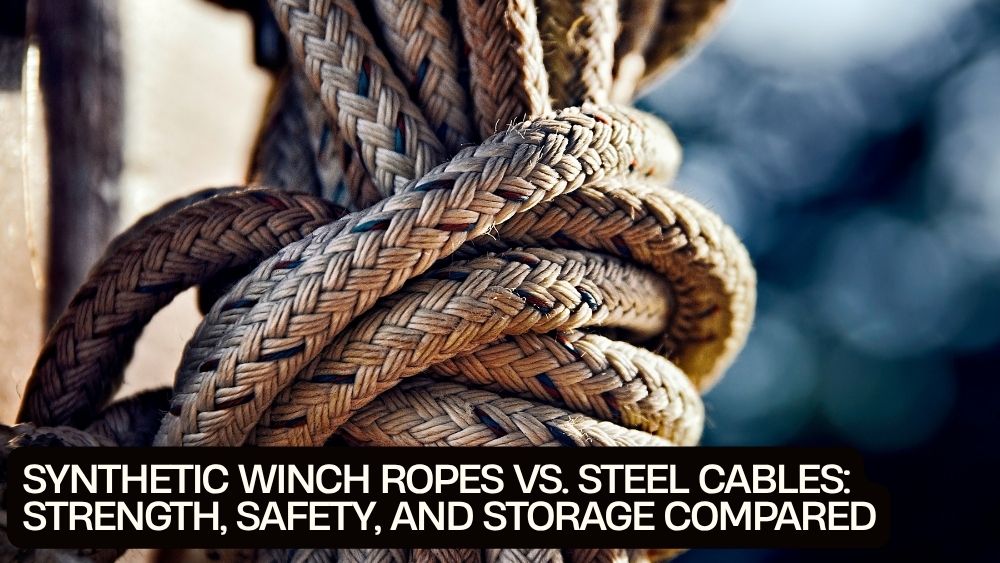
Getting a truck or SUV unstuck on a muddy trail is stressful enough. Choosing the wrong winch line can make the situation much more dangerous. Synthetic winch rope and traditional steel cable can both handle demanding recovery work, but they differ in weight, abrasion resistance, handling, maintenance, and how they behave if something fails under tension.
So, when comparing synthetic winch cable vs. steel wire rope safety ratings, which option makes more sense for your vehicle?
For many recreational off-roaders, synthetic rope is attractive because it's lightweight, flexible, and easier to handle. Steel cable remains a strong contender for applications where abrasion resistance, ruggedness, and long-term durability matter more than weight.
Neither option is automatically safe just because its advertised strength looks impressive. The winch, rope, anchor point, hook, fairlead, and recovery technique all need to work together within their rated limits.
Let's compare both options so you can choose the right winch line for your SUV, truck, or off-road recovery setup in the US or Canada.
1. Synthetic Winch Rope vs. Steel Cable: What's the Difference?
A winch line transfers pulling force from the winch to the load. The two most common options for vehicle recovery are synthetic fiber rope and steel wire rope.
What is synthetic winch rope?
Synthetic winch rope is made from high-strength fibers. Many modern winch lines use ultra-high-molecular-weight polyethylene (UHMWPE), although construction and materials vary by product.
These ropes are popular with off-road enthusiasts because they weigh considerably less than comparable steel cables. They are also flexible, easier to handle, and do not develop the sharp metal burrs associated with damaged steel wire rope.
However, synthetic rope is more vulnerable to abrasion, cuts, ultraviolet exposure, heat, and certain chemicals. Its condition can deteriorate if dirt works into the fibers or the rope repeatedly rubs against sharp surfaces.
What is steel winch cable?
Steel winch cable consists of multiple metal wires twisted into strands. It has been used for decades in vehicle recovery, towing-related equipment, and industrial pulling applications.
Its major advantage is abrasion resistance. Steel cable generally tolerates rough contact with rocks, logs, and other surfaces better than exposed synthetic fibers.
The trade-offs are weight, less flexible handling, potential corrosion, kinking, and sharp broken wires that can injure your hands.
Neither material is indestructible. The better choice depends on where, how often, and under what conditions you use your winch. WARN Industries also highlights these trade-offs in its synthetic-versus-steel winch rope guidance.
2. Strength Ratings: Which Winch Line Is Stronger?
The word strength can be misleading because winch product listings may display different kinds of ratings.
A synthetic rope advertised with a 32,000-pound rating is not necessarily interchangeable with every steel cable carrying the same number. You need to know what the rating represents and whether it applies to the rope alone or another component of the assembly.
Breaking strength vs. working load
These terms are not interchangeable.
-
Breaking strength describes the force at which a line or specimen fails under specified test conditions.
-
Working load limit (WLL) is the maximum permitted load for an item under the conditions defined by its manufacturer or applicable rating system.
-
Winch pulling capacity describes the winch's rated pulling capability under specified conditions. It is not automatically the safe working load of every component attached to it.
A line's breaking strength does not mean you should routinely load it to that force. Real recovery situations introduce variables such as line angle, friction, shock loading, wear, attachment geometry, and the condition of the equipment.
The complete setup must be suitable for the intended load, and you should never exceed the manufacturer's stated limits.
Does synthetic rope have less strength than steel cable?
There is no universal answer based on material alone. A properly designed synthetic rope can have a high strength-to-weight ratio, while steel cable offers excellent durability in abrasive environments.
Actual performance depends on rope diameter, construction, material, termination, condition, and the manufacturer's specifications.
When comparing products, look for the following:
-
The stated rating and what it measures.
-
Rope diameter and length.
-
Compatibility with your winch.
-
Manufacturer installation and inspection instructions.
-
Any limitations involving heat, abrasion, chemicals, or environmental exposure.
Don't select a winch rope based on a headline number alone.
3. Safety Comparison: What Happens if the Line Fails?
Safety is one of the biggest reasons drivers compare synthetic winch rope with steel cable.
A tensioned winch line stores energy. If a component fails, that energy can be released suddenly, potentially causing serious injury or damage.
Synthetic rope: Generally lower stored energy
Synthetic rope generally stores less potential energy under load than comparable steel wire rope. If it breaks, it is less likely to recoil with the same forceful behavior associated with steel cable under similar circumstances.
That can reduce certain hazards, but it does not make synthetic rope harmless. A failed line, moving hook, shifting vehicle, or damaged attachment can still cause serious injury.
Synthetic rope can also fail when cut, badly abraded, overheated, chemically damaged, or overloaded.
Steel cable: More recoil and handling hazards
Steel cable can store substantial energy under tension. If it breaks, the line may recoil or move violently, depending on the setup and circumstances.
Steel cable can also develop sharp broken wires, commonly called burrs or fishhooks. These can puncture gloves and injure hands during handling.
For this reason, steel cable requires careful inspection and appropriate protective gloves.
Safe winching practices apply to both
Regardless of the material:
-
Keep people clear of the tensioned line and the potential path of moving equipment.
-
Never step over, touch, or handle a line under tension.
-
Use the winch manufacturer's recommended recovery accessories.
-
Avoid shock loading, which can create sudden forces far above a steady pull.
-
Never use a winch line for towing unless the equipment is specifically designed and rated for that use.
-
Follow the winch manual for anchoring, spooling, and operating procedures.
-
Stop immediately if the line or any component appears damaged.
A line damper may be recommended as part of a particular recovery setup, but it is not a substitute for keeping people out of the danger zone.
WARN's operating guidance emphasizes inspecting the complete setup, avoiding damaged lines, and keeping people clear during winching.
4. Durability: Mud, Rocks, Rain, and Rough Trails
A winch line may look perfect on the driveway but encounter a very different environment on a rocky trail.
Synthetic rope and abrasion
Synthetic rope is vulnerable to abrasion, particularly when it slides across sharp rock edges or rough metal surfaces. An abrasion sleeve can help protect the section that contacts a rough edge, but it does not make the entire rope cut-proof.
The sleeve must be positioned where protection is needed, and the line still needs inspection before and after use.
Synthetic rope can also be affected by UV exposure, heat, dirt, and chemicals. Its service life depends on material quality, construction, protective coatings, use, and maintenance.
Steel cable and corrosion
Steel cable handles abrasion well, but it can rust when its protective finish is damaged or moisture and corrosive contaminants remain on the cable.
Inspect for kinks, crushed sections, broken wires, and corrosion. A cable that has developed serious damage should not be kept in service just because steel is generally durable.
Which is better for off-road recovery?
For drivers who frequently recover vehicles in mud, sand, and general trail conditions, synthetic rope's low weight and easier handling can be significant advantages.
For work that involves frequent rough contact with rocks, logs, or abrasive surfaces, steel cable may be a better fit if the equipment is designed for that application.
The right answer depends on the environment and how carefully the line can be routed and protected.
5. Weight and Handling: A Big Difference for SUVs and Trucks
The difference becomes obvious when you pull the line out of the winch.
Synthetic rope is lighter and more flexible, making it easier to carry, position, and feed out by hand. That can be especially helpful when recovering a vehicle alone or when handling a long line on uneven ground.
Steel cable is heavier and generally less flexible. It can be more tiring to handle, especially on a larger winch, and damaged wires can create sharp edges.
For an off-road SUV or truck, reducing weight at the front of the vehicle may also be desirable. However, the actual weight difference depends on the rope and cable specifications, not just the material category.
If you frequently use your winch, synthetic rope can make routine setup and recovery more convenient. If your winch is used occasionally in a rough work environment, steel cable may remain a practical choice.
6. Storage and Maintenance: Keeping Your Winch Line Ready
Proper storage isn't glamorous, but it can make the difference between a reliable recovery tool and equipment you should have replaced months ago.
How to maintain synthetic winch rope
Inspect the entire length. Look for cuts, fraying, unusual flat spots, discoloration, stiffness, or signs of abrasion. Some surface fuzz can occur during normal use, but progressive damage or exposed, weakened fibers needs attention.
Clean away embedded grit. Dirt and sand trapped in the rope can abrade fibers internally. Follow the manufacturer's cleaning procedure and use only recommended cleaning products.
Protect against UV and heat. Store the line out of prolonged direct sunlight when practical. Keep it away from hot exhaust components and other heat sources.
Use the abrasion sleeve. Position the sleeve where the rope could contact a rough edge. Inspect both the sleeve and the rope beneath it.
Spool carefully. Follow the winch instructions for initial stretching, tensioning, and winding the rope evenly onto the drum.
How to maintain steel winch cable
Wear appropriate gloves. This helps protect your hands from sharp wires and rough surfaces.
Inspect for kinks and broken wires. Also check for crushed sections, corrosion, and damage near terminations.
Keep the cable properly spooled. Follow the winch manufacturer's instructions to prevent bunching, tangling, and uneven winding.
Keep it clean and dry when practical. Remove dirt and moisture according to the manufacturer's care recommendations.
Replace damaged cable. Serious kinks, broken wires, crushing, or significant corrosion are reasons to stop using the line and assess replacement.
WARN recommends regular inspection for both rope types and advises replacing compromised winch lines rather than continuing to use them.
7. Can You Replace Steel Cable With Synthetic Rope?
In many cases, a winch can be converted from steel cable to synthetic rope, but compatibility must be confirmed first.
A conversion may require a different fairlead, correct rope diameter and length, and a suitable attachment for the winch drum. The winch itself must be approved for the intended rope configuration.
Check the fairlead
A fairlead guides the rope as it enters and leaves the winch. Synthetic rope is particularly vulnerable to cuts and abrasion from rough or sharp edges.
Many synthetic winch setups use a smooth, large-radius hawse fairlead. A steel cable may have worn or damaged a previous fairlead, leaving burrs that could damage synthetic fibers.
Do not assume that a roller fairlead designed for steel cable is suitable for synthetic rope. Follow the winch and rope manufacturer's conversion instructions.
Match the rope to the winch
Before purchasing a replacement, verify:
-
Rope diameter and length.
-
Winch model and rated capacity.
-
Drum attachment and spooling direction.
-
Fairlead compatibility.
-
Hook and termination compatibility.
-
Installation and initial loading instructions.
A longer or thicker rope may not fit correctly on the drum. Choosing the wrong line can create a dangerous installation even when the advertised strength looks sufficient.
8. Product Spotlight: VEVOR 1/2-Inch Synthetic Winch Rope
For off-road drivers considering a synthetic replacement line, TotalFindz lists the VEVOR Synthetic Winch Rope, 1/2 inch × 92 feet, advertised with a 32,000-pound rating. The listing also describes a protective sleeve, forged winch hook, and pull strap.
You can review the VEVOR 1/2-Inch × 92-Foot Synthetic Winch Rope to check the product's stated specifications and compatibility information.
What should you check before buying?
Confirm what the 32,000-pound figure means. Verify whether the listed number refers to minimum breaking strength or another manufacturer-defined rating. Do not treat it as an automatic working load limit.
Check the winch capacity. The rope must be compatible with the exact winch model, including its drum and attachment requirements.
Verify the fairlead. A smooth, compatible fairlead is important for protecting synthetic fibers from abrasion.
Inspect the included components. Confirm that the hook, sleeve, and pull strap are appropriate for your intended setup and follow the supplied instructions.
Review the intended application. The product listing may describe broad vehicle compatibility, but the actual winch model and installation requirements still determine whether the rope is suitable.
A synthetic line can be a convenient upgrade for a compatible SUV or truck winch. The safest purchase is one where the rating, dimensions, and installation requirements are clear before you begin.
9. Synthetic vs. Steel Winch Rope: Which Should You Choose?
Here's a practical way to decide.
| Your priority | Option to consider |
|---|---|
| Lightweight handling for recreational off-roading | Synthetic rope |
| Easier manual handling and less bulky line | Synthetic rope |
| High resistance to abrasion from rough contact | Steel cable |
| Frequent work around rocks, logs, or abrasive materials | Steel cable, if suited to the setup |
| Lower concern about UV degradation | Steel cable |
| Reduced stored energy compared with steel under similar conditions | Synthetic rope |
| Minimal inspection and maintenance | Neither; both require regular checks |
For many recreational SUV and truck owners, synthetic rope is the appealing everyday choice. Steel cable remains valuable for applications where abrasion resistance and durability are major priorities.
The decision should come down to your winch, environment, and maintenance habits, not simply which material has the biggest advertised number.
Frequently Asked Questions
Is synthetic winch rope stronger than steel cable?
Not universally. Strength depends on the particular rope or cable, its construction, diameter, termination, condition, and rating. Compare manufacturer specifications and confirm what each advertised number measures.
Is synthetic winch rope safer if it breaks?
Synthetic rope generally stores less potential energy than steel cable under similar conditions, which may reduce some recoil hazards. However, a failed synthetic line can still cause serious injury, and safe winching practices remain essential.
How often should I inspect my winch rope?
Inspect the line, hook, attachments, and other recovery components before use, and check them again after demanding recovery work. Follow the manufacturer's inspection schedule and replace compromised equipment.
Can synthetic winch rope get wet?
Many synthetic winch ropes can be used in wet conditions, but water exposure does not eliminate the need for care. Dirt, abrasion, heat, UV exposure, and chemicals can still damage the fibers. Follow the manufacturer's cleaning and storage instructions.
Can I put synthetic rope on any winch?
No. Confirm compatibility with the winch model, drum, rope dimensions, fairlead, and attachment hardware. Some conversions require a compatible hawse fairlead and other changes.
Does a 32,000-pound rope rating mean I can pull a 32,000-pound vehicle?
No. An advertised rope rating does not establish the safe capacity of the entire recovery system or guarantee that a vehicle of that weight can be recovered. The winch, rigging, anchor, attachments, load conditions, and manufacturer's limits all matter.
Final Verdict
Synthetic winch rope and steel cable each have a place in vehicle recovery. Synthetic rope is lighter, easier to handle, and generally stores less potential energy under load. Steel cable offers excellent abrasion resistance and can be a sensible choice for demanding work around rough surfaces.
Neither option removes the need for careful inspection, compatible hardware, correct installation, and safe winching technique.
If you're choosing a replacement line for your SUV or truck, compare the actual ratings and dimensions, verify compatibility with your winch, and consider the conditions in which you'll use it. The best winch line is the one that suits the job and remains in good condition when you need it most.