Winter doesn't have to mean the end of your vegetable garden.
A well-managed greenhouse can extend the growing season, protect plants from snow and freezing winds, and give cool-season vegetables a controlled environment when outdoor beds become difficult to manage.
But there is one catch: a greenhouse is not automatically warm just because it is enclosed.
Polycarbonate panels can reduce heat loss compared with some single-layer glazing systems, but nighttime temperatures can still drop sharply. Cold air, wind, short winter days, and frozen ground can all challenge plants.
That is why winter greenhouse growing is less about creating a tropical paradise and more about managing heat loss.
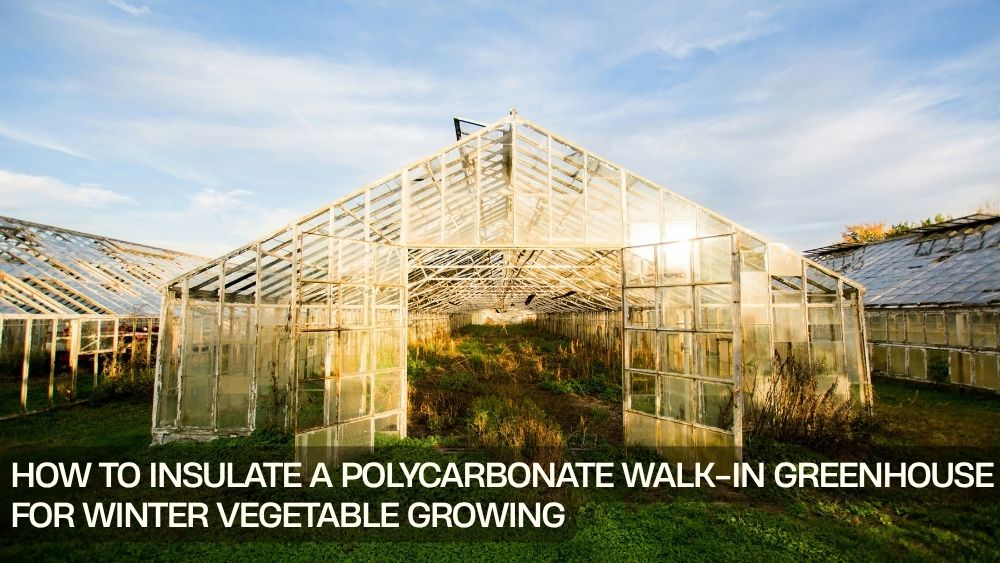
If you're working with a Heavy-Duty Polycarbonate Aluminum Walk-In Greenhouse, you already have a useful structure for creating a protected growing environment. The next step is improving its winter performance.

Here is how to approach it.
Why Insulate a Greenhouse for Winter?
A greenhouse collects solar energy during daylight hours.
The problem begins when the sun disappears.
Once temperatures outside fall, heat moves out of the greenhouse through its covering, frame, gaps, ventilation openings, and ground.
The greenhouse can therefore experience a large temperature swing between afternoon and early morning.
Insulation helps slow that heat loss.
It does not create heat by itself.
Think of insulation as a thermal speed bump. It gives the warmth you've already captured or generated more time to remain inside.
That distinction matters.
A properly insulated greenhouse still needs ventilation, sensible plant selection, and, in very cold climates, potentially supplemental heating.
Start With the Polycarbonate Panels
Polycarbonate is popular for greenhouses because it is lightweight, impact-resistant, and available in multiwall configurations that provide insulating air spaces.
If you're building a winter growing setup, inspect the panels before doing anything else.
Look for:
- Cracks
- Loose panels
- Gaps
- Damaged edges
- Poorly sealed joints
- Loose fasteners
- Areas where wind can enter
A small opening may not look dramatic during autumn.
In winter, however, cold air can turn that opening into a constant heat-loss pathway.
Make sure panels are installed according to the manufacturer's instructions and that joints are properly secured.
Seal Drafts Without Blocking Ventilation
One of the biggest winter greenhouse mistakes is confusing unwanted drafts with necessary ventilation.
You want to stop uncontrolled air leakage.
You do not want to permanently seal every ventilation opening.
A greenhouse still needs airflow.
Excess humidity can encourage condensation and plant disease, particularly when temperatures fluctuate.
Inspect around:
- Doors
- Sliding tracks
- Panel joints
- Corners
- Roof vents
- Frame connections
- Utility openings
Weatherstripping or suitable greenhouse sealing materials can help reduce unwanted gaps around doors and other areas.
But keep intentional vents functional.
The goal is controlled ventilation, not an airtight greenhouse.
Use Greenhouse Insulation Film
One common winter technique is adding a layer of greenhouse-specific insulating film.
The film creates an additional barrier between the interior air and the cold exterior.
Depending on the material and installation, it can reduce drafts and slow heat loss.
Bubble-style horticultural insulation is another option.
The trapped air provides additional insulation while allowing sunlight to reach the plants.
Install insulating material carefully so it does not unnecessarily damage or obstruct the greenhouse panels.
Avoid casually covering ventilation openings or creating loose material that can detach in windy conditions.
Insulate the Greenhouse Floor
Heat doesn't only escape through the walls and roof.
The floor matters too.
If plants are growing directly on cold ground, the root zone can remain considerably colder than the daytime greenhouse air.
There are several approaches.
Raised Beds
Raised beds can provide better control over soil composition and drainage.
However, simply raising the soil does not automatically make it warm.
Consider adding organic matter and suitable mulch to help moderate soil temperature.
Mulch
Organic mulch can act as an insulating layer over the growing medium.
Materials such as straw or other suitable mulch can reduce temperature fluctuations around plant roots.
Keep mulch away from plant stems when appropriate to reduce moisture-related problems.
Container Plants
Containers give you more flexibility.
You can move sensitive plants closer together or position them over insulated surfaces.
However, containers can also lose heat more quickly than large volumes of ground soil, so their root zones need attention during freezing conditions.
Add Thermal Mass
One of the simplest ways to moderate temperature swings is to use thermal mass.
Thermal mass absorbs heat during warmer periods and releases some of that stored heat as temperatures fall.
Water is particularly useful because of its relatively high heat capacity.
You can place sealed water containers or barrels inside the greenhouse where they receive daytime warmth.
Dark-colored containers can absorb solar radiation efficiently, but positioning and safety still matter.
Do not overcrowd the growing area.
You need enough room for plants, airflow, watering, harvesting, and maintenance.
Thermal mass is not a replacement for heating in severe climates.
It is a temperature-buffering strategy.
Use a Floating Row Cover Inside the Greenhouse
Here is a useful winter-growing trick: you can create a protected microclimate inside your greenhouse.
Floating row covers can be placed over suitable crops, creating another layer between the plants and cold greenhouse air.
This is particularly useful for leafy greens and other cold-tolerant vegetables.
The greenhouse protects the overall growing environment.
The row cover gives the plants another layer of protection.
Just remember that plants still need light, airflow, and appropriate moisture management.
Protect the Root Zone
Winter vegetable growing isn't just about air temperature.
Roots matter enormously.
A plant can appear fine above ground while its root zone becomes dangerously cold.
Use:
- Mulch
- Insulated containers
- Raised beds
- Suitable soil depth
- Thermal mass
- Root-zone monitoring
Avoid assuming that a warm afternoon means the soil stayed warm overnight.
A basic soil thermometer can provide useful information that an air thermometer cannot.
Monitor Temperature Instead of Guessing
A greenhouse thermometer is one of the simplest tools you can add.
Better yet, use a thermometer that records minimum and maximum temperatures.
Why?
Because the overnight low is often more important than the afternoon high.
Imagine your greenhouse reaches 70°F during a sunny winter afternoon.
That sounds excellent.
But if the temperature falls to 25°F before sunrise, your plants experience the coldest part of the day regardless of the afternoon reading.
Track:
- Daytime high
- Nighttime low
- Soil temperature
- Humidity
- Temperature changes during cloudy weather
This information helps you decide whether additional insulation, ventilation, thermal mass, or supplemental heating is necessary.
Choose Vegetables That Actually Like Cool Weather
Insulation can help.
But plant selection can help even more.
Cool-season vegetables commonly include:
- Spinach
- Kale
- Lettuce
- Radishes
- Carrots
- Swiss chard
- Peas
- Some Asian greens
- Certain brassicas
Exact cold tolerance varies by variety and growing conditions.
Seed packets and extension resources can help determine suitable planting windows for your region.
The key lesson is simple:
Don't force a summer crop to behave like a winter crop.
Tomatoes, peppers, cucumbers, and similar warm-season plants generally require much more warmth than winter greens.
Consider a Double-Layer Growing Strategy
Winter greenhouse growing works particularly well when you combine several modest improvements instead of relying on one dramatic solution.
For example:
Greenhouse panels + insulating film + thermal mass + row cover + mulch + temperature monitoring
Each layer addresses a different part of the problem.
The greenhouse provides the primary enclosure.
Insulation slows heat loss.
Thermal mass buffers temperature changes.
Row covers protect individual crops.
Mulch protects roots.
Monitoring tells you whether the system is actually working.
This layered approach gives you more control than simply adding one thick insulation material everywhere.
How a 16 x 8 Greenhouse Changes Your Planning
A 16 x 8 ft aluminum polycarbonate greenhouse provides a substantial walk-in growing area.
The listed greenhouse includes several features designed around practical garden use, including an adjustable roof vent, rain gutter, and sliding door.
That combination is useful for winter growing because ventilation and moisture management remain important even when you're trying to conserve heat.
The larger footprint also gives you room to create zones.
For example:
Zone 1: Hardy greens
Place cold-tolerant vegetables in the cooler parts of the greenhouse.
Zone 2: Protected seedlings
Use an interior row cover or small propagation area for young plants that need extra protection.
Zone 3: Thermal mass
Position water containers where they can collect daytime solar energy without blocking plant light.
Zone 4: Working area
Keep enough space for watering, harvesting, pruning, and moving containers.
A walk-in greenhouse should function as a working garden rather than becoming an obstacle course of plants and insulation materials.
Use the Roof Vent Carefully in Winter
A roof vent may sound like the last thing you want when temperatures are freezing.
But ventilation remains important.
On a sunny winter day, greenhouse temperatures can rise significantly even while outdoor temperatures remain low.
That creates a balancing act.
You need enough ventilation to prevent excessive heat and humidity, but not so much that you unnecessarily dump heat during cold periods.
An adjustable roof vent gives you greater control.
Monitor conditions rather than leaving ventilation permanently open or permanently closed.
Manage Condensation
Cold winter nights can create condensation inside a greenhouse.
Warm, humid interior air comes into contact with colder surfaces and water vapor can condense.
Excessive moisture can contribute to fungal and plant-health problems.
To manage condensation:
- Avoid unnecessary overwatering
- Provide appropriate airflow
- Vent when conditions allow
- Avoid overcrowding plants
- Keep leaves from remaining constantly wet
- Monitor humidity when possible
The objective is not to eliminate humidity completely.
Plants need moisture.
The objective is to keep the environment within a reasonable range for the crops you're growing.
Should You Heat a Winter Greenhouse?
That depends on your climate and your plants.
In relatively mild winter regions, insulation and cold-hardy crops may be enough for season extension.
In areas with prolonged freezing temperatures, additional heating may be required.
If you add a heater, use equipment specifically suitable for greenhouse environments and follow all electrical and fire-safety requirements.
Never improvise a heating setup inside an enclosed structure.
Also remember that insulation and heating work together.
A poorly sealed greenhouse can waste the heat you're paying to produce.
Before increasing heater output, inspect the structure for unnecessary heat loss.
A Practical Winter Greenhouse Setup
Here's an example of a layered winter setup:
Structure:
Heavy-duty aluminum frame with polycarbonate panels.
Draft control:
Inspect and seal unnecessary gaps around doors and panels.
Insulation:
Use appropriate greenhouse insulation film where needed.
Root protection:
Apply suitable mulch and monitor soil temperatures.
Thermal mass:
Use safely positioned water containers to moderate temperature swings.
Plant protection:
Add floating row covers over particularly sensitive crops.
Ventilation:
Use the adjustable roof vent strategically.
Monitoring:
Track overnight minimum temperatures and humidity.
Crop selection:
Prioritize vegetables suited to cool-season growing.
Emergency plan:
Know how you will protect plants if a severe freeze is forecast.
This approach creates several layers of protection without turning the greenhouse into a sealed plastic bubble.
Common Winter Greenhouse Mistakes
Mistake 1: Assuming Polycarbonate Makes the Greenhouse Freeze-Proof
It doesn't.
Polycarbonate can improve the enclosure, but outdoor temperatures still influence the interior.
Mistake 2: Blocking Every Vent
Ventilation remains necessary.
Use it strategically rather than eliminating it.
Mistake 3: Ignoring the Ground
Cold roots can undermine otherwise good greenhouse conditions.
Mistake 4: Overwatering
Winter plants often grow more slowly and may use less water.
Water according to plant and soil conditions rather than following a summer schedule.
Mistake 5: Growing Only Warm-Season Crops
Choose varieties appropriate for your winter climate.
Mistake 6: Watching Only the Afternoon Temperature
The overnight minimum tells a very different story.
Mistake 7: Overcrowding the Greenhouse
Plants need light and airflow.
A greenhouse packed wall-to-wall can become difficult to manage and more humid than necessary.
How to Prepare Before the First Freeze
Don't wait for the first hard freeze to discover a problem.
A few weeks beforehand:
- Inspect every panel.
- Check the door and sliding mechanism.
- Inspect roof vents.
- Look for unwanted gaps.
- Install appropriate insulation.
- Prepare thermal mass.
- Add mulch where appropriate.
- Check your thermometer.
- Review crop cold tolerance.
- Prepare a plan for unusually cold nights.
This is much easier than trying to repair a greenhouse during a freezing storm while your lettuce looks at you accusingly.
Final Thoughts
Winter vegetable growing becomes much easier when you stop thinking about insulation as one giant fix.
Instead, build layers.
Start with a well-constructed polycarbonate greenhouse.
Control drafts.
Add suitable insulation.
Protect the root zone.
Use thermal mass.
Monitor temperatures.
Ventilate strategically.
And grow vegetables suited to the season.
A Heavy-Duty Polycarbonate Aluminum Walk-In Greenhouse can provide the structure needed for an extended growing season, but successful winter gardening comes from how you manage that structure.
A 16 x 8 ft greenhouse with polycarbonate panels, an adjustable roof vent, rain gutter, and sliding door can give you plenty of room to create a practical winter growing system.
The goal isn't necessarily to make January feel like July.
It's to create a stable enough environment for the right plants to keep growing when the outdoor garden has gone quiet.